‘Resignation Is Not The Point’— Oburu Defends Cabinet Secretaries Amid Fuel Scandal

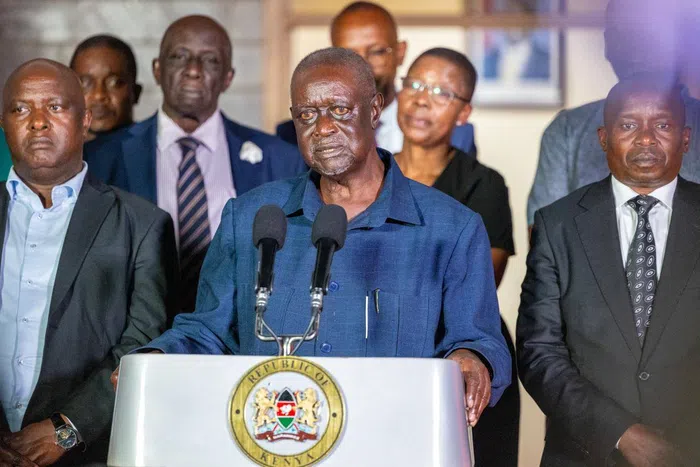
Orange Democratic Movement (ODM) party leader Oburu Oginga has publicly distanced himself from mounting opposition calls for the resignation of Cabinet Secretaries in the Trade and Energy dockets. These high-ranking officials currently face intense scrutiny following a multi-billion-shilling fuel importation scandal that has left many citizens concerned about transparency and fiscal responsibility within the government.
Defending the Principles of Due Process
Oburu insisted during a local radio interview on Sunday, April 19, 2026, that political grandstanding must not take precedence over the rule of law. He firmly maintains that public officials should only vacate their positions if there is concrete, legal evidence of wrongdoing confirmed by official state investigative bodies.
“We are not shielding anybody, but resignation is not the point,” Oburu asserted during the broadcast. “If the investigations find that they are culpable, then they will be mentioned and the necessary actions will follow.”
Drawing parallels to the governance standards of the Mwai Kibaki administration, he explained that the proper procedure involves an investigative body officially naming an individual before they are asked to step aside. Oburu cautioned against a growing political culture where leaders are forced out simply due to the optics of their position, emphasizing that politicians lack the legal mandate to conduct independent probes or reach definitive conclusions regarding guilt.
“You don’t drag somebody’s name politically just because he is the head and you want him to be dragged, especially when his name has not been mentioned by the investigative authority,” Oburu stated. “We are not, as politicians, the investigative authority.”
Read Also: Rio Ferdinand To Open International Doors For Arusha Through AFCON 2027
The Escalating Political Confrontation
This pushback from the ODM leader follows a campaign intensified by the United Alternative Government against Energy Cabinet Secretary Opiyo Wandayi and Trade Cabinet Secretary Lee Kinyanjui. Former Deputy President Rigathi Gachagua led these calls on Wednesday, April 15, 2026, accusing the ministers of gross mismanagement and a lack of transparency regarding the recent fuel importation saga.
“We unequivocally demand the resignation and prosecution of the minister for energy and petroleum, Mr. Opiyo Wandayi, for the fuel scandal and lying under oath to the National Assembly committee,” Gachagua demanded. “We also demand the resignation of Lee Kinyanjui for being complicit and part of the scandal.”
The opposition coalition has claimed that the energy value chain was turned into a “criminal enterprise,” alleging that the government saw the conflict in the Middle East as an opportunity to profit at the expense of Kenyan taxpayers. They argue that the emergency procurement framework—which bypassed standard procedures—served to benefit private intermediaries rather than state interests.
Economic Context of the Public Unrest
Public unrest remains largely fueled by the Energy and Petroleum Regulation Authority’s (EPRA) recent price adjustments. On April 14, 2026, the regulator announced a fuel price hike effective through May 14, 2026, following a Treasury directive to reduce the Value Added Tax (VAT) on petroleum products from 13 percent to 8 percent. This chaotic sequence of events—which saw two different price announcements within 48 hours—left consumers and business owners in a state of confusion.
Nairobi residents currently pay Ksh197.60 for Super Petrol, Ksh196.63 for Diesel, and Ksh152.78 for Kerosene. These costs represent a significant burden on households already struggling with high living expenses and represent a steep increase from prices earlier in the year. The business community has warned that these fluctuations directly correlate with increased production costs, weakened regional competitiveness, and squeezed profit margins for small and medium-sized enterprises.
The Scope of the Allegations
Leaked letters and correspondence have placed Wandayi and Kinyanjui at the center of the storm. Investigations are currently examining how waivers were granted for the importation of 128,000 tonnes of petroleum outside the established Government-to-Government (G-to-G) framework. Critics argue that senior officials manipulated data on national fuel stocks to trigger an emergency purchase, which then proved to be both overpriced and substandard in quality.
Despite the controversy, ODM has maintained that the fight against corruption must be comprehensive, impartial, and relentless. The party has warned against what it previously termed the “public lynching” of officials, noting that the focus must remain on allowing investigative agencies—such as the Directorate of Criminal Investigations (DCI)—to complete their work without political interference.
Ensuring Accountability Without Politicization
Accountability serves as the central pillar of the ODM governance agenda. Oburu’s defense of the Cabinet Secretaries is specifically rooted in the argument that the two are not “accounting officers” and therefore not directly responsible for the financial management of procurement deals. He has cautioned that attacking officials before the completion of professional audits risks derailing the search for truth and politicizing what should be a straightforward legal matter.
Professional investigators have already begun questioning key figures, including the former Petroleum Principal Secretary Mohamed Liban, Kenya Pipeline Company (KPC) Managing Director Joe Sang, and EPRA Director-General Daniel Kiptoo. All these individuals have since resigned, signaling that the probe is reaching the highest levels of the energy sector. ODM has commended the government’s swift response in these arrests, characterizing them as a step in the right direction.
Looking Toward a Resolution
The Registrar of Trade Unions and other oversight bodies now face the difficult task of balancing the need for institutional stability with the public’s right to transparent governance. The opposition, meanwhile, has warned that a failure to hold senior officials accountable could trigger nationwide mass action, highlighting the fragility of public trust in the current administration.
Read Also: Top Comoros Official Hospitalized in Nairobi Amid Rising Tensions in Moroni
Citizens continue to demand justice, transparency, and the full recovery of any public resources lost throughout the procurement process. Moving forward, the final outcome of these investigations is expected to set a critical legal and political precedent for how trade and energy scandals are adjudicated in Kenya for years to come. The integrity of the fuel procurement framework—and by extension, the cost of living for millions—hinges on the ability of independent agencies to conduct their duties without the shadow of political patronage or personal bias.