
Why Oblique Seville Has Withdrawn from Jamaica World Relays Team

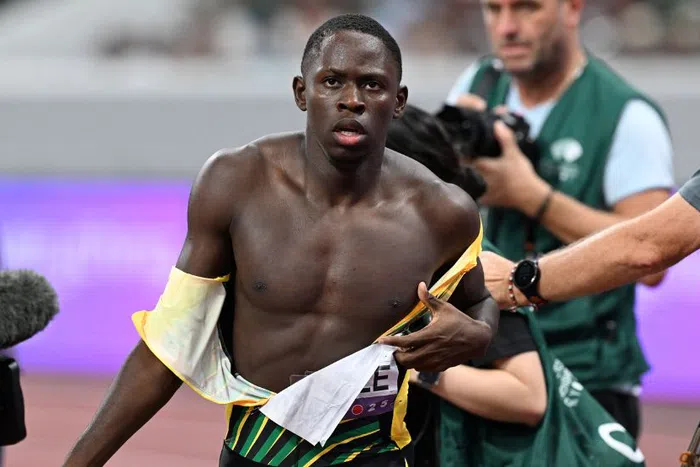
Oblique Seville
Oblique Seville’s sudden absence from Jamaica’s World Relays squad has drawn global attention, especially given his status as one of the most promising sprinters in world athletics.
Early reports triggered speculation across social media, with suggestions ranging from contractual disagreements to financial disputes. However, official communication from Jamaica’s athletics authorities has clarified that the situation is far more practical than controversial.
The explanation behind why Oblique Seville has withdrawn from Jamaica World Relays team explained comes down to travel logistics, scheduling conflicts, and strict international competition timelines.
Also Read: 7 Profitable Business Ideas to Start With 50K in Kenya (2026 Guide)
Rising Expectations Around Oblique Seville in Jamaican Sprinting
Oblique Seville has steadily grown into a key figure in Jamaica’s sprinting system. Known for his explosive acceleration and strong performances in the 100m category, he has become a reliable option in both individual and relay events.
His inclusion in the World Relays squad was seen as a strategic move to strengthen Jamaica’s 4x100m team, which relies heavily on speed consistency and smooth baton transitions.
Seville’s absence therefore carries weight not only in selection terms but also in team balance and race execution strategy.
What Initially Sparked Speculation Around His Withdrawal

When Seville was no longer listed among the traveling athletes, speculation quickly emerged.
Common assumptions included:
- Possible disagreement over travel arrangements
- Financial compensation concerns
- Internal team selection changes
- Last-minute injury issues
However, none of these claims were confirmed by official sources.
Instead, governing bodies stepped in to clarify the situation and prevent misinformation from spreading further.
Official Explanation Behind the Withdrawal Decision
The Jamaica Athletics Administrative Association (JAAA) clarified that there was no dispute between the athlete and the federation.
According to their statement, the withdrawal was based entirely on scheduling and travel constraints rather than any internal conflict.
Key clarifications included:
- No disagreement over funding or ticket costs
- No breakdown in relationship between athlete and federation
- No disciplinary or contractual issues
- Full professional communication between all parties
This shifted the narrative from controversy to logistics.
How Travel Scheduling Created the Main Conflict
At the center of the issue was a strict travel timeline.
Seville had prior obligations requiring him to return to Miami shortly after the relay event window. However, available flight schedules from Botswana did not align with this requirement.
The World Relays competition schedule in Gaborone meant:
- Races were set for early May
- Recovery and departure time was limited
- Flight availability did not match required return timing
Because of this mismatch, participation became logistically impossible without disrupting existing commitments.
Timeline of Events Leading to the Withdrawal
| Stage | Development | Outcome |
|---|---|---|
| Initial selection | Named in Jamaica relay squad | Expected participation |
| Travel coordination | Flight planning initiated | Scheduling issues identified |
| Final review | Conflicts confirmed | Participation risked |
| Official notice | Withdrawal communicated | Exit finalized |
This progression shows that the decision was not sudden but developed through logistical planning discussions.
Impact on Jamaica’s Relay Team Strategy
Seville’s withdrawal naturally affects Jamaica’s relay planning, especially in the 4x100m category where precision matters.
The relay team now faces adjustments in:
- Starting lineup structure
- Baton exchange combinations
- Sprint order configuration
- Depth rotation strategy
Even though Jamaica remains one of the strongest sprint nations globally, elite relay performance depends heavily on consistency and timing between runners.
Why Relay Teams Are Sensitive to Last Minute Changes
Unlike individual sprint races, relay events require synchronized execution.
Key factors include:
- Baton exchange timing within fractions of seconds
- Familiarity between team members
- Consistent practice under race conditions
- Stability in lineup selection
Even a single athlete change can require reworking the entire race strategy.
Comparison of Jamaica Relay Scenarios
| Performance Area | With Oblique Seville | Without Oblique Seville |
|---|---|---|
| Sprint start strength | Very strong | Slightly reduced |
| Baton exchange flow | Highly coordinated | Adjusted combinations |
| Team depth | Elite level | Still competitive |
| Race stability | High consistency | Moderate adjustment phase |
This comparison highlights why Seville’s absence is strategically important but not catastrophic for Jamaica.
Athlete Commitments in Modern Professional Sprinting
Modern elite athletes operate under complex schedules that extend beyond competition alone.
They often balance:
- Sponsorship obligations
- Training camps across countries
- Medical and recovery programs
- Media and promotional duties
These commitments can sometimes overlap with competition schedules, creating unavoidable conflicts.
Seville’s situation reflects this modern reality in professional sprinting.
Jamaica’s Sprint Development System Remains Strong
Jamaica continues to produce world-class sprinters through a structured development system.
The system includes:
- School athletics competitions
- National training programs
- Strong coaching networks
- Continuous talent identification
Because of this system, even when top athletes are unavailable, replacement talent is often ready.
Broader Lessons From the Withdrawal Situation
The explanation behind why Oblique Seville has withdrawn from Jamaica World Relays team explained highlights several broader realities in elite sport.
These include:
- Logistics can influence team selection as much as performance
- International competition requires precise coordination
- Athlete management is increasingly complex
- Communication between federations and athletes is essential
It also shows how quickly misinformation can spread before official clarification is provided.
Future Outlook for Oblique Seville
Despite missing the World Relays, Seville remains a key part of Jamaica’s sprinting future.
Confirmed expectations include:
- Continued involvement in relay pool selections
- Participation in future international championships
- Ongoing focus on individual sprint development
- No reported dispute with governing bodies
His long-term trajectory remains aligned with Jamaica’s elite sprint program.
Also Read: Rio Ferdinand To Open International Doors For Arusha Through AFCON 2027
Final Insight
The full explanation behind why Oblique Seville has withdrawn from Jamaica World Relays team explained is not one of conflict but coordination.
It reflects the demanding nature of modern athletics, where travel schedules, competition timing, and personal commitments must all align perfectly.
In elite sport, even world-class athletes must sometimes step aside not because of performance issues, but because of timing realities beyond the track.

