
Universities Facing Sharpest Funding Cuts as Crisis Deepens in Higher Education

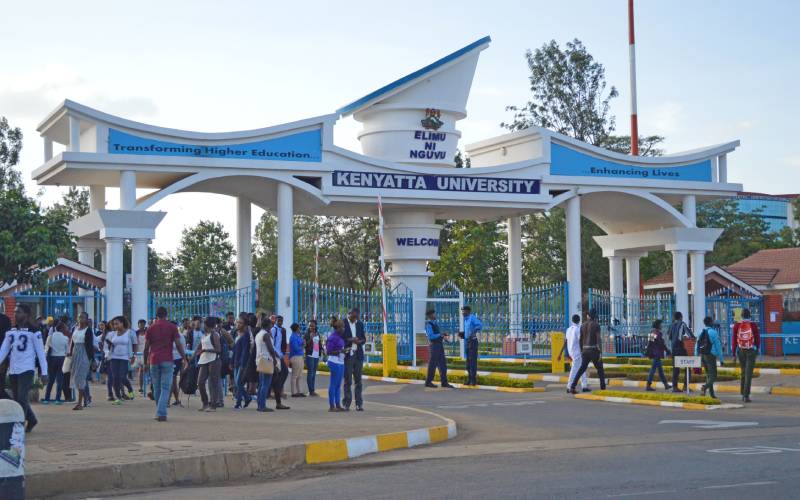
The government has overseen a significant reduction in funding allocated to public universities over the past three financial years, raising concern among education stakeholders about the sustainability of higher education financing in Kenya.
According to data from the Kenya National Bureau of Statistics (KNBS), 24 public universities have collectively lost up to Sh13 billion in allocations between the 2023/2024 and 2025/2026 financial years under the new funding model. The cuts have been accompanied by a notable decline in government-sponsored students, intensifying pressure on institutions already struggling with rising enrolment demands.
The most affected institutions include some of the country’s largest universities, such as the University of Nairobi, Jomo Kenyatta University of Agriculture and Technology (JKUAT), Kenyatta University, and the Technical University of Mombasa. The funding reductions have been severe and consistent, pointing to a systemic shift in how public universities are financed. While the government has defended the new funding framework as more targeted and efficient, critics argue that it has created financial instability across the sector.
Read Also: Top Comoros Official Hospitalized in Nairobi Amid Rising Tensions in Moroni
University Funding Cuts and Shifting Student Sponsorship
One of the most striking examples of the funding decline is the University of Nairobi, where allocations fell from Sh2.44 billion in 2023/2024 to Sh947.8 million in 2024/2025, and further down to Sh534.79 million in 2025/2026. Over the same period, the number of government-sponsored students dropped sharply from 23,666 to 10,859, before slightly recovering in later projections. This reduction has raised concerns about the institution’s ability to maintain academic quality, staffing levels, and essential services.
JKUAT also experienced a steep decline, with funding falling from Sh2.5 billion to Sh474.83 million within the same period. Similarly, the Technical University of Mombasa saw its allocation drop from Sh1.06 billion to just Sh90.9 million, representing one of the most drastic reductions recorded. Other universities such as Kenyatta University, Moi University, and Maseno University also saw their budgets cut from over Sh1 billion to slightly above Sh600 million.
The decline in funding has been closely linked to changes in student sponsorship. Under the new system, government support is increasingly tied to student classification and placement outcomes, rather than blanket funding of institutions. This has resulted in uneven distribution of resources and fluctuating numbers of sponsored students across universities. While some institutions have recorded sharp declines, others have experienced moderate increases despite reduced overall funding.
Rising Enrolment Pressure and Future Sustainability Concerns
The funding cuts come at a time when Kenya’s university system is preparing for a surge in student enrolment. More than 250,000 students are expected to join universities in the upcoming September intake, placing additional strain on already constrained institutions. Stakeholders have raised concerns that reduced government funding could compromise infrastructure development, lecture capacity, research output, and student support services.
At Egerton University, funding declined from Sh1.73 billion in 2023/2024 to Sh628.74 million in 2024/2025, and further to Sh365.24 million in 2025/2026. Despite these cuts, some institutions like Masinde Muliro University recorded an increase in sponsored students, even as funding dropped from Sh1.29 billion to Sh550.79 million. This inconsistency highlights the complexity and unpredictability of the new funding model.
While the Higher Education Loans Board (HELB) continues to provide loans to students in both public and private universities, stakeholders argue that loans alone are not sufficient to address the widening funding gap.
Read Also: Rio Ferdinand To Open International Doors For Arusha Through AFCON 2027
Universities may increasingly be forced to rely on alternative income sources such as partnerships, tuition adjustments, and internal revenue generation, which could shift more financial responsibility to students and families.