Why Wetang’ula, Kenya Kwanza Leaders Want Uhuru to Quit Active Politics

The political landscape in Kenya is witnessing a sharp escalation in tensions as top government officials and the retired presidency clash over the boundaries of post-tenure engagement.
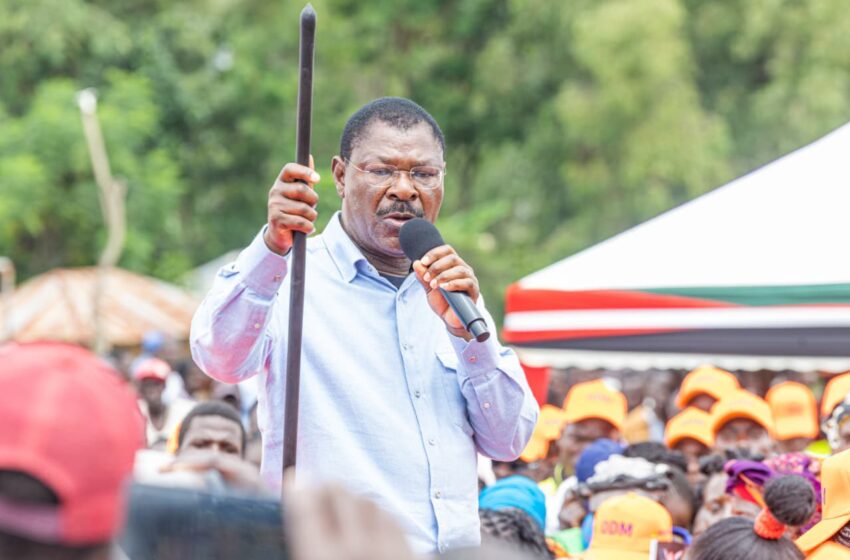
In a series of high-stakes addresses across Busia County, a delegation of leaders led by National Assembly Speaker Moses Wetang’ula sent a blunt message to retired President Uhuru Kenyatta: step back from the political limelight or prepare for a “head-on” confrontation.
The Call for Statesmanlike Silence
Addressing residents at Lunyofu Primary School in Budalang’i, Speaker Wetang’ula articulated a vision of the presidency that extends beyond the term of office. He argued that the role of a former Head of State is to transition from a partisan player to a national arbiter.
“I respect Uhuru as a former president and a leader I have worked with in government, but he should now serve as a beacon of peace, unity and a source of statesmanlike counsel,” Wetang’ula remarked as per The Star.
The Speaker’s critique hinges on the precedent set by Uhuru’s predecessors. Both Daniel arap Moi and Mwai Kibaki largely retreated to private life or ceremonial roles after their terms, providing a buffer that allowed their successors to govern without the shadow of the previous administration.
According to the Speaker, Uhuru’s recent public remarks and his presence in opposition-aligned spaces risk “widening divisions” at a time when the country requires cohesion.
Threats of a Political Response
The rhetoric in Busia was not merely advisory; it carried a distinct edge of warning. Senate Majority Leader Aaron Cheruiyot and several Members of Parliament expressed frustration with what they perceive as Uhuru’s hand in strengthening the opposition.
“We are ready to take you head-on unless you stop criticising President Ruto,” Cheruiyot stated, framing the former president’s actions as an attempt to weaken the current government.
This sentiment was echoed by Navakholo MP Emmanuel Wangwe, who pointed toward the legal frameworks governing retired presidents. Under the Presidential Retirement Benefits Act, a retired president is expected to cease holding office in a political party within six months of retirement to enjoy certain benefits. “You are not special,” Wangwe added. “Just like other retired presidents, follow the law and enjoy your retirement.”
Uhuru’s Defiance: The Right to Political Identity
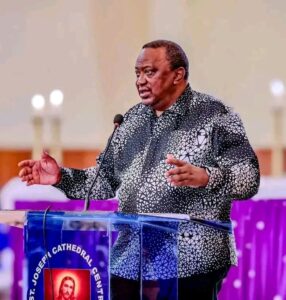
The retired President, however, is not retreating. In a spirited defense delivered via a phone call during the homecoming of Jubilee Secretary General Moitalel Ole Kenta, Uhuru Kenyatta dismissed the notion that his retirement necessitates his silence.
“I am in active politics, but I am not looking for any seat. I have a right to defend my political party and stand with it. I am a member of Jubilee by blood,” Uhuru declared to an applauding crowd.
Uhuru’s argument rests on the constitutional rights afforded to every Kenyan citizen. He challenged the “double standards” he believes are being applied to his retirement, questioning why he is restricted from attending weddings, funerals, or political gatherings. He famously remarked in Kiswahili, “Ati ninyamaze kama bubu na kuna macho naona na nina maskio naskia” (That I should stay quiet like a mute yet I have eyes to see and ears to hear).
To bolster his position, the former President cited international examples, specifically mentioning former U.S. President Barack Obama, who continues to campaign and advocate for the Democratic Party long after leaving the White House.
A Clash of Democratic Interpretations
The standoff between the Kenya Kwanza leadership and the retired President highlights a fundamental tension in Kenyan democracy.
On one side, the current administration views a politically active former president as a destabilizing force that interferes with the mandate of the incumbent.
On the other, Uhuru Kenyatta views his participation as a manifestation of his democratic freedom and a responsibility to his political party.