
Tea Export Strategy: Kenya Unveil Aggressive Plan to Conquer Emerging International Markets

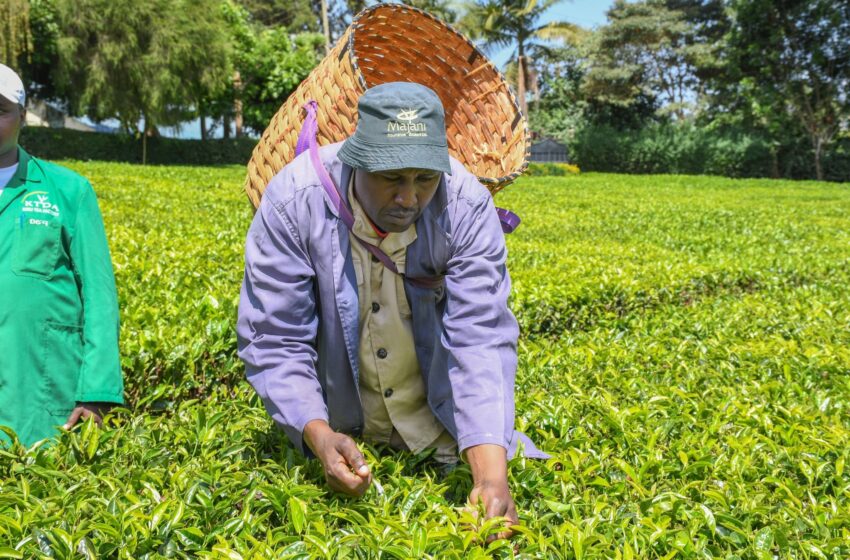
Tea growers across the country are standing at the threshold of a transformative era following the government’s formal rollout of the Tea Levy Regulation 2026.
The legislative milestone aims to establish a self-sustaining funding model designed to safeguard the industry’s future and elevate the Kenyan leaf’s standing in the increasingly crowded global marketplace.
By injecting fresh capital into the sector, the state intends to turn the tide on stagnant growth and ensure the “Green Gold” remains Kenya’s premier foreign exchange earner.
The framework, spearheaded by the Tea Board of Kenya, focuses on a multi-pronged approach to industry health. Funds generated through this levy are earmarked for aggressive international marketing, cutting-edge research, and the modernization of infrastructure that has long needed an upgrade.
Beyond physical assets, the regulation seeks to tighten the grip on the industry’s legal landscape, ensuring that regulatory frameworks are robust enough to handle modern trade complexities while protecting the integrity of the supply chain.
Willy Mutai, the Chief Executive Officer of the Tea Board of Kenya, highlighted that these reforms are not merely administrative but are deeply rooted in the Bottom-Up Economic Transformation Agenda (BETA).
The primary objective remains the enhancement of returns for the small-scale farmer, who forms the backbone of the industry. By stabilizing prices and streamlining the route to market, the government believes the 2026 regulations will provide a safety net that has been missing for decades.
How Will the New Levy Impact Market Competitiveness?

“The regulation is in accordance with section 53(50) of the Tea Act which provides that the tea levy shall be applied on income and price stabilisation of tea growers 50 percent, research at 20 percent while infrastructure development and regulation each get 15 percent, respectively,” the statement read in part as per KNA.
Under the new fiscal structure, a levy of 0.8 percent will be applied to the auction value or the customs value for direct sales, payable at the point of export. To protect local production from external competition, tea imports will now attract a 100 percent import tax. Mutai pointed out that even with this new charge,which translates to roughly Sh. 2.28 per kilogramme of made tea, Kenya remains highly competitive. Other major tea-producing nations like India, Bangladesh, and Sri Lanka maintain significantly higher rates, sometimes reaching up to 5 percent.
A significant portion of this strategy involves diversifying Kenya’s export destinations. The Ministry of Agriculture and Livestock Development has already been tasked with forming a multi-stakeholder committee to lead a marketing offensive into emerging markets. This includes expanding the Kenyan footprint in Russia, China, North America, and across West Africa. The goal is to move away from a reliance on traditional buyers and capture a larger share of the “re-exporting” market.
Can Value Addition Drive Higher Returns for Farmers?
‘Supporting value addition aimed at reducing overreliance on bulk export and increasing proportion packaged branded and speciality tea exports from Kenya,’ the presser read.
The Board is also taking a firm stance against “Greenleaf malpractices” and the counterfeiting of premium Kenyan tea, which have previously diluted the brand’s value. While the transition began on May 1st, the Board has shown flexibility toward the private sector.
Mutai confirmed that the Board is processing exemptions and refunds for exporters who concluded contracts or auction purchases between January and April 30th, 2026. This pragmatism ensures that the industry moves forward into this new era of sustainable funding without penalizing those with existing trade commitments.
By addressing historical challenges through structured research and infrastructure development, Kenya is positioning itself to not just export volume, but to export excellence.
The revitalization of the Tea Board’s regulatory powers will likely serve as the ultimate guardian of quality, ensuring that every gram of tea leaving Kenyan shores meets the high standards expected by global consumers, ultimately putting more money back into the pockets of the local growers.