Senator Veronicah Maina: Why UDA Performed Poorly in Ol Kalou Primaries

If the recent party primaries in Ol Kalou are a barometer for political influence in Nyandarua County, the United Democratic Alliance (UDA) may have cause for concern following a significant turnout disparity compared to the Democracy for Citizens (DCP) party.
Rigathi Gachagua’s led DCP celebrated a robust turnout while UDA faced what many are calling a “Waterloo,” with its winning candidate, Samuel Muchina Nyaga, securing fewer votes than even the third-placed aspirant in the DCP camp.
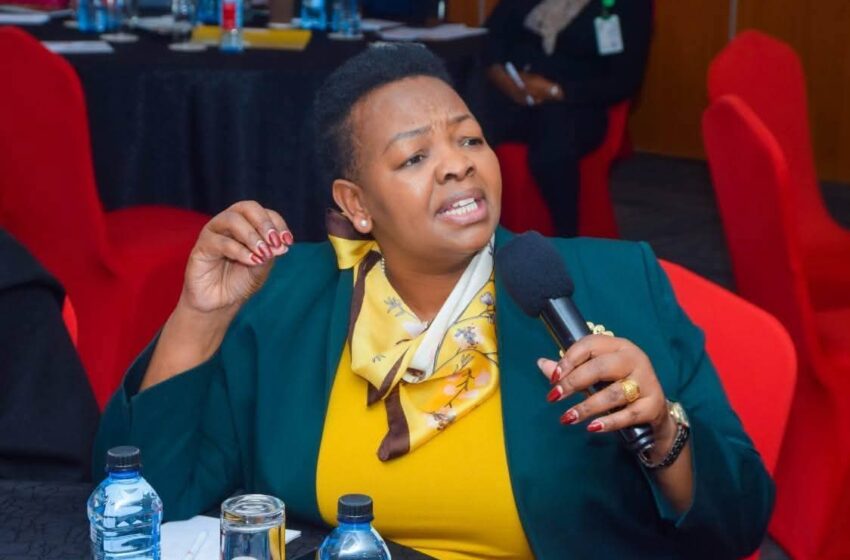
Nominated Senator Veronicah Maina has stepped forward to address the lackluster performance, offering a strategic defense for the ruling party’s underwhelming numbers.
Did the Weekday Schedule Affect Participation?
Senator Maina, the former UDA Secretary General, attributes the low turnout primarily to the scheduling of the polls.
“The UDA party primaries were done on a Friday the community of Ol Kalou; they could not turn up to vote. When you choose a weekday like that, the numbers are affected; the best day to do a party primary is always on a weekend,” she said as per PD Daily.
Maina argued that the residents of Ol Kalou are hardworking people who prioritized their jobs over the ballot on a Friday, leading to a natural dip in participation.
Was the DCP Turnout Inflated by Open Registration?
A more technical point of contention raised by Maina involves the voting eligibility criteria used by the two parties. She criticized the DCP for allegedly abandoning a strict party member register in favor of using Independent Electoral and Boundaries Commission (IEBC) records.
UDA maintains a closed primary system, theoretically restricting voting to registered party members. Maina contends that the DCP allowed any person to walk into polling stations and vote, regardless of party affiliation. This inclusive approach, according to Maina, naturally inflated the DCP’s turnout figures compared to the more regulated and restricted UDA process.
What Do the Numbers Reveal About the Mobilization Gap?
The disparity in the figures is difficult to ignore, highlighting a significant mobilization gap. In the DCP race, Kamau Ngotho emerged victorious with an impressive 12,957 votes. He was followed by Paul Waiganjo with 4,978 votes and Peter Karanja with 3,919 votes.
In contrast, the UDA winner, Samuel Muchina Nyaga, secured only 3,221 votes, narrowly defeating George Wambugu Kanuri, who garnered 3,077 votes. The fact that the DCP’s third-placed candidate outperformed the UDA winner by nearly 700 votes is a data point that has local analysts questioning whether the UDA’s influence in the region is waning or if the logistical hurdles cited by Maina were truly the deciding factor.
What Can Be Expected on July 15?
Despite the current optics, Senator Maina remains dismissive of the DCP’s celebrations, characterizing them as short-lived. She maintains that the primaries are a poor metric for general popularity and that the real test will occur during the official IEBC mini-poll on July 15, 2026.
The upcoming contest will be a high-stakes showdown between DCP’s Kamau Ngotho and UDA’s Samuel Nyaga. With President William Ruto recently backing Nyaga, the UDA is expected to ramp up its machinery to bridge the gap seen in the primaries.
Whether the low UDA turnout was a result of residents being busy with their jobs on a Friday or a genuine shift in the political tide toward Rigathi Gachagua’s new outfit remains to be seen. For now, Ol Kalou stands as a crucial testing ground for party supremacy ahead of the July contest.