
How SHA is Leveraging Artificial Intelligence to Achieve Universal Health Coverage

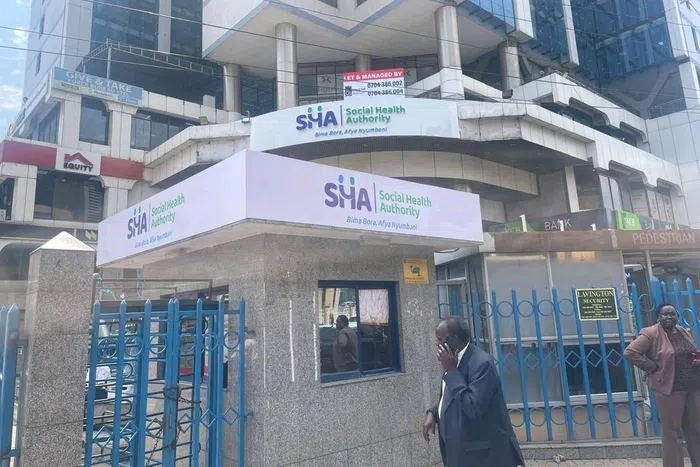
The Social Health Authority (SHA) is currently navigating a pivotal transition in Kenya’s healthcare landscape by leveraging advanced technology to bridge the gap between policy and accessibility.
Central to this evolution is the implementation of an artificial intelligence-based system known as the Means Testing Instrument. This tool is designed to address the long-standing challenges of income estimation, particularly for citizens within the informal sector whose earnings are often non-regular and difficult to track through traditional payroll systems.
How Does Proxy Means Testing Work for Households?
By applying Proxy Means Testing, SHA uses AI to estimate household income based on observable characteristics. This data-driven approach moves away from the rigid structures of the former National Health Insurance Fund (NHIF), which often placed a disproportionate financial burden on low-income earners.
Under the previous NHIF framework, poorer households frequently contributed a higher percentage of their total income compared to wealthier individuals. The AI-driven model aims to correct this inequality by ensuring that the mandatory 2.75 percent contribution is calculated more accurately against a household’s true ability to pay.
The AI system functions as a digital equalizer for the informal sector where documentation is often sparse, allowing the algorithm to process various data points to categorize households into fair payment tiers. SHA reports that the majority of these households currently contribute Sh300 to Sh850 per month, which is a structure intended to maintain the fund’s sustainability while protecting the most vulnerable from financial hardship.
Can Data-Driven Insights Enhance Benefit Packages?
Beyond contribution logic, the government is utilizing utilization data and public participation feedback to expand critical health services. Following directives from the 2025 State of the Nation Address, SHA has significantly enhanced its benefit packages under the Primary Healthcare Fund and the Emergency, Chronic and Critical Illness Fund. These updates are a cornerstone of the broader Universal Health Coverage initiative.
Registered beneficiaries now access free delivery services at Level 2 and Level 3 facilities, with reimbursements set at Sh10,000 for normal deliveries and Sh30,000 for C-sections.
Furthermore, the annual cancer benefit package has been raised from Sh550,000 to Sh800,000 to cover advanced diagnostics like PET scans and specialized therapies such as brachytherapy. Support for chronic conditions has also increased to Sh400,000 per year, reflecting a broader commitment to comprehensive care.
How Is SHA Addressing Concerns of Algorithmic Bias?
While the transition to an AI-based system offers efficiency, it has not been without scrutiny. Investigative reports have raised questions regarding algorithmic bias, suggesting that automated systems might inadvertently overcharge poorer households if the underlying data or poverty classification methods are flawed.
SHA has responded to these concerns by emphasizing that the Means Testing Instrument underwent rigorous validation and was developed in collaboration with multiple institutional partners. The authority maintains that the system is a significant improvement over the manual processes of the past and notes that over half of formally employed members are already seeing lower contribution rates than they did under the old scheme.
What Does the Future Hold for AI in Kenyan Healthcare?
The shift toward AI-managed social health insurance represents a fundamental change in how the state interacts with the health needs of the public. By integrating sophisticated diagnostics and specialized care, such as sickle cell treatments and mental health support, into the standard package, SHA is attempting to build a more inclusive healthcare safety net. As the system matures, the continued refinement of these AI tools will be essential to ensuring that the digital transition translates into tangible medical outcomes for every Kenyan. The authority continues to urge beneficiaries to engage with their communication channels to stay informed about these evolving digital tools and expanded benefits.