
Why Kenya’s Role as Mediator Remains Vital for Stability Amid Sudan Warlord Questions

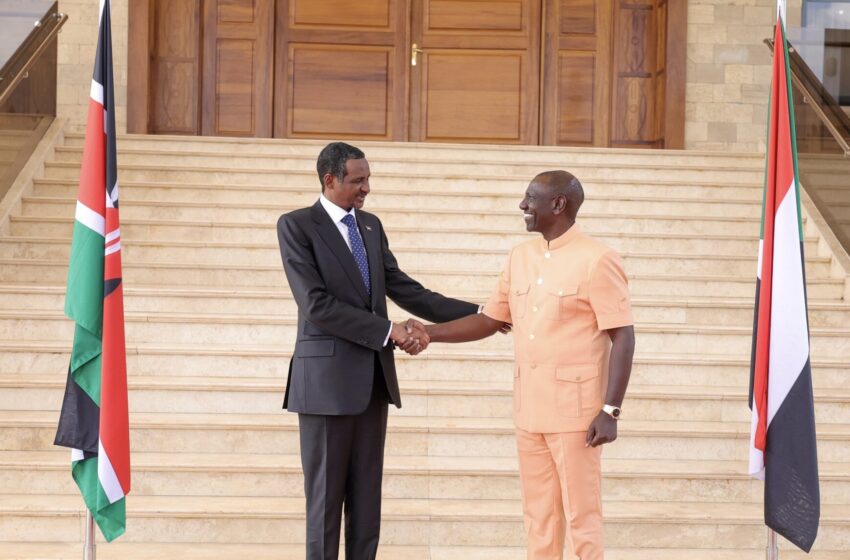
Principal Secretary for Foreign Affairs Korir Sing’oei has addressed the complex intersection of regional peace-building and immigration integrity following reports regarding the issuance of travel documents to individuals from conflict-stricken Sudan.
The discourse centers on whether exceptional humanitarian circumstances can justify the provision of national passports to foreign nationals, particularly those linked to paramilitary organizations like the Rapid Support Forces (RSF).
Despite the Kenyan government maintaining that these actions are rooted in a commitment to regional stability, the controversy highlights a significant tension between diplomatic flexibility and the rule of law.
“I want to speak quite categorically; the first passports are not dished willingly. It is my very strong view that under exceptional circumstances, people in distress may be allowed to travel using our passports. This is not a new thing; this has happened because fleeing conflicts don’t actually have documents,” Sing’oei said on Citizen TV.
Can Humanitarian Aid Justify Bypassing Immigration Law?
The core of the debate rests on the interpretation of “distress.” In conflict zones, formal documentation is often the first casualty of war. Displaced persons frequently flee across borders without the necessary paperwork to facilitate legal transit or participation in peace negotiations. Under such conditions, sovereign nations occasionally exercise discretionary powers to grant travel status to key actors or vulnerable individuals to move mediation efforts forward.
However, when these individuals are associated with groups accused of grave human rights violations, the humanitarian justification faces intense scrutiny. Critics argue that using “distress” as a blanket term for high-ranking members of armed factions undermines the legal framework of the state.
Kenya’s citizenship laws are designed to ensure national security through rigorous vetting, public notification, and residency requirements. Relaxing these standards, even for high-stakes diplomacy, risks creating a precedent where political expediency overrides statutory safeguards.
Does Diplomatic Neutrality Risk Kenya’s International Standing?
Kenya’s role as a mediator in the Sudanese crisis is historically significant. Nairobi has long served as a neutral ground for warring factions to seek consensus, a position that requires a degree of engagement with all parties involved in the theater of war.
Proponents of the government’s stance argue that isolating combatants by denying them travel prevents the very dialogue necessary to end hostilities. If peace requires the physical presence of leaders at a negotiating table, the logistical means to get them there becomes a functional necessity of the diplomatic process.
There is also the matter of international accountability; providing state-backed documentation to individuals under sanction or investigation by global bodies could complicate Kenya’s own standing within the international legal framework.
The integrity of a national passport is not merely a domestic concern but a global one. It represents a state’s guarantee of an individual’s identity to the rest of the world. Any perceived dilution of these standards can have far-reaching consequences for the visa-free privileges and international trust afforded to all Kenyan citizens.
The path forward for Nairobi involves a delicate recalibration. To maintain its status as a trusted regional arbiter, the government must ensure that its humanitarian gestures do not inadvertently offer a cloak of legitimacy to those accused of atrocities.
Transparency in the “exceptional circumstances” cited by the Ministry of Foreign Affairs will be vital in restoring public confidence. This means defining clear, restrictive criteria for when such documents are issued and ensuring that national security vetting remains uncompromised by political objectives.
Ultimately, the Sudan passport saga is a reminder that diplomacy in a volatile region is rarely clean. It requires navigating a landscape of moral ambiguities where the goal of saving lives through peace often clashes with the requirements of domestic law