
Inside UDA Internal Squabbles Over Historical Coastal Land Allocation Injustices

The stability of political alliances in Kenya remains permanently tied to how ruling coalitions navigate deeply entrenched regional grievances.
Despite political parties form fluid national networks to win elections, the underlying structural disparities between regions often create friction. A clear example of this tension is the ongoing debate regarding land ownership in the Coast province and its impact on partners from the Central Kenya region.
Resource distribution and historical injustices are not just talking points; they are foundational issues that shape the country’s legislative and executive priorities. When regional leaders attempt to address local vulnerabilities, their rhetoric often triggers defensive alignments from other powerful voting blocs. This systemic friction reveals why maintaining a cohesive national agenda is an ongoing challenge for any administration.
Historical Land Grievances: The Unresolved Crisis Of The Coastal Strip
The Origins of Coastal Landlessness
Land issues in the Coast province date back to pre-colonial and colonial legal frameworks that dispossessed indigenous populations of their ancestral territory. The 1908 Land Titles Ordinance, implemented by the British colonial administration, required registration of land claims within a strict timeline. This system heavily favored wealthy absentee landlords and foreign traders, leaving a vast majority of the local population as legal squatters on their own land.
Successive post-independence administrations struggled to correct these imbalances. Programs aimed at resettlement often faced criticism for lack of transparency or for disproportionately benefiting politically connected individuals from outside the region. Consequently, the term “historical land injustices” remains a powerful rallying cry that directly influences local voter mobilization during every election cycle.
Why Property Rights Remain Politically Volatile
Public commentary on coastal land distribution is highly sensitive because it directly intersects with identity politics. Advocacy for indigenous land rights can easily be interpreted by external communities as an attempt at regional profiling or economic exclusion. For business investors and residents who moved to the Coast from regions like Central Kenya, any talk of revising land titles creates immediate anxiety regarding property security.
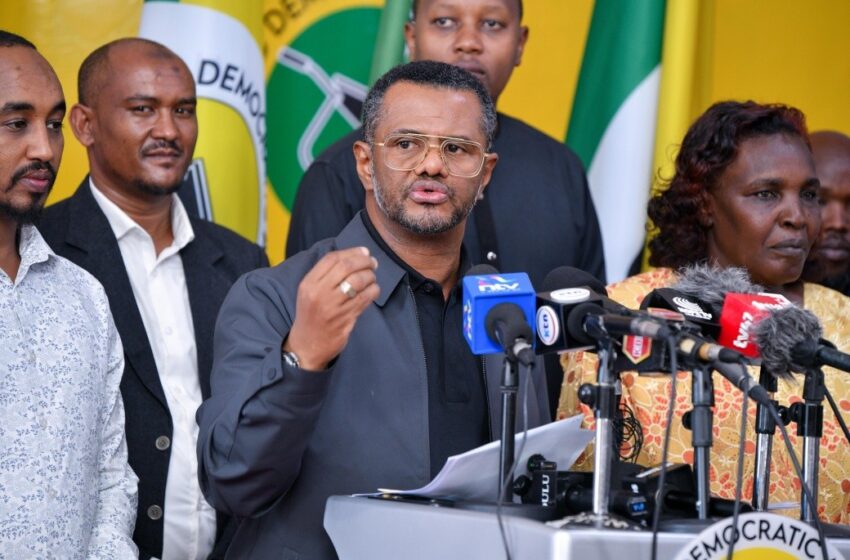
This anxiety explains why statements by United Democratic Alliance (UDA) Secretary General Hassan Omar caused significant alarm. By raising long-standing coastal land grievances during a party meeting, his presentation was perceived by Mt. Kenya leaders as an attempt to alienate their electorate. Even though Omar issued an apology and maintained a firm defense of his intentions, the incident highlighted how quickly historical property issues can strain national political partnerships.
Coalition Governance: Balancing Regional Demands With National Unity
The Mechanical Weakness of Multi-Ethnic Alliances
Kenyan political parties are rarely ideological; instead, they operate as coalitions of regional kingpins who pool their demographic strength to attain power. This structural reality means that internal party management requires constant negotiation between competing regional interests. The administrator of a ruling party must balance the specific demands of one region without alienating the power brokers of another.
| Regional Alliance Pillar | Core Policy Priority | Primary Vulnerability |
| Coast Province Factions | Redress for historical landlessness and equitable port revenue. | Economic marginalization and high rate of squatter displacement. |
| Central Kenya Factions | Equitable revenue allocation based on population size. | Perceived political isolation and threats to diaspora investments. |
| National Coalition Executive | Maintenance of legislative majorities and fiscal stability. | Disruption of governance agendas by competing regional demands. |
When a high-ranking official like the UDA Secretary General focuses heavily on localized grievances, it tests the limits of this delicate balance. Leaders from Central Kenya, including Kirinyaga Governor Anne Waiguru, Naivasha MP Jane Kihara, and Nyeri Woman Representative Rahab Mukami, immediately formed a unified front. Their swift condemnation demonstrated that regional survival instincts will always override party loyalty when a community feels targeted.
The Role of Historical Figures in Modern Alliances
Another recurring source of friction within national coalitions is the continuous invocation of prominent political figures to justify current positions. Partisan exchanges that drag former leaders, such as former President Uhuru Kenyatta, into contemporary disputes often exacerbate existing regional rifts. Central Kenya leaders view these actions as uncalled-for provocations designed to undermine their historical political contributions.
For party administrators, learning to separate structural advocacy from regional baiting is essential for coalition survival. Hassan Omar underscored that his regional engagement aimed to find lasting legal and policy solutions for coastal landlessness rather than stoking ethnic balkanization. However, the severe friction generated by the event shows that in Kenyan politics, the interpretation of a message is often entirely dependent on the regional identity of the listener.
Institutional Pathways To Resolving Structural Injustices
The National Land Commission Framework

To remove land grievances from the volatile arena of partisan political exchanges, Kenya established institutional mechanisms like the National Land Commission (NLC). The 2010 Constitution empowered the NLC to manage public land on behalf of both national and county governments. Crucially, the commission received a mandate to initiate investigations into historical land injustices and recommend appropriate remedies.
Progress has been slow due to complex legal hurdles, funding limitations, and resistance from established property owners. The adjudication of disputed titles requires navigating a maze of colonial-era records and post-independence land allocations. Without fast-tracked legal resolutions, the issue remains unresolved, leaving it open to exploitation by politicians seeking regional support.
The Path Forward for Ruling Alliances
For a ruling alliance to maintain long-term stability, its leadership must pivot away from public rhetoric and focus on concrete policy implementation. Addressing coastal landlessness requires systematic titling programs, fair compensation for historical displacement, and clear protection for legal investments. By routing these sensitive grievances through formal legal channels, coalitions can avoid damaging internal rifts.
The formal apology offered by Hassan Omar to the Central Kenya region served as a temporary relief valve for the current ruling coalition. However, the underlying structural differences between the Coast and Mt. Kenya priorities remain unchanged. Only deep institutional reforms can ensure that regional grievances do not continuously threaten the survival of national political partnerships.