
Teacher Welfare Frameworks: Structural Funding, Mental Health Economics, Administrative Reform

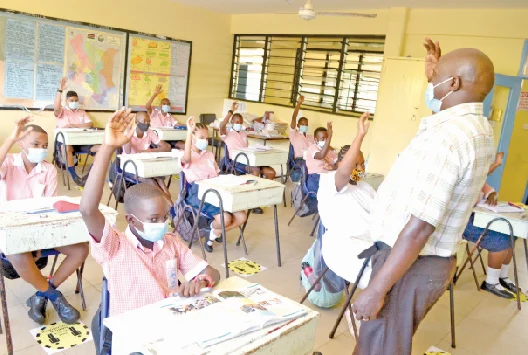
Strategic implementation of nationwide curriculum adjustments demands deep structural stability within human resource pipelines.
Educational institutions globally demonstrate that infrastructural development, including school construction and digital tool integration, fails to produce superior learner outcomes if the instructional workforce operates under systemic occupational distress.
Modern human resource management within public education sectors necessitates balancing physical infrastructure delivery with targeted investments in the financial, psychological, and physical well-being of classroom educators.
Empirical indicators derived from comprehensive institutional evaluations reveal critical vulnerabilities within public education systems. Data from structural workforce surveys demonstrate a stark disconnect between aggressive policy rollouts and the actual operational capacity of teaching personnel. Addressing these systematic inefficiencies requires moving past temporary administrative directives toward long-term fiscal planning, workload optimization, and institutionalized support frameworks.
1. Human Capital Economics: The True Fiscal Cost of Educator Burnout
Occupational exhaustion within large-scale public institutions functions as a hidden economic drain, lowering instructional efficiency and inflating secondary health expenditures. Evaluating public education through the lens of human resource optimization reveals that excessive workloads trigger progressive operational decline. Systemic understaffing leads directly to severe classroom workloads, which generates chronic burnout and ultimately results in heightened attrition alongside atrophied instructional quality. When instructional personnel face a convergence of high learner-to-teacher ratios and extensive administrative obligations, localized job dissatisfaction escalates into systemic institutional risk.
Workplace assessments tracking macro-level data within regional school networks indicate that a high percentage of educators face persistent stress profiles. According to institutional data, approximately 60% of active teaching staff experience chronic occupational burnout. This psychological strain correlates directly with structural imbalances in classroom utilization practices, where educators are routinely deployed across diverse administrative, counseling, and co-curricular functions without corresponding workload adjustments or mental health resources.
Furthermore, severe psychological vulnerabilities emerge when institutional safety nets remain underfunded. Institutional surveys indicate that approximately 12% of teaching personnel under high systemic pressure report experiencing severe emotional distress or suicidal ideation. This severe metric exposes a deep-seated deficiency in peer collaboration networks, workplace mentorship programs, and accessible counseling systems.
Unaddressed occupational exhaustion carries quantifiable fiscal consequences for managing authorities:
- Elevated Absenteeism Rates: Chronic physical and mental fatigue increases reliance on medical leave, disrupting academic calendars and forcing reliance on under-trained auxiliary staff.
- Accelerated Personnel Turnover: Experienced educators exit public structures prematurely, resulting in a loss of institutional knowledge and driving up recruitment and training expenditures.
- Atrophied Instructional Quality: Next-generation teaching personnel demonstrate reduced capacity to implement complex pedagogical models, lowering overall learner performance indicators.
2. Financial Stability Matrix: Mitigating Paycheck-to-Paycheck Vulnerabilities
Sustainable educational outcomes are structurally tied to the economic security of the instructional workforce. When public sector compensation frameworks fall behind macroeconomic cost-of-living shifts, the resulting financial anxiety undermines professional engagement.
|
Financial Vulnerability Indicator |
Prevalence Rate |
Systemic Institutional Implication |
|
Paycheck-to-Paycheck Dependency |
97% of active personnel |
Complete absence of disposable savings; vulnerability to minor economic disruptions. |
|
Emergency Fund Deficiency |
92% of active personnel |
Severe exposure to unbudgeted health or domestic expenditures; high default risks. |
|
Debt Service Incapacity |
88% of active personnel |
Inability to clear existing credit lines while sustaining baseline living standards; high reliance on informal credit. |
|
Acute Financial Distress |
18% of active personnel |
Severe economic insolvency directly impacting classroom performance and professional focus. |
Data collected across diverse educational regions shows that an overwhelming 97% of active teaching professionals subsist entirely on a paycheck-to-paycheck baseline. This absolute reliance on monthly disbursements leaves 92% of the workforce highly vulnerable to unexpected economic shocks, such as family medical emergencies or sudden inflationary spikes in living costs.
When personal liquid reserves are absent, secondary credit crises follow. Approximately 88% of surveyed educators report a total inability to service outstanding debts while simultaneously maintaining standard household expenditures. This structural imbalance forces heavy reliance on high-interest informal credit lines or commercial payday loans, accelerating a cyclical poverty trap. To break this cycle, institutional interventions must pivot from passive salary reviews toward structured wealth management initiatives and proactive career progression tracks.
3. Structural Capital Allocations: Balancing Physical and Human Resource Investments
Public education budgeting often exhibits a historical bias toward physical infrastructure accumulation. While building new educational facilities represents a visible, quantifiable deployment of public funds, overemphasizing capital expenditure while underfunding human capital creates operational bottlenecks. Long-term institutional equilibrium demands a balanced fiscal model where physical asset construction is closely paired with matching human resource allocations.
For example, the recent rapid deployment of 23,000 Grade 9 classrooms designed to anchor Junior Secondary School frameworks represents a substantial expansion of physical institutional assets. However, maximizing the educational utility of these learning spaces requires a concurrent, heavily funded campaign to stabilize the teaching personnel operating inside them. Without specialized capacity building, advanced physical facilities sit under-utilized due to instructional skill gaps.
To address this structural imbalance, current fiscal blueprints require direct funding pools aimed at professional advancement and workload reduction:
- Ksh2 Billion Strategic Allocation: Dedicated exclusively to financing comprehensive career progression models under the Teachers Service Commission. This funding pool targets the formal promotion of 21,383 educators, resolving historical career stagnation and boosting baseline compensation packages.
- Ksh950 Million Continuous Retooling Fund: Explicitly earmarked for instructional capacity building within modern pedagogical frameworks. This fund underwrites large-scale professional training workshops, ensuring that classroom personnel can confidently execute complex curriculum mandates.
- 100,000 Position Recruitment Drive: A multi-year human resource expansion targeting long-standing staffing deficits. Injecting a massive block of new educators directly into public institutions helps lower the excessive individual workloads that fuel the 60% burnout crisis.
4. Multi-Stakeholder Ecosystems: Addressing External Societal Pressures
Classroom instruction does not occur in an isolation chamber. The internal stability of educational institutions is consistently impacted by external societal disruptions that bleed into school environments, adding heavy emotional and administrative burdens to teaching staff. When local communities experience economic fractures or social instability, the resulting disciplinary challenges manifest directly within school boundaries.
Teaching personnel are frequently forced to step outside their primary pedagogical roles to manage rising rates of student unrest, localized substance abuse, and escalating disciplinary breakdowns. Forcing educators to double as security personnel or mental health counselors without formal specialized training significantly accelerates occupational exhaustion. These complex behavioral challenges cannot be resolved through institutional regulations alone.
Reversing disciplinary decay requires a structured, multi-stakeholder framework where parents and surrounding communities actively share institutional accountability:
- Formalized Parental Accountability Frameworks: Creating clear, mandatory channels where guardians reinforce behavioral standards established by school leadership, limiting the disciplinary friction that falls on classroom instructors.
- Integrated Community Support Networks: Partnering with regional healthcare professionals, social workers, and civil society organizations to handle substance abuse interventions outside the school environment, allowing educators to focus on core instructional delivery.
Evidence-Based Policy Adaptation: Committing to continuous data collection to track evolving workforce vulnerabilities, ensuring that future educational guidelines adapt proactively to changing societal demands.

