
Linda Mwananchi Movement Mt Kenya Political Shift Explained


Kenya’s political landscape is entering a new phase of realignment ahead of the 2027 General Election, marked by the emergence of the Linda Mwananchi movement.
What began as a loosely organized opposition gathering has evolved into a structured political mobilisation effort attracting governors, senators, MPs, and civil society actors.
The movement is increasingly positioning itself as a pressure bloc focused on governance accountability, cost of living concerns, and electoral competition against the current administration.
Also Read: Top Comoros Official Hospitalized in Nairobi Amid Rising Tensions in Moroni
What Is the Linda Mwananchi Movement in Kenya Politics
The Linda Mwananchi initiative is widely described as a political mobilisation platform that brings together opposition leaders and reform-minded politicians.
It is associated with a breakaway political alignment involving figures from ODM-linked networks and allied political actors seeking to consolidate support in key regions.
At its core, the movement presents itself as a citizen-focused campaign emphasizing governance reforms, economic relief, and institutional accountability.
Key political positioning of Linda Mwananchi
| Area | Position | Political objective |
|---|---|---|
| Economy | High cost of living criticism | Economic reform |
| Governance | Anti-corruption stance | Accountability pressure |
| Security | Police conduct concerns | Institutional reform |
| Elections | 2027 mobilization | Electoral influence |
This positioning reflects broader opposition strategies ahead of the next general election cycle.
Why Mt Kenya Region Is Central to 2027 Political Strategy
The involvement of Mt Kenya leaders, particularly governors and former ruling coalition figures, has intensified national attention on the movement.
Mt Kenya remains one of the most influential voting blocs in Kenya due to its population size, economic contribution, and historical role in presidential elections.
Political analysts often describe the region as a “kingmaker zone” due to its ability to swing national outcomes.
Mt Kenya political importance factors
| Factor | Influence on elections |
|---|---|
| Population size | High voter weight |
| Economic power | Business influence |
| Historical voting trends | Swing region behavior |
| Urban centers | High turnout potential |
The entry of senior leaders from the region signals a potential shift in political alliances ahead of 2027.
Irungu Kangata Entry and Political Realignment Explained
Murang’a Governor Irungu Kangata’s alignment with the Linda Mwananchi movement has been interpreted as part of a broader political repositioning within Mt Kenya leadership.
His participation highlights growing debate within regional politics regarding economic conditions, governance direction, and party loyalty.
Kangata’s messaging reflects concerns over:
- Cost of living pressures
- Business environment challenges
- Public service delivery gaps
- Youth unemployment
His entry strengthens the perception that political alliances in Kenya are becoming more fluid ahead of the next election cycle.
ODM Linked Networks and Opposition Coalition Dynamics
Although Linda Mwananchi is not formally structured as a political party, it draws influence from ODM aligned political networks and allied reform groups.
The movement reflects a broader trend in Kenyan politics where coalitions form around issues rather than strict party structures.
This allows flexibility in:
- Cross party cooperation
- Regional alliances
- Issue based campaigns
- Electoral negotiation strategies
Such fluidity is increasingly common in multiparty democracies during pre election cycles.
Economic Messaging at the Centre of Political Mobilisation
One of the strongest themes within the Linda Mwananchi movement is economic dissatisfaction.
Speakers across rallies have consistently focused on:
- Rising taxation levels
- Cost of basic commodities
- Business environment constraints
- Youth unemployment
These issues resonate strongly with urban and rural voters facing economic pressure.
Key economic concerns raised in political discourse
| Issue | Public impact | Political response |
|---|---|---|
| Inflation | Reduced purchasing power | Policy criticism |
| Taxes | Lower disposable income | Reform calls |
| Unemployment | Youth frustration | Job creation promises |
| Business closures | Economic slowdown | Regulatory critique |
Economic messaging is expected to remain central in the 2027 campaign cycle.
Role of Youth and Urban Voters in 2027 Elections
Youth voters represent a significant portion of Kenya’s electorate and are increasingly politically active.
Many political movements, including Linda Mwananchi, are targeting young voters through messaging focused on employment, cost of living, and governance accountability.
Urban centres such as Nairobi, Mombasa, and Kisumu are key battlegrounds due to:
- High population density
- Diverse voter demographics
- Economic sensitivity
- Rapid information flow
Governance Criticism and Policy Debate in Kenya Politics
The movement has also focused on government policy critique, particularly around health reforms and housing programmes.
Critics argue that some reforms are not fully aligned with immediate citizen needs, particularly in areas of affordability and service delivery.
This debate reflects a broader tension in governance between:
- Long term structural reforms
- Short term economic relief
- Fiscal constraints
- Public expectations
Such policy debates often shape electoral narratives in Kenya.
Security Concerns and Political Rally Environment
Political gatherings in Kenya often occur within highly sensitive security environments.
Reports of disruptions during rallies highlight ongoing concerns around political tensions and public order management.
Security agencies typically play a central role in:
- Crowd control
- Event protection
- Intelligence monitoring
- Conflict prevention
These dynamics underscore the importance of stability in electoral mobilisation activities.
National Political Realignment Ahead of 2027 Elections
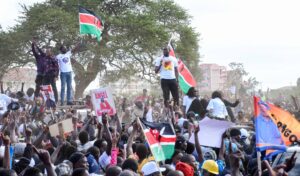
Kenya’s political environment is currently undergoing significant realignment.
Key trends include:
- Formation of issue based coalitions
- Shifting regional alliances
- Leadership repositioning
- Increased voter engagement
The Linda Mwananchi movement is part of this broader restructuring process.
Emerging 2027 political trends
| Trend | Description |
|---|---|
| Coalition fluidity | Shifting alliances |
| Economic voting | Cost of living focus |
| Youth mobilisation | Digital campaigning |
| Regional bargaining | Bloc politics |
These trends are likely to define the upcoming election cycle.
Role of Opposition Strategy in Kenya Electoral Politics
Opposition groups often use mobilisation platforms to consolidate voter sentiment and coordinate campaign messaging.
Linda Mwananchi represents one such platform focusing on:
- Voter turnout mobilisation
- Political messaging coordination
- Policy critique alignment
- Coalition building
This approach reflects modern electoral strategy in competitive democracies.
Kenya Linda Mwananchi Movement and 2027 Political Outlook
The Linda Mwananchi movement illustrates the evolving nature of Kenyan politics as the country moves closer to the 2027 General Election.
Driven by economic concerns, governance debates, and regional realignment, the movement is shaping early political narratives across key voting blocs.
Also Read: Rio Ferdinand To Open International Doors For Arusha Through AFCON 2027
While still fluid in structure, its influence highlights how coalition politics, voter sentiment, and regional leadership dynamics are converging in Kenya’s pre election landscape.
As political activity intensifies, the movement will likely remain a key reference point in discussions around opposition strategy, governance accountability, and electoral competition.

