
What Wealth Declaration Demand by David Maraga Means for Kenya 2027 Elections

Over the past few election cycles in Kenya, questions about political integrity, corruption, and public accountability have increasingly shaped national conversations around leadership.
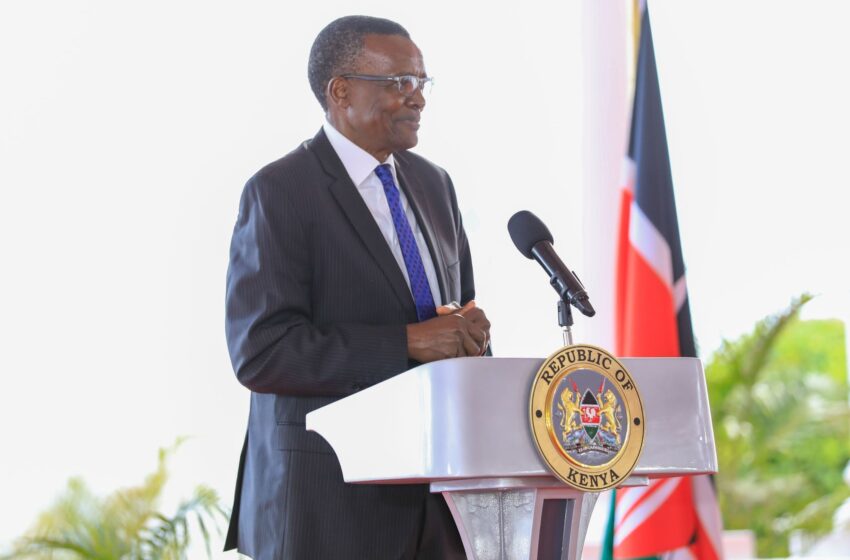
The latest contribution to this debate comes from former Chief Justice and presidential hopeful David Maraga, who has challenged all individuals seeking the presidency in 2027 to publicly declare their wealth and explain how it was acquired.
His proposal has reignited a long-standing discussion in Kenya: should wealth transparency be a legal requirement for top political office, or should it remain a voluntary ethical practice?
Kenya Frontline breaks down the meaning of wealth declaration, why it matters in governance, how it connects to corruption concerns, and what it could mean for Kenya’s political future.
Also Read: Top Comoros Official Hospitalized in Nairobi Amid Rising Tensions in Moroni
Understanding Wealth Declaration in Political Leadership
Wealth declaration refers to the public disclosure of a leader’s financial assets, income sources, and liabilities.
In many democratic systems, it is used as a tool to:
-
Promote transparency in governance
-
Reduce corruption risks
-
Build public trust
-
Allow voters to assess integrity
In Kenya, wealth declaration already exists in limited forms under ethics and anti-corruption frameworks. However, it is often not fully public, and enforcement has been inconsistent.
Maraga’s proposal pushes this idea further by suggesting full public disclosure for presidential aspirants, not just private declarations to oversight bodies.
Why Wealth Declaration Has Become a National Debate
Kenya continues to face persistent concerns about corruption, public debt, and misuse of public resources. These issues have made citizens more demanding of accountability from political leaders.
Calls for transparency often increase during election cycles when voters evaluate candidates’ credibility and integrity.
Key public concerns include:
-
Rising cost of living
-
Public debt pressure
-
Allegations of mismanagement in state institutions
-
Limited transparency in political financing
Within this context, wealth declaration is seen by some analysts as a potential trust-building mechanism between leaders and citizens.
David Maraga Position on Transparency and Leadership Ethics
David Maraga has positioned himself as a strong advocate for governance reforms, particularly around rule of law and accountability.
His argument is straightforward: anyone seeking public office should be willing to demonstrate how they acquired their wealth.
According to his position, transparency should not be optional for presidential candidates but a baseline requirement for leadership legitimacy.
He has also indicated willingness to disclose his own financial status, framing it as a personal commitment to ethical leadership.
Why Wealth Transparency Matters in Elections
Wealth transparency plays a significant role in democratic systems because it helps voters make informed decisions.
When citizens understand a candidate’s financial background, they can better evaluate:
-
Potential conflicts of interest
-
Risk of corruption or misuse of office
-
Consistency between public service and personal wealth
-
Accountability in leadership behavior
Key Governance Benefits of Wealth Declaration
| Benefit Area | Impact on Governance |
|---|---|
| Anti-corruption | Reduces hidden financial influence |
| Public trust | Strengthens confidence in leaders |
| Electoral fairness | Enables informed voting decisions |
| Accountability | Encourages ethical leadership behavior |
| Policy integrity | Reduces influence of illicit wealth |
How Wealth Declaration Relates to Corruption Control
Corruption remains one of the most discussed governance challenges in Kenya.
Wealth declaration is often proposed as one of several tools that can help reduce corruption risks by increasing visibility of financial interests.
However, experts note that declaration alone is not enough unless combined with:
-
Strong enforcement institutions
-
Independent audits
-
Political financing regulation
-
Judicial accountability systems
Without enforcement, wealth disclosure can become symbolic rather than transformative.
International Practices on Asset Disclosure
Many countries require some level of asset declaration for public officials, especially those in executive positions.
While systems vary, common approaches include:
-
Confidential submission to ethics commissions
-
Public disclosure for top leaders
-
Periodic updates during tenure
-
Sanctions for false declarations
Comparative Overview
| Country | Requirement Type | Public Access |
|---|---|---|
| United States | Disclosure for elected officials | Partially public |
| United Kingdom | Conflict of interest register | Public |
| South Africa | Parliamentary disclosures | Public |
| Kenya | Ethics declarations system | Limited public access |
This comparison shows that Kenya already has structures in place, but the level of public accessibility is more restricted than in some democracies.
Challenges of Full Wealth Disclosure in Kenya
While the proposal has strong support among anti-corruption advocates, it also raises practical and legal questions.
Some of the key challenges include:
Privacy Concerns
Candidates may argue that full public disclosure violates personal privacy rights, especially regarding family wealth.
Verification Difficulties
Without strong auditing systems, verifying declared assets can be difficult.
Political Weaponization
Wealth information could be used for political attacks rather than accountability.
Informal Economy Complexity
In economies where wealth may come from informal sources, documentation can be difficult to establish.
Political Financing and Hidden Influence
One of the key motivations behind wealth declaration proposals is the issue of political financing.
Campaigns often require significant financial resources, raising concerns about:
-
Donor influence
-
Hidden sponsorships
-
Post-election obligations to financiers
Wealth transparency could help identify whether candidates rely heavily on unexplained or sudden wealth accumulation before elections.
Youth, Trust, and Political Accountability
Kenya has a young population that is increasingly vocal on governance issues, especially through social media platforms.
For many young voters, transparency is not just a political demand but a trust requirement.
Issues such as unemployment, cost of living, and economic inequality have increased pressure on leaders to demonstrate integrity before assuming office.
Wealth declaration is therefore seen by some youth groups as a way to “reset trust” in leadership.
Read Also: Rio Ferdinand To Open International Doors For Arusha Through AFCON 2027
Could Wealth Declaration Improve Governance?
The effectiveness of wealth declaration depends on how it is implemented.
If applied transparently and consistently, it could:
-
Increase voter confidence
-
Reduce unexplained enrichment in politics
-
Strengthen institutions
-
Encourage ethical leadership culture
However, if poorly implemented, it risks becoming:
-
A symbolic political gesture
-
A tool for propaganda
-
A selective enforcement mechanism
The Broader Reform Conversation in Kenya
The proposal by David Maraga fits into a wider governance reform discussion in Kenya, which includes:
-
Judicial independence
-
Police accountability
-
Public debt management
-
Electoral reforms
-
Anti-corruption enforcement
These reforms are interconnected, meaning wealth transparency alone cannot solve systemic governance challenges.
Instead, it would function as part of a broader institutional strengthening agenda.
What This Means for the 2027 Election
As Kenya moves closer to the 2027 general election cycle, governance and accountability themes are likely to dominate political discourse.
If adopted seriously, wealth declaration debates could:
-
Shape candidate selection criteria
-
Influence party manifestos
-
Increase scrutiny of aspirants
-
Redefine leadership expectations
Candidates may increasingly be required to justify not only their policies but also their financial histories.
Key Takeaways
Wealth declaration has re-emerged as a key governance topic in Kenya’s political landscape, driven by concerns over corruption, accountability, and public trust.
The proposal advanced by David Maraga reflects a growing demand for transparency in leadership, especially among voters who want clearer standards for those seeking high office.
While implementation challenges remain, the debate itself signals an important shift in how Kenyans evaluate leadership: not only by promises made, but also by integrity demonstrated before power is granted.
As the 2027 election approaches, wealth transparency is likely to remain a central issue shaping conversations about Kenya’s political future.

