How NTSA Licensing Suspension Is Changing Kenya Public Transport System


Kenya’s public transport sector is entering a major regulatory reset after the National Transport and Safety Authority introduced a nationwide pause on new licensing activities for operators.
The decision affects how new matatu Sacco groups, transport companies, and route expansions will be approved over the next one to two years.
Beyond administrative policy, the move signals a deeper restructuring of Kenya’s road safety systems, compliance enforcement, and route management framework.
To commuters, investors, and operators, this is not just a technical rule change but it is a shift that may redefine how public transport works across major towns and counties.
Also Read: Top Comoros Official Hospitalized in Nairobi Amid Rising Tensions in Moroni
Why NTSA has paused new transport licensing in Kenya
The regulator has pointed to long standing structural challenges in the public service vehicle sector.
These include weak compliance with safety standards, rising informal operators, and inconsistent route management across counties.
Key policy concerns behind the decision
- Increasing presence of unregulated transport operators
- Weak enforcement of safety and licensing rules
- Unstable and overlapping matatu routes in urban areas
- Rising road safety risks and accident exposure
- Market distortion affecting licensed operators
NTSA has framed the pause as a correction phase aimed at restoring order before new entrants are allowed into the system.
What the licensing freeze covers in Kenya public transport sector
The restrictions are not uniform. They affect different parts of the transport system for different durations.
NTSA suspension framework overview
| Area affected | What is restricted | Duration |
|---|---|---|
| New PSV operator licensing | No new Saccos or companies approved | 24 months |
| New route approvals | No new routes or extensions | 12 months |
| Route modifications | No changes to existing routes or stages | 12 months |
This means expansion in the sector will be heavily controlled until further review is completed.
How this affects matatu Saccos and transport investors
For existing operators, day to day operations continue, but growth opportunities will be limited.
New investors hoping to enter the sector will face a waiting period that could stretch up to two years.
This creates a temporary market environment where competition is frozen at current levels.
Sector impact breakdown
| Stakeholder group | Short term impact | Medium term impact |
|---|---|---|
| Matatu Saccos | No expansion into new routes | Stability in existing routes |
| New investors | Entry blocked | Delayed market entry |
| Commuters | Limited route changes | Potential service standard improvements |
| Counties | Route planning restrictions | Greater coordination with NTSA |
Road safety reforms driving the policy shift
A major justification for the pause is road safety improvement.
Authorities argue that uncontrolled entry into the sector has contributed to safety risks and unreliable transport services.
The regulator plans to use this period to strengthen enforcement systems and improve oversight tools.
Planned reforms during the freeze period
- Comprehensive audit of PSV operators
- Review of route licensing and allocation system
- Strengthening digital transport management systems
- Closer coordination with county governments
- Crackdown on illegal transport operators
These reforms aim to create a more structured and predictable transport ecosystem.
The issue of illegal operators and market disruption
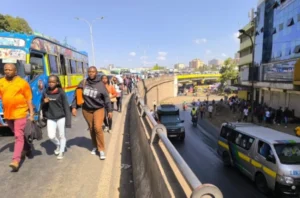
One of the most significant challenges highlighted is the rise of informal transport operators.
These operators often bypass regulatory requirements, creating price undercutting and safety concerns.
Licensed operators argue that this has distorted the market and reduced profitability in certain routes.
The pause is expected to give regulators time to restore order before allowing further expansion.
Impact on urban mobility and commuters
For passengers, the changes may not be immediately visible, but long term effects could be significant.
In the short term, routes will remain stable, meaning fewer sudden changes in stages or pick up points.
However, reduced flexibility in route adjustments may slow down innovation in urban transport systems.
Why this matters for Kenyan cities
Kenya’s urban transport system is highly dependent on matatus, especially in Nairobi, Mombasa, Kisumu, and Nakuru.
Route planning and licensing directly influence congestion, pricing, and accessibility.
A more controlled system could improve predictability, but it may also slow down expansion into growing residential zones.
Also Read: Rio Ferdinand To Open International Doors For Arusha Through AFCON 2027
Will athletes and public figures be affected
While this policy does not target individuals, it indirectly affects mobility infrastructure in sports and public events.
For example, improved regulation could impact transport logistics for major stadium events and athlete mobility.
Notably, improved road safety systems are expected to support smoother travel conditions for major sports figures, including elite Kenyan athletes who rely on reliable transport infrastructure during national and international engagements.
Economic implications of the transport freeze
The transport sector contributes significantly to Kenya’s informal economy.
Restricting entry and route expansion may have both positive and negative effects.
Economic tradeoffs
- Short term slowdown in transport investment
- Reduced competition among new entrants
- Potential improvement in service quality
- Stabilization of fare structures in some routes
The outcome will depend on how efficiently reforms are implemented during the freeze period.
Long term goal of NTSA reforms
The broader objective is not restriction but restructuring.
Authorities aim to build a transport system where:
- Routes are clearly defined
- Operators comply fully with safety standards
- Digital systems manage licensing and monitoring
- Illegal operators are eliminated or formalized
If successful, the reforms could modernize Kenya’s public transport network.
What happens after the 24 month period
Once the review period ends, NTSA is expected to reopen licensing under stricter conditions.
This may include:
- Higher compliance thresholds
- Digital verification of operators
- More structured route allocation systems
- Enhanced safety audits before approval
The reopening phase is likely to be more controlled than the current system.
Final outlook on Kenya transport sector reforms
The suspension of new PSV licensing marks a turning point in Kenya’s transport governance.
While it temporarily slows expansion, it signals a push toward long term stability, safety, and modernization.
For operators, investors, and commuters, the next two years will determine how Kenya reshapes one of its most important public service sectors.