
Kenya Coffee Farmers Explain Why Bigger Prices Alone Are Not Enough

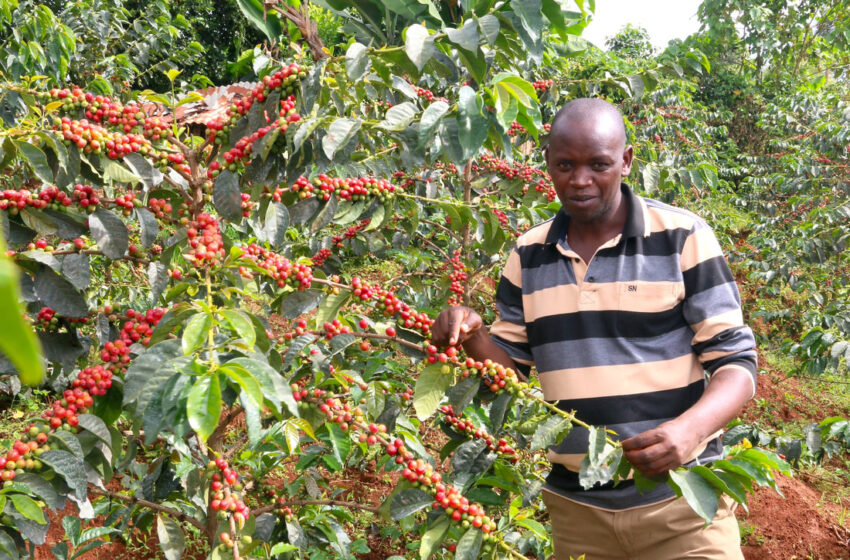
Image/ The Coffee Ledger
Every harvest season, Joseph Kamau adheres to a steadfast routine in his rural village in Kirimukuyu Location, Nyeri County. He wakes before sunrise, walks through rows of coffee trees that his father planted decades ago, and carefully picks ripe cherries that will eventually make their way to markets thousands of kilometers away. Months later, after the crop has been processed and sold, he receives a lump-sum payment that helps him settle school fees, repay loans, and make improvements around his home.
That annual payout is more than just income. It is the financial anchor his family plans around. A single payment allows him to budget for major expenses that would be difficult to manage if the money arrived in small portions spread throughout the year. Many of his neighbors follow the same pattern, treating coffee season as the moment when long-postponed plans finally become possible.
Those realities explain why many coffee farmers have reacted cautiously to proposed changes in payment structures, even as they welcome promises of better prices. Higher earnings sound attractive, but growers argue that the timing and method of payment can be just as important as the amount itself. Their concerns reveal that reviving Kenya’s coffee sector will require more than ambitious targets or optimistic forecasts.
Recent promises of significantly higher returns per kilogram have generated optimism across the sector. On paper, the prospect of farmers earning substantially more for their harvest appears like the breakthrough many have waited years to see.
Yet conversations in coffee-growing communities reveal a more complicated reality. Many growers insist that higher prices alone will not solve the problems facing the industry. In fact, some fear that changing long-established payment systems could leave them financially worse off despite earning more per kilogram.
That tension highlights a broader lesson about agricultural reform. Success depends not only on how much farmers earn but also on how and when they receive those earnings.
Also Read: How to Check Car Registration in Kenya Online Using NTSA And eCitizen
Coffee Built Wealth Across Rural Kenya
Few crops have shaped Kenya’s rural economy as profoundly as coffee.
Entire communities were built around cooperative societies that collected cherries, processed them, and marketed Kenyan beans to buyers around the world. Seasonal coffee payments funded school fees, paid medical bills, financed home construction, and enabled families to invest in their farms.
Many of today’s successful professionals trace their education to income generated from coffee bushes planted decades earlier by parents and grandparents.
The crop became more than an export. It became a financial lifeline for thousands of households.
Years of Challenges Changed Farmer Confidence
Coffee’s fortunes gradually shifted.
Global market fluctuations, increasing production costs, delayed payments, governance concerns within some cooperative societies, and competition from alternative land uses discouraged many producers.
Urban expansion swallowed coffee farms near major towns.
Younger generations looked elsewhere for employment.
Some farmers uprooted coffee trees altogether, believing other ventures offered faster or more predictable returns.
Those experiences continue to influence how growers evaluate new reform proposals today.
Bigger Prices Sound Attractive but Timing Matters
Improving farm-gate prices remains one of the government’s most important objectives.
Higher returns could encourage investment, attract younger farmers, and increase production across the country.
Many growers welcome those ambitions.
Resistance emerges, however, when discussions move beyond price and into payment structures.
Farmers argue that receiving money quickly is not always better if the total amount arrives in smaller installments that complicate long-term planning.
For many households, timing carries almost as much value as the payment itself.
Why Farmers Value Seasonal Payments
| Household Need | How Seasonal Payments Help |
|---|---|
| School fees | Large lump sums cover annual costs |
| Loan repayments | Easier settlement of outstanding balances |
| Farm improvements | Enables investment in equipment and inputs |
| Home construction | Supports major one-time expenses |
| Family emergencies | Creates larger financial reserves |
Coffee Income Supports Annual Planning
Unlike salaried employees who receive monthly wages, coffee farmers often organize their finances around harvest cycles.
Many expect one significant payment after coffee has been processed and marketed.
That income arrives with enough scale to meet obligations requiring substantial capital.
Breaking payments into smaller amounts may improve short-term cash flow, but some farmers worry it could reduce their ability to manage annual expenses efficiently.
Those concerns explain why proposals intended to help producers have instead generated skepticism.
Also Read: Ferdinand Omanyala Net Worth in 2026: Age, Wife, Cars, Height, Tribe, Job & Career Explained
Trust in Cooperative Systems Remains Strong
Cooperative societies continue playing an important role in many coffee-growing areas.
Beyond collecting produce, they provide technical advice, facilitate processing, coordinate marketing, and in some cases extend credit or agricultural support.
Generations of farmers have developed routines around those institutions.
Changes affecting payment channels or settlement structures therefore raise understandable questions about continuity and reliability.
Many producers are not necessarily rejecting modernization.
They simply want reassurance that reforms will preserve the financial stability they currently rely upon.
Rising Costs Continue to Eat Into Profits
Selling coffee at a higher price does not automatically translate into higher profits.
Production costs have risen steadily over recent years.
Farmers spend considerable amounts on fertilizers, pesticides, fungicides, labor, transport, and maintenance.
Some growers also express concern about inconsistent quality among agricultural chemicals available in local markets.
Poor-performing inputs increase costs while reducing yields, squeezing margins despite better selling prices.
Addressing those issues could significantly improve profitability.
Costs Farmers Frequently Mention
| Expense | Impact |
|---|---|
| Fertilizers | Raises production costs |
| Crop protection chemicals | Major recurring expenditure |
| Farm labor | Increases harvesting expenses |
| Transport | Reduces net income |
| Equipment maintenance | Requires ongoing investment |
Productivity Matters as Much as Price
Experts often note that increasing yields can transform household incomes even without dramatic market changes.
Healthier seedlings, better pruning techniques, improved irrigation, disease management, and access to extension services all contribute to stronger harvests.
Producing more coffee from the same acreage spreads fixed costs over larger volumes, improving profitability.
Technology therefore complements pricing reforms rather than replacing them.
Kenya Premium Reputation Offers Opportunity
Kenyan coffee continues to enjoy strong recognition among specialty buyers worldwide.
Distinctive flavor profiles and careful processing have helped maintain demand despite declining production volumes.
Expanding access to premium markets could improve returns if quality standards remain high.
Value addition within Kenya may also create new opportunities through roasting, branding, packaging, and direct marketing.
Capturing more stages of the value chain allows producing countries to retain greater economic benefits.
Younger Farmers Need More Than Promises
Reviving the industry requires convincing younger generations that coffee offers a sustainable future.
Many young landowners compare coffee with dairy farming, horticulture, real estate, or non-agricultural employment before deciding how to use family land.
Reliable profitability, transparent governance, access to finance, and predictable payments influence those decisions.
Long-term confidence cannot be built on price announcements alone.
It requires consistent policies and practical support.
Building a Sustainable Coffee Industry
| Priority | Expected Benefit |
|---|---|
| Better seedlings | Higher productivity |
| Affordable farm inputs | Improved profit margins |
| Transparent marketing | Greater farmer confidence |
| Stable payment systems | Easier household planning |
| Export market expansion | Stronger long-term demand |
Dialogue May Be the Missing Ingredient
Agricultural reforms succeed most effectively when farmers participate in shaping them.
People working the land understand seasonal realities that may not always appear in policy documents or boardroom presentations.
Consultation creates opportunities to identify unintended consequences before implementation.
Compromise often produces solutions balancing efficiency with local experience.
Listening carefully to producers can strengthen reforms rather than delay them.
Reviving Coffee Means Rebuilding Confidence
Kenya has set ambitious goals for increasing coffee production over the coming years.
Achieving those targets will require farmers to plant more trees, invest in better practices, and remain committed to the crop despite alternative opportunities.
Such decisions depend heavily on confidence.
Confidence in prices.
Confidence in markets.
Confidence in institutions.
Confidence in payment systems.
Without that trust, even well-intentioned reforms may struggle to achieve their objectives.
Also Read: Explainer: Kenya Purple Tea Launch in France and Its Impact on Farmers Income
Beyond Bigger Prices
The debate unfolding across coffee-growing regions demonstrates that successful agricultural policy cannot be measured solely by the headline price offered for a kilogram of produce. Farmers evaluate the entire economic journey, from purchasing inputs and maintaining fields to receiving payments that sustain their families and finance future harvests.
Many growers welcome efforts to increase earnings and strengthen Kenya’s position in global coffee markets. At the same time, they want reforms that respect the financial rhythms around which rural households have planned their lives for generations.
Kenya’s coffee revival may ultimately depend less on promises of higher prices and more on creating a system that farmers trust, understand, and believe will leave them genuinely better off. If policymakers and producers can reach that common ground, the sector could once again become one of the country’s strongest engines of rural prosperity and export growth.

