
Kenya Germany Trade Partnership Boosts Exports Investment Jobs Growth

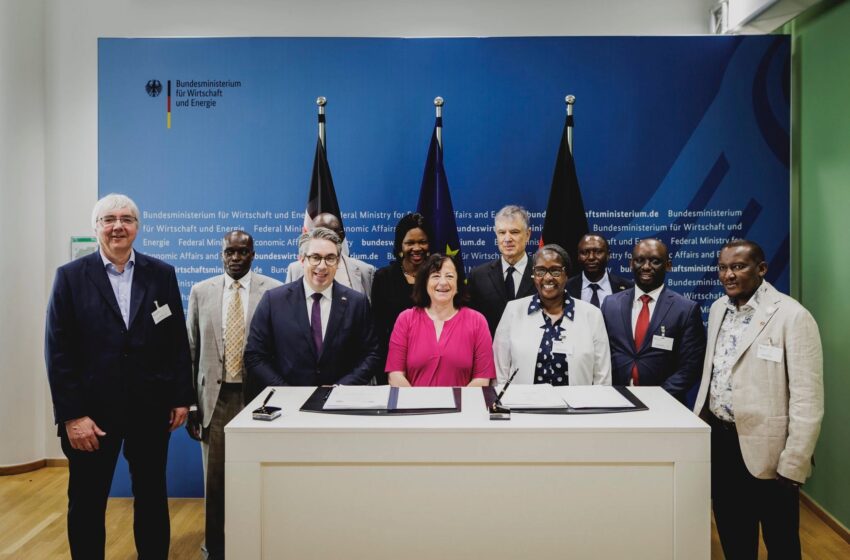
Deutsch-Kenianischer Wirtschaftstag in Berlin, 24.06.2026.
Kenya’s growing trade relationship with Germany is emerging as one of the country’s most important economic success stories in Europe. New figures showing that exports to Germany have climbed from roughly KSh26.2 billion in 2021 to KSh45.4 billion in 2025 underline not only rising demand for Kenyan products but also a broader shift toward investment-led cooperation between the two countries.
The momentum comes as leaders from Nairobi and Berlin pursue agreements covering renewable energy, manufacturing, digital innovation, climate-smart agriculture and skills development. Together, these initiatives could shape Kenya’s long-term economic trajectory far beyond the latest export statistics.
Why are Kenya exports to Germany increasing
Several factors have contributed to the rapid growth in Kenyan exports to Germany.
Demand for high-quality horticultural products and cut flowers remains strong in European markets, while Kenyan coffee continues to enjoy an established reputation among international buyers. At the same time, sustained diplomatic engagement and business partnerships have encouraged deeper commercial links between companies in both countries.
Improved logistics, trade promotion initiatives and investment discussions have also helped create confidence among exporters looking to expand into Europe.
Kenya Germany trade growth at a glance
| Indicator | 2021 | 2025 |
|---|---|---|
| Estimated exports | KSh26.2 billion | KSh45.4 billion |
| Value in US dollars | USD 203 million | USD 352 million |
| Growth over four years | — | More than 73 percent |
The figures suggest that Germany is becoming an increasingly valuable destination for Kenyan goods, particularly at a time when exporters are seeking to diversify beyond traditional regional markets.
What does Kenya export to Germany
Kenya’s exports to Germany are still dominated by agriculture, but opportunities for value-added products continue to grow.
| Major Kenyan exports | Why they matter |
|---|---|
| Cut flowers | Strong demand from European retailers |
| Coffee | Premium product with established market recognition |
| Fresh fruits and vegetables | Supports Kenya’s horticultural sector |
| Other agricultural products | Expands foreign exchange earnings |
Germany, meanwhile, exports machinery, industrial equipment and technology that support infrastructure development and manufacturing in Kenya.
New investment agreements could reshape economic cooperation
Recent bilateral discussions extend beyond trade statistics.
The agreements focus on sectors capable of generating long-term economic value, including renewable energy, digital skills, manufacturing, technology transfer and climate-smart agriculture. These areas are increasingly important as Kenya seeks to industrialise while maintaining sustainable growth.
Rather than relying solely on commodity exports, policymakers are encouraging partnerships that bring knowledge, innovation and high-quality employment opportunities.
Renewable energy remains a strategic priority

Kenya is already recognised as one of Africa’s leaders in renewable energy thanks to significant geothermal, wind and solar resources.
German expertise in engineering and clean technology could support new projects involving power generation, energy storage and grid efficiency. Reliable electricity is particularly important for manufacturers because it lowers production costs and improves competitiveness in export markets.
Investment in clean energy also aligns with global efforts to reduce carbon emissions while attracting environmentally conscious investors.
Digital skills and technology partnerships matter for future growth
One notable feature of the latest cooperation agenda is its emphasis on digital transformation.
Technology skills are increasingly essential across finance, manufacturing, agriculture and public services. Partnerships in training and innovation can help prepare Kenya’s workforce for changing labour market demands while encouraging entrepreneurship among young people.
Digital infrastructure also makes it easier for small and medium-sized enterprises to reach customers abroad through online platforms and cross-border commerce.
German companies already play an important role in Kenya
More than 120 German companies are reported to have operations in Kenya, many using the country as a regional base for serving East Africa and the wider Sub-Saharan market.
Their presence reflects confidence in Kenya’s strategic location, improving infrastructure and access to regional trading blocs.
Foreign investment can create benefits that extend beyond direct employment by introducing advanced production methods, technical expertise and international quality standards.
Manufacturing could become the next growth engine
Manufacturing remains central to Kenya’s ambition of creating more skilled jobs and increasing exports of finished products.
Potential areas for deeper cooperation include:
-
Food processing.
-
Industrial machinery assembly.
-
Pharmaceutical production.
-
Green technologies.
-
Packaging and logistics.
-
Engineering services.
If these sectors expand successfully, they could reduce dependence on raw commodity exports while strengthening domestic supply chains.
Kenya Germany cooperation by sector
| Sector | Potential impact |
|---|---|
| Renewable energy | Increased investment and cleaner power |
| Manufacturing | Industrial expansion and job creation |
| Digital innovation | Higher productivity and entrepreneurship |
| Skills development | Better workforce competitiveness |
| Climate-smart agriculture | Improved resilience and export quality |
| Technology transfer | Faster adoption of advanced production methods |
What this means for Kenyan businesses
For exporters, stronger ties with Germany could open additional opportunities in one of Europe’s largest consumer markets.
Businesses that invest in quality standards, certification and value addition may be particularly well positioned to benefit from expanding demand.
For local entrepreneurs, increased foreign investment can create partnerships, supply contracts and access to international expertise that would otherwise be difficult to obtain.
Challenges remain despite positive momentum
Trade growth alone does not guarantee lasting economic transformation.
Kenyan businesses still face challenges including transport costs, compliance with European regulations, exchange-rate fluctuations and intense competition from producers in other countries.
Turning policy agreements into measurable investment projects will require consistent implementation, regulatory certainty and continued infrastructure improvements.
Outlook for Kenya Germany trade relations

The recent surge in exports illustrates how diplomatic engagement and commercial cooperation can translate into tangible economic gains.
More importantly, the focus on renewable energy, technology, manufacturing and skills development suggests that both countries are looking beyond short-term trade volumes toward a broader strategic partnership.
If current initiatives are implemented effectively, Kenya could strengthen its position as a leading investment destination in Africa while expanding higher-value exports to European markets. For Germany, deeper engagement offers access to a dynamic economy with regional influence and growing opportunities across multiple industries.
The result is a relationship that is evolving from traditional commerce into a long-term economic alliance—one that has the potential to create jobs, encourage innovation and support sustainable growth for years to come.