How Uganda Woke Up to Blank Screens After Gen Muhoozi’s Severe Media Blackout

Uganda’s media landscape was thrown into unprecedented turmoil on Sunday morning after a sweeping, overnight military operation forced the nation’s leading independent news outlets off the air and into a state of total lockdown.
By 5:00 am local time on Sunday, June 28, 2026, prominent television stations NTV Uganda and Spark TV had gone dark. Viewers across the country were left staring at blank screens displaying a standard, chilling message: “Video unavailable.”
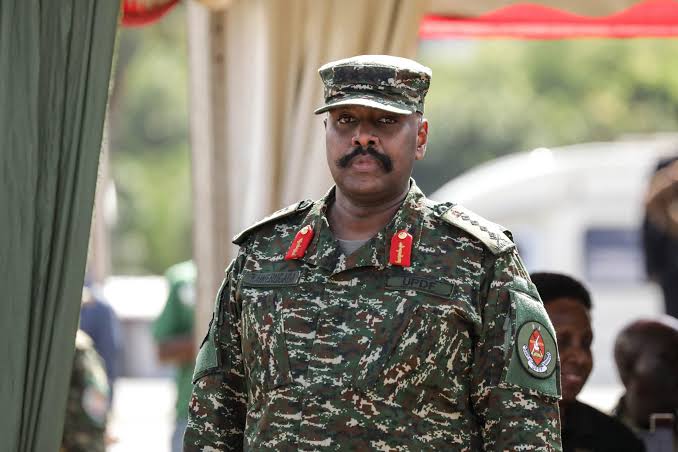
The sudden broadcast blackout followed a series of highly incendiary late-night declarations on social media platform X by the Chief of Defence Forces (CDF) and first son, Gen Muhoozi Kainerugaba. Gen Muhoozi explicitly ordered a total shutdown of the Nation Media Group (NMG) Uganda platforms, including the country’s prominent independent daily newspaper, the Daily Monitor.
Also Read: Top Comoros Official Hospitalized in Nairobi Amid Rising Tensions in Moroni
Inside the Midnight Operation at Namuwongo and Serena Hotel
The security operation began shortly after midnight when heavily armed military personnel descended upon the primary hubs of NMG’s operations in Kampala. Heavily fortified cordons were thrown around the media group’s main headquarters in Namuwongo, while a simultaneous tactical deployment took place at the Kampala Serena Hotel Conference Centre, which houses the broadcasting studios for NTV Uganda and Spark TV.
Staff members working the overnight shifts reported a total lockdown of the facilities. Armed guards took control of the perimeters, preventing anyone from entering or leaving the compounds.
Despite the growing military presence outside, the broadcasting teams managed to keep the stations on air through the early hours of Sunday. At 4:45am, nearly four hours into the armed siege, NTV Uganda continued transmitting an Al Jazeera simulcast feed. However, shortly after 5:00am , the transmission lines were completely severed. Reports emerging from inside the Serena Hotel facility indicated that security personnel had systematically disabled both the main grid electricity supply and the backup generators to kill the broadcast signals.
Beyond the television networks, NMG’s radio frequencies—93.3 KFM and 90.4 Dembe FM—also went completely silent. By daybreak, the entire broadcast and print machinery of East Africa’s largest independent media house in Uganda had been entirely neutralized.
“I Do Not Believe in a Free Press”: The Commands on X
The physical raid on NMG’s infrastructure was explicitly detailed by Gen Muhoozi on social media just hours before the tactical teams moved into position. In a post published at 1:07 am, the general wrote:
“NTV and Monitor are being shut down from today!”
He quickly followed this announcement with a second post reinforcing his absolute authority over the media industry:
“Both NTV and Monitor will not re-open without my permission.”
The Ideological Shift Against Independent Media
The most telling sign of the regime’s current stance toward public interest journalism appeared in an earlier social media post, where the commander laid out his philosophy on free speech:
“In Uganda, I DO NOT believe in a free press! The press should be guided by cadres of the revolution.”
These statements mark a severe escalation of a week-long campaign of intimidation. Over the previous seven days, Gen Muhoozi had repeatedly claimed he was merely awaiting formal clearance from his father, President Yoweri Museveni, before launching a definitive crackdown against NMG.
The rationale provided on social media centered around accusations that NTV Uganda and the Daily Monitor had persistently insulted the first family and crossed red lines regarding state security.
De Facto Power and Roster Management in a Post-Election Climate
The context of this media raid is deeply intertwined with Uganda’s changing political structure. Following President Museveni’s swearing-in for a seventh consecutive term earlier in 2026, Gen Muhoozi has steadily consolidated operational authority across the state apparatus, increasingly issuing directives that were traditionally the exclusive reserve of the head of state.
The current escalation points to a larger effort to control the political narrative. Having a completely unmonitored press corps allows the state to bypass public accountability. Independent journalists are being viewed as direct political adversaries rather than crucial observers of democratic processes.
The complete list of affected platforms highlights the massive reach of this media blackout:
-
Television: NTV Uganda, Spark TV
-
Radio Stations: 93.3 KFM, 90.4 Dembe FM
-
Print Platforms: Daily Monitor, The East African, Ennyanda newspaper
-
Logistics & Digital: Nation Courier and associated digital portals
A History of Institutional Resilience Under Fire
The current military siege is a familiar challenge for Nation Media Group Uganda. Over its decades of operation, the media house—which describes itself as “Uganda’s Bold Voice”—has faced multiple state-enforced closures.
Historical Precedents of Media Suppression
President Museveni has long maintained a difficult relationship with the Daily Monitor, previously labeling it an “enemy and evil newspaper” due to its investigations into corruption, public expenditure, and governance structural issues.
Also Read: Rio Ferdinand To Open International Doors For Arusha Through AFCON 2027
The sudden closure of an entire media house leaves massive logistical and economic fallout. NMG Uganda is a primary employer within the local creative and media economies, supporting more than 500 direct employees, including journalists, editors, camera operators, engineers, and administrative staff.
By Sunday afternoon, neither the Uganda People’s Defence Forces (UPDF), the Uganda Police Force, nor the regulatory body, the Uganda Communications Commission (UCC), had issued any formal statutory instruments, court warrants, or regulatory notices detailing the legal basis for the physical closure.
The lack of legal paperwork creates immense operational uncertainty. Advertisers, corporate partners, and distributors have been left completely in the dark regarding contract obligations, while hundreds of media workers face immediate professional displacement under an indefinite military siege.
Global and Local Backlash Against Authoritarian Media Rules
The military intervention drew swift and sharp criticism from political leaders, local press associations, and international human rights watchdogs.
Opposition figures, including Bobi Wine, immediately condemned the deployment, pointing out that the operation effectively establishes open military censorship across the country. The National Association of Broadcasters (NAB) released a statement expressing deep concern over the sudden disruption of the media ecosystem, warning that the move completely undermines regional press freedom standards across the East African Community (EAC).
The Path Forward for Independent Journalism in East Africa
Nation Media Group remains a publicly traded entity listed across regional stock markets, including the Nairobi Securities Exchange (NSE) and the Uganda Securities Exchange (USE). A state-enforced shutdown of this scale severely damages Uganda’s profile among international investors, signaling that private property and commercial enterprises can be arbitrarily seized or disabled via social media decrees.
The ongoing standoff at Namuwongo serves as a critical turning point for the future of free expression in Uganda. If military commanders can completely dismantle major media networks outside established communication laws, the survival of independent journalism in the region will depend entirely on digital adaptation, cross-border reporting, and alternative distribution models capable of bypassing state-controlled transmission lines.