
Two Suspects Nabbed in Slain Nairobi Researcher Case

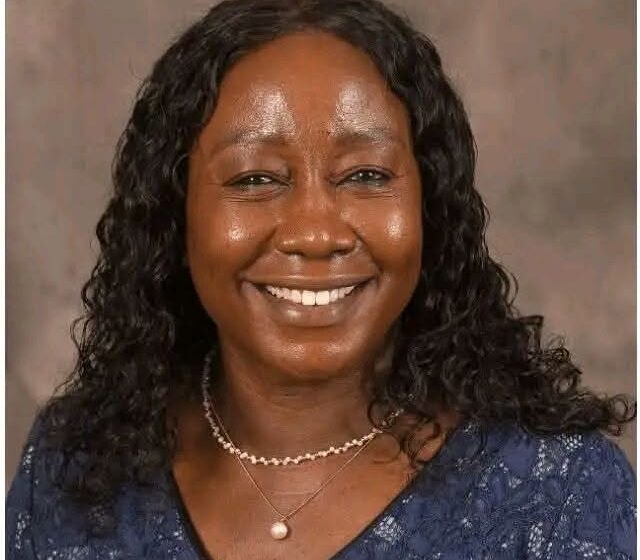
Dr Mutiso
Homicide detectives in Nairobi have taken two suspects into custody as they broaden their investigation into the execution-style murder of celebrated clinical psychologist and health scholar Dr Victoria Nthunya Mutiso.
The arrests—involving a woman and her adult son—came on Thursday as senior investigators worked to decode the motive behind a targeted assassination that has left the nation’s medical, academic, and research communities in shock.
The fatal shooting occurred in broad daylight on Wednesday morning, moments after the researcher arrived at the Africa Institute of Mental and Brain Health in Upper Hill.
Dr Mutiso had ordered a digital ride-hailing taxi from Tanga Heights Apartments on Bamboo Lane, just off Riara Road, intending to travel directly to the institute’s primary offices along Mawensi Gardens off Matumbato Road.
According to statements provided by the taxi driver, the trip turned lethal when a black Toyota Prado maneuvered to partially block the roadway, forcing the driver to hit the brakes.
Before the vehicle could maneuver away, a gunman approached the left rear passenger window where Dr Mutiso was seated and fired several shots at close range before fleeing.
Chasing Clues Behind a Chilling Track and Ambush
Detectives from the Directorate of Criminal Investigations (DCI) believe the taxi was intentionally cornered by the four-wheel-drive vehicle to allow two hitmen riding on a motorcycle to execute the rapid strike.
Dr Mutiso sustained fatal gunshot wounds during the attack and was rushed to a nearby hospital, where medical staff pronounced her dead on arrival.
Forensic evidence suggests the hitmen systematically trailed her from her residence near the Junction area in Kilimani before choosing an opportune moment to strike.
Crime scene experts processed the vehicle and surrounding roadway, recovering a spent cartridge that has since been submitted to the ballistic division for forensic analysis.
Investigators have noted that the slain scholar had previously reported direct threats to her personal security at the Kilimani Police Station after armed men on a motorcycle pointed a firearm at her while she was trapped in traffic. That matter was still under active inquiry at the time of her death.
Homicide teams are now exploring whether the assassination is linked to an earlier security incident logged along Magadi Road last year.
Concurrently, detectives are investigating reports of an ongoing family property dispute, treating it as a primary line of inquiry alongside her professional work. A specialized squad visited the victim’s home on Thursday to interview immediate relatives and compile a comprehensive timeline of her recent interactions.
The killing is particularly tragic given that Dr Mutiso, a mother of two, was scheduled to solemnise her marriage in just a week. She was the second wife of a prominent Kenyan psychiatrist and University of Nairobi Professor of Psychiatry.
A Legacy of Impact in Global and Local Mental Health Research
Beyond the circumstances surrounding her murder, Dr Mutiso was widely recognized as a towering figure in African health research.
In her capacity as Head of Research at the Africa Mental Health Research and Training Foundation (AMHRTF), she spearheaded critical studies into youth mental health, substance addiction frameworks, and the seamless integration of psychological care into primary healthcare systems.
Her professional agenda focused heavily on child and adolescent psychology. She spent years designing culturally resonant interventions aimed at improving mental well-being in vulnerable populations, particularly within urban informal settlements and low-income rural communities.
By grounding her academic methodologies in real-world African contexts, she helped dismantle long-standing barriers preventing marginalized groups from accessing professional therapy and mental health resources.
Over a distinguished career spanning nearly two decades, Dr Mutiso led and co-directed numerous local and international research projects probing mental illnesses, complex neurological conditions, and substance dependence disorders.
She was a co-lead on the NIHR Global Health Research Group’s HOPE project, an initiative addressing homelessness and severe psychiatric conditions across Africa. Her extensive portfolio of peer-reviewed publications remains a fundamental cornerstone for health policy formulation across East Africa.