
Fate of 7 Americans placed under Ebola quarantine in Kenya revealed

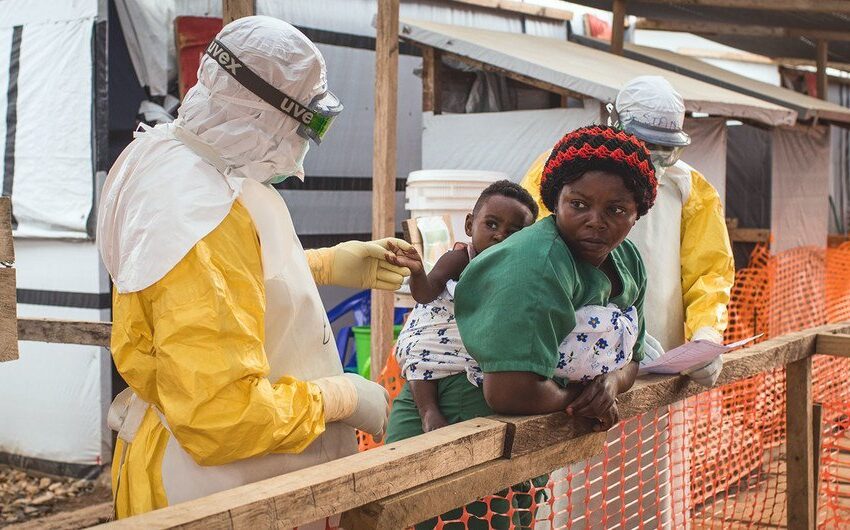
If there was one moment that tested Kenya’s Ebola preparedness, it came quietly at a military airbase in Laikipia, where seven American disaster response workers waited 21 days to find out whether they had been exposed to the deadly virus.
The seven workers from Samaritan’s Purse had been placed under observation at a US-funded bio-isolation facility at Laikipia Air Base as a precaution while supporting emergency operations in the region.
None developed symptoms during the mandatory quarantine period, and all seven have since been discharged and returned to the United States. Their release came after completing the full 21-day monitoring period required for people who may have been exposed to Ebola.
PAY ATTENTION: Follow Kenya Frontline WhatsApp channel for more news
Alex Kuria, Samaritan’s Purse’s Kenya director, confirmed that the workers remained well throughout their stay and have now returned to their normal lives.
“The people left. They went back to their homes. They’ve been back home for two weeks now. They did not develop symptoms. They were well, and there are no new ones that have come,” said Mr Kuria.
The development offers relief amid heightened concern over Ebola in the region, particularly because Kenya remains a major transport and humanitarian hub linking East and Central Africa. While the country has not recorded a confirmed Ebola case, health authorities have significantly stepped up surveillance, laboratory testing and emergency response measures.
Inside the 21-day Ebola watch
The seven Americans were members of Samaritan’s Purse’s American Disaster Assistance Response Team, which had been supporting regional emergency operations when they were placed under precautionary quarantine.
Their stay at Laikipia Air Base was designed to provide controlled monitoring while protecting the wider public from any potential risk. The facility is supported by the United States and is equipped to handle people requiring bio-isolation.
Franklin Graham, president and CEO of Samaritan’s Purse, previously described the conditions in which the workers were housed, highlighting the unusual nature of the quarantine experience.
“large military tents in a fenced-in gravelled area, sleeping on military cots,”
Food was provided by the US military while the workers remained under observation.
The fact that all seven completed the quarantine without developing symptoms means the episode ended without a confirmed Ebola infection. Their departure also removes one immediate concern for Kenyan health authorities as they continue monitoring developments in neighbouring countries.
The broader threat, however, has not disappeared.
Kenya’s location makes it particularly vulnerable to imported infectious diseases because of the movement of people through Nairobi and its border crossings. The country has extensive travel and trade links with Uganda and the Democratic Republic of Congo, where Ebola outbreaks have prompted heightened regional surveillance.
Kenya’s official preparedness status report shows that more than 413,000 travellers have already been screened. A total of 192 alerts have been investigated, including 14 originating at border entry points, while 196 samples tested have returned negative results.
The figures point to an extensive surveillance operation designed to detect suspected infections before they can spread.
Kenya has also established five designated Ebola testing laboratories, including mobile facilities positioned at high-risk border crossings in Busia and Lwakhakha. Other testing capacity is available in Kisumu, while the CDC laboratory and National Virology Laboratory are based in Nairobi.
Isolation capacity has also been identified at several major hospitals.
Kenyatta National Hospital has eight beds available for suspected cases, while Police Hospital has 29 beds. Moi Teaching and Referral Hospital has 30 intensive care beds alongside 30 surge beds, while Port Reitz Hospital has four isolation beds.
The country’s Incident Management Team was activated on May 20, 2026, and continues to coordinate national and county-level preparedness efforts.
Weekly technical consultations are also being held with Ugandan counterparts, reflecting the cross-border nature of the threat.
Kenya strengthens its defences

Dr Patrick Amoth, Director General for Health at the Ministry of Health, has repeatedly warned that Kenya cannot afford to become complacent despite having no confirmed Ebola cases.
Speaking during a media town hall, he pointed to Kenya’s position as a regional hub and the continued outbreak situation in the Democratic Republic of Congo.
“Ebola remains a public health problem. The situation in Congo is still unfolding. Uganda has brought the outbreak under control, but because we are a hub, with movement between us, the DR Congo and the region, Nairobi serves as a hub, and what have we done? One of the first things we did was to be able to establish an incident management structure to be able to coordinate all the actors, to be able to bring the outbreak under control in case it lands on our doorstep,”
Dr Amoth also explained how the country is using its public health emergency operations centre to centralise information coming from different parts of Kenya.
“Number two was to activate the public health emergency operations centre so that events from all over the country are reported in one central place for action. As of today, we have responded to more than 183 alerts; all the samples tested are negative. In DR Congo plus Uganda, the total number of cases is north of 4,200, and deaths are now approaching 1,900, giving a case fatality rate of 46 per cent.”
Kenya’s preparedness has also improved according to assessments conducted during the outbreak response.
Dr Amoth said the country scored 66 per cent in an earlier World Health Organisation assessment conducted when the outbreak began. A subsequent assessment towards the end of July put Kenya’s preparedness level at 88 per cent.
“The World Health Organisation gave us a score of 66 per cent in the assessment when the outbreak began. In the recent assessment that was done towards the end of last month, we had gone up to 88 per cent, so we are on the right trajectory. We want to assure Kenyans that we have put in place the necessary systems to be able to not only prevent but also detect and respond appropriately,” he said.
The improvement has been supported by international partners, with the United States playing a major role in Kenya’s Ebola preparedness.
The US, through the Centers for Disease Control and Prevention, USAID and the Department of Defence, has committed an initial $13.5 million towards preparedness. The support includes technical assistance, risk assessments, laboratory equipment, mobile laboratories, personal protective equipment, infection prevention supplies and training for rapid response teams.
Other international partners are also contributing.
The World Bank is supporting surveillance, laboratory operations, risk communication and general preparedness, while the United Kingdom is providing support for protective equipment, infection prevention, laboratory systems and training.
China has committed $1 million towards laboratory equipment, PPE, medical supplies and training, while India has donated 6,000 PPE kits, 475 thermal guns and six biosafety cabinets.
Despite the progress, Kenya’s preparedness report identifies areas that still require attention.
Twenty-three healthcare facilities in high-risk counties need structural upgrades to meet WHO standards. Authorities have also identified the need for temporary mobile isolation units and improvements to existing facilities.
The need for continued vigilance has been reinforced by the scale of the wider regional outbreak. According to figures cited from the US CDC, 4,665 Ebola cases had been confirmed across the Democratic Republic of Congo, Uganda and France as of August 12, with 2,184 deaths.
The discharge of the seven American workers therefore represents a positive development, but it does not signal the end of Kenya’s Ebola response.
Their 21-day quarantine ended without a single worker developing symptoms, providing reassurance that the precautionary measures worked as intended.
The episode has also offered a practical demonstration of how Kenya’s preparedness systems operate when a potential exposure occurs.
From screening travellers at border crossings to testing alerts in specialised laboratories and isolating people who may have been exposed, the country is building several layers of protection against the virus.
The seven Samaritan’s Purse workers have now gone home.
Kenya, meanwhile, remains on watch.