
Koskei reveals why Kenya must look beyond 2030

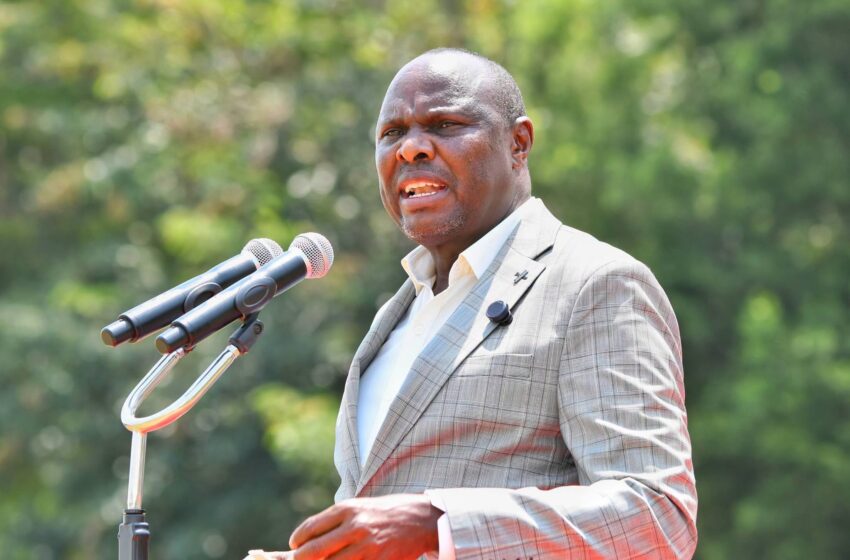
Head of Public Service Felix Koskei
Sometimes the biggest decisions about a country’s future begin with a simple question: what kind of Kenya do citizens want to build for the generations that will follow?
That question is now at the centre of a proposed national conversation on Kenya beyond 2030, as the Government seeks to determine the country’s long-term development priorities after the current Vision 2030 framework.
Head of Public Service Felix Koskei says the planned conversation will give Kenyans an opportunity to examine what has been achieved under Vision 2030 and consider the direction the country should take over the coming decades.
“We must see the Vision 2030 scorecard and, as Kenyans, come to the table to say how we want our country to move forward,” he said.
PAY ATTENTION: Follow Kenya Frontline WhatsApp channel for more news
Koskei spoke at Amagoro Comprehensive School during a thanksgiving service held in honour of ACK Diocese of Katakwa Bishop Dr Vitalis Job Ekuru. His remarks placed young people at the centre of the proposed discussion, with the Government viewing their participation as critical to shaping Kenya’s future beyond the next few years.
Why Kenya is looking beyond Vision 2030
Vision 2030 has served as Kenya’s long-term development blueprint, providing a framework for economic, social and political transformation. As the country considers what should follow the framework, Koskei said Kenyans need to be involved in deciding the priorities that will shape the next phase of national development.
The proposed national conversation is expected to provide a platform where citizens can assess the country’s progress and identify areas that require greater attention.
Rather than leaving the next development agenda to policymakers alone, Koskei said Kenyans should have an opportunity to contribute their views on what the country should prioritise.
He said the ideas generated through the process could be incorporated into a long-term development agenda aimed at accelerating economic transformation.
The approach could give citizens a chance to consider issues that affect their everyday lives, including employment opportunities, economic growth, infrastructure, public services and the prospects available to younger generations.
Koskei’s emphasis on a national conversation also points to the importance of building broad ownership around the country’s long-term plans. Development priorities can extend across several administrations, making public participation important in creating continuity.
The proposed agenda comes at a time when Kenya is grappling with the challenge of preparing for a rapidly changing economy and a growing population. Decisions made today on education, technology, infrastructure, healthcare, jobs and investment could shape opportunities available to Kenyans decades from now.
Koskei said the country must therefore look beyond immediate political and economic cycles when considering its development path.
The proposed exercise would also allow Kenyans to reflect on the achievements and shortcomings of Vision 2030 before determining what should come next.
Why young people are being placed at the centre
The strongest emphasis in Koskei’s remarks was on the role of young people.
Kenya has a large youthful population, meaning today’s decisions on development will have consequences that extend well beyond the lifespan of many current leaders.
“From now to 2060, those who will be alive and have the energy to work will be the youth. We want young people and youth in general to be drivers of this conversation because it is their destiny and they are the ones who will be implementing the agenda,” he said.
The statement places a long-term responsibility on the country’s younger generation. The people expected to implement policies and projects in the decades ahead are also the people who will live with the consequences of the decisions being made today.
Young people’s involvement could therefore extend beyond simply being consulted during the process. Koskei’s remarks suggest that they should actively influence the priorities that eventually form part of the country’s long-term development agenda.
Employment is likely to remain a major consideration in such a conversation, given the number of young Kenyans entering the labour market each year. The future development framework could also have to account for how technology, automation and new industries will reshape the nature of work.
Education and skills development could equally become central to the discussion, particularly as Kenya prepares young people for an economy that may look very different by 2060.
The conversation could also create room for young Kenyans to articulate the kind of institutions, cities, communities and opportunities they want to inherit.
Koskei’s focus on 2060 effectively shifts the discussion from what Kenya wants to achieve in the next few years to what the country could become over an entire generation.
That longer horizon may require policymakers and citizens to think differently about national development. Projects and policies designed around short-term results may not necessarily address challenges that will emerge several decades from now.
A long-term agenda could instead provide a framework for sustained investment and continuity, particularly in areas where results take years to become visible.
The proposed national conversation will therefore be closely watched for the priorities that emerge and how those priorities are eventually translated into government policy.
Public participation will also be important if the exercise is to reflect the experiences and aspirations of Kenyans across different regions and generations.
Koskei’s remarks suggest that the Government wants the process to become a national discussion rather than a conversation confined to offices in Nairobi.
The challenge will be turning public ideas into clear and achievable priorities, while ensuring that the resulting agenda remains responsive to changing circumstances.
Kenya’s economic and social environment is likely to change significantly between now and 2060. Technology, climate pressures, population growth, urbanisation and shifts in the global economy could all influence the country’s development choices.
A long-term plan will therefore need enough direction to provide continuity while remaining flexible enough to respond to new realities.
The proposed conversation on Kenya beyond 2030 offers an opportunity to begin that process.
Koskei’s message is that the people who will ultimately carry the country’s development agenda into the future should have a meaningful voice in determining what that agenda looks like.
The emphasis on young people also gives the exercise a generational dimension. Decisions made during the transition from Vision 2030 could influence the lives of Kenyans who will still be working, raising families and leading institutions decades from now.
The conversation, if implemented broadly, could consequently become more than a review of one development blueprint. It could become an opportunity for Kenyans to define the ambitions they want the country to pursue after 2030 and establish priorities that can guide development towards 2060.
The central question will now be whether the proposed national conversation can translate those ambitions into practical priorities capable of surviving political cycles and delivering lasting change.

