Primary Health Care in Kenya: How to Access Free Level 2 & 3 Hospital Services Under SHA

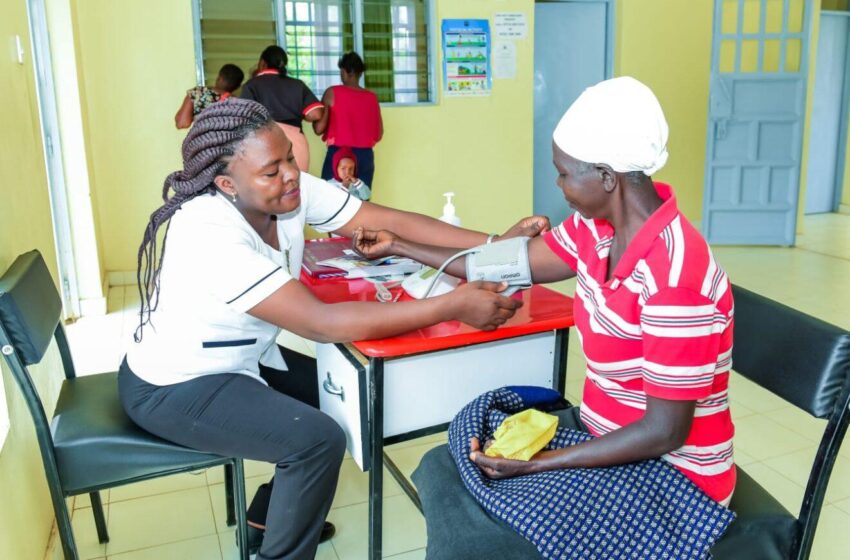
Sometimes, a simple visit to a nearby dispensary or health centre can leave a Kenyan wondering whether they should carry cash before seeking treatment under the Social Health Authority (SHA).
The introduction of SHA has changed how primary healthcare is financed and accessed in Kenya, with the government placing greater emphasis on ensuring that Kenyans can receive essential medical services closer to their homes.
At the centre of this system is the Primary Healthcare Fund (PHF), which is designed to finance primary healthcare services at lower-level facilities.
PAY ATTENTION: Follow Kenya Frontline WhatsApp channel for more news
SHA administers three major funds — the Primary Healthcare Fund, Social Health Insurance Fund (SHIF), and Emergency, Chronic and Critical Illness Fund (ECCIF). The Authority’s mandate is to provide financial protection and facilitate access to healthcare for Kenyan residents.
The PHF is particularly important for people who rely on dispensaries and health centres because it is intended to finance essential primary healthcare without requiring patients to make a separate payment at the point of care for covered services.
But what exactly is covered?
And how can a Kenyan access these services without paying cash?
Understanding Primary Healthcare Fund
The Primary Healthcare Fund was established to finance essential healthcare services at the primary level.
Under the Social Health Insurance regulations, facility-based primary healthcare services are accessed through Level 2 and Level 3 health facilities that have been empanelled and contracted by SHA.
The regulations provide for a wide range of services under the PHF, including promotive, preventive, curative, rehabilitative, palliative and referral services.
This means that the fund is not limited to treating someone after they fall sick.
It also supports services designed to prevent disease, detect health problems early and help patients manage conditions before they become more serious.
The government’s wider Universal Health Coverage programme has placed primary healthcare at the centre of its healthcare reforms. The Ministry of Health says the reforms are strengthening financing for more than 11,800 Level 2 and Level 3 facilities across Kenya.
The government has also moved away from the earlier capitation approach and adopted a Global Budget Model for primary healthcare financing. The model began in January 2025 and is intended to allocate predetermined budgets based on expected patient numbers and service demand.
This is an important distinction for patients.
A PHF allocation should not be understood as money deposited into an individual’s SHA account. Instead, the fund is used to purchase healthcare services from contracted facilities.
Level 2 vs Level 3 Facilities
The difference between Level 2 and Level 3 facilities can determine the type of healthcare a patient receives.
Level 2 facilities are generally dispensaries and other basic primary healthcare facilities. They provide first-contact services and are usually located within communities to make healthcare more accessible.
A patient can visit a Level 2 facility for common illnesses, consultations, basic tests, preventive healthcare, treatment and medicines covered under the applicable package.
Level 3 facilities, generally health centres, provide a broader range of primary healthcare services.
They can have expanded laboratory services, maternity services, inpatient capacity and other services that may not be available at a smaller dispensary.
The exact services available can differ between facilities because of staffing, equipment and the services for which a particular facility has been contracted.
The SHA regulations specifically identify Level 2 and Level 3 facilities as access points for facility-based primary healthcare.
This makes them an important entry point for Kenyans seeking treatment.
What Services Are Covered?
The primary healthcare package covers a broad range of services.
The official SHA benefit package lists consultation, diagnosis and treatment among the services available under primary healthcare. It also includes prescribed laboratory investigations and basic radiological examinations such as X-rays and ultrasounds.
Patients can also receive prescribed medicines and drug administration where these services fall within the applicable benefit package.
The package covers management of acute and chronic conditions, including selected non-communicable diseases.
For Kenyans, this means that a visit to a contracted Level 2 or Level 3 facility should not automatically translate into a cash payment for every basic service.
However, coverage depends on whether the service is included in the applicable SHA package and whether the facility is contracted to provide it.
Medicine availability can also vary between facilities because a covered medicine may not necessarily be physically in stock on the day a patient visits.
Maternal and Child Healthcare
Maternal and child healthcare has become a major part of Kenya’s primary healthcare reforms.
In June 2026, the Ministry of Health announced proposed tariff amendments that would introduce a Maternal, Newborn and Child Health package under the PHF. The proposed package includes antenatal care, normal and Caesarean deliveries, newborn care, postnatal services, immunisation and nutritional support.
The government has said the reforms are aimed at reducing the financial burden on families and expanding access to maternity services at Level 2 and Level 3 facilities.
For expectant mothers, the changes are significant because maternity costs have traditionally been a major financial challenge for households.
The primary healthcare approach is also intended to encourage mothers to begin antenatal care early and continue attending healthcare facilities throughout pregnancy.
Children can benefit from immunisation and other preventive services offered through the primary healthcare system.
The focus is therefore not only on treating illness but also on preventing avoidable complications.
Laboratory Tests and Basic Diagnosis
A common concern among patients is whether they will have to pay separately after seeing a clinician because they have been sent for a laboratory test.
The PHF benefit package includes prescribed laboratory investigations.
The official primary healthcare tariff document also lists basic radiological examinations, including X-rays and ultrasounds, among the services under the primary healthcare package.
Other specific services include malaria testing and treatment, HIV testing and follow-up services, tuberculosis testing and treatment, family planning commodities and vaccines provided under the Kenya Expanded Programme on Immunization.
The same document states that certain services and commodities, including ARVs, antimalarial medicines, anti-TB medicines, associated tests, family planning commodities and KEPI vaccines, are provided at no cost to patients under the stated access rules.
Patients should nevertheless confirm with the facility whether a particular test or medicine falls under the current package.
Screening and Chronic Disease Management
Primary healthcare is also intended to help Kenyans detect diseases before they become severe.
Screening and early management are particularly important for conditions such as hypertension and diabetes, which can remain unnoticed for years.
The wider SHA reforms emphasise preventive care and early intervention, including management of conditions such as diabetes, hypertension and cancer.
A patient who begins treatment at a primary facility can therefore be monitored over time instead of waiting until the condition requires emergency or specialised treatment.
This approach could also reduce pressure on major referral hospitals, where patients with relatively simple conditions sometimes seek care because they believe they will receive better or faster treatment.
How to Access Primary Healthcare Under SHA
The process of accessing services begins with confirming your SHA status.
Kenyans can check their coverage through the official SHA eligibility portal, which allows users to search using their National ID number or CR number.
Once eligibility has been confirmed, the next step is to identify a Level 2 or Level 3 facility that is contracted by SHA.
Patients should not assume that every dispensary or health centre automatically provides SHA-funded services.
The facility must be within the SHA network and contracted for the relevant services.
At the facility, the patient presents the required identification for verification.
Health workers then assess the patient and provide the appropriate treatment or service according to the patient’s medical needs and the applicable SHA benefit package.
Where laboratory tests are required, the patient can be directed to the facility’s laboratory.
If medicine is prescribed, the patient can proceed to the facility pharmacy or designated dispensing point.
Where the condition cannot be managed at that level, the healthcare worker can initiate a referral to a higher-level facility.
What Role Do Primary Care Networks Play?
Primary Care Networks, commonly known as PCNs, are designed to connect different healthcare facilities within a defined geographical area.
The idea is to make the healthcare system more coordinated.
A patient may begin treatment at a dispensary before being referred to a health centre or a higher-level facility if specialised care is needed.
The original PHF tariff framework provides for facilities to be mapped to Primary Care Networks, with registered households also mapped to a PCN.
This arrangement is intended to reduce unnecessary movement between hospitals and improve continuity of care.
It also strengthens the role of lower-level facilities as the first point of contact for many patients.
Is Everything Free at Level 2 and Level 3?
No.
This is one of the biggest misconceptions surrounding SHA.
The fact that primary healthcare is financed through the PHF does not mean that every service, medicine or procedure available inside a Level 2 or Level 3 facility is automatically free.
Coverage is determined by the applicable SHA benefit package, tariffs and access rules.
Optional services, items outside the approved package and certain specialised treatments may not be covered.
Patients should therefore ask the healthcare provider whether a service is covered before agreeing to pay.
The same principle applies to medicines.
A patient should not assume that every medicine sold or prescribed at a facility is automatically covered simply because the facility participates in SHA.
What Happens at Higher-Level Hospitals?
SHA is not designed to mean that every Kenyan can walk into any hospital and receive every service without payment.
Primary healthcare has a specific role within the wider SHA system.
A patient who requires specialised care can be referred from a primary healthcare facility to a higher-level hospital.
The wider SHA framework contains separate arrangements for services financed through the Social Health Insurance Fund and the Emergency, Chronic and Critical Illness Fund.
This distinction matters because patients who need specialised or emergency treatment may fall under different benefit arrangements.
The government’s 2026 health reforms also emphasise the importance of proper referral protocols as part of improving efficiency within the healthcare system.
Patients should therefore avoid assuming that bypassing the primary healthcare system will always produce the same coverage.
What Should You Do If a Facility Demands Cash?
A patient who believes they are being asked to pay for a service covered by SHA should first ask the facility to explain the charge.
The patient can ask whether the service is included in the current benefit package and whether the facility is contracted to provide it.
This is especially important because SHA coverage is linked to contracted facilities and specific services.
The government has also moved to strengthen enforcement against unauthorised charges. In April 2026, the Ministry of Health said contracted facilities under a revised framework would not be permitted to charge beneficiaries unauthorised out-of-pocket fees, while SHA maintains a list of approved facilities.
Kenyans should therefore keep records of any questionable charges and seek clarification through the appropriate SHA complaint and support channels.
Why Primary Healthcare Is Important
The success of Kenya’s SHA reforms will depend heavily on what happens at the primary healthcare level.
A patient should ideally be able to walk into a nearby dispensary or health centre, receive an assessment, undergo necessary basic tests and obtain treatment without facing an unexpected financial barrier.
That approach can encourage people to seek treatment earlier.
It can also help prevent minor illnesses from developing into conditions requiring expensive specialised care.
The government says the primary healthcare reforms are supporting more than 11,800 Level 2 and Level 3 facilities across the country, demonstrating the scale of the system being built around community-level care.
For Kenyan households, understanding how the PHF works is therefore important.
The key message is simple: Level 2 and Level 3 facilities are central access points for primary healthcare under SHA, but patients should use contracted facilities and understand what falls within the approved benefit package.
Checking SHA eligibility before seeking treatment, confirming that the facility is contracted and asking questions about any requested payment can help patients make full use of the services available to them.