Government moves to build single system for detecting fake academic papers

The government is moving to create a coordinated system for verifying academic qualifications as it seeks to close loopholes that have allowed people with forged certificates to secure jobs and promotions in the public service.
The proposed framework will bring together institutions responsible for examinations, education and public service recruitment, allowing credentials presented by jobseekers to be checked against official records before appointments are confirmed.
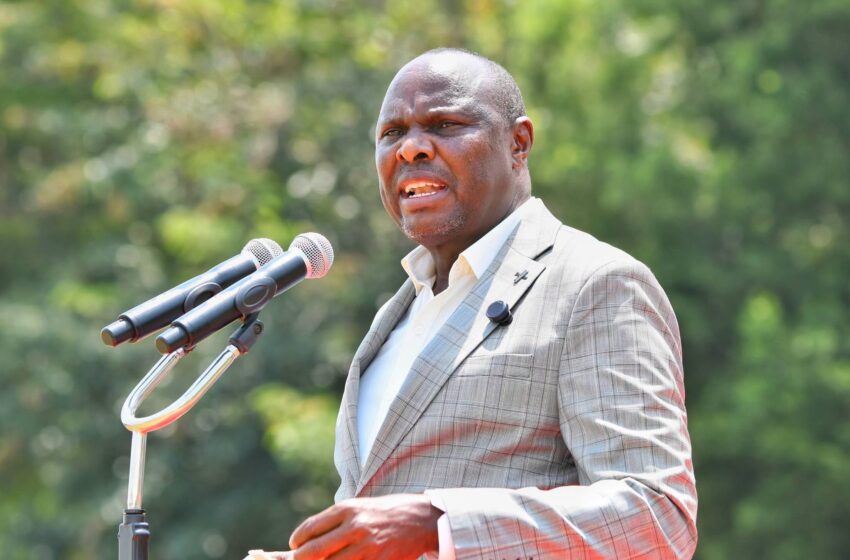
Head of Public Service and Chief of Staff Felix Koskei led a consultative meeting involving officials from the Public Service Commission (PSC), Kenya National Examinations Council (KNEC) and the Ministry of Education at State House, Nairobi, on Thursday, September 17.
Read Also: Pharmacy Board Looks to Shape Future of Pharmaceutical Practice
“There is a need for robust and coordinated mechanisms for verifying academic qualifications to ensure that only people with genuine credentials secure positions in the public service,” says Koskei.
The meeting comes as government agencies continue to grapple with cases involving forged academic and professional certificates. The planned integration is expected to reduce duplication in the verification process while making it easier for recruiters to establish whether qualifications presented by applicants are genuine.
The discussions also point to a shift towards greater use of technology in recruitment and credential verification. The PSC has previously acknowledged challenges with existing verification systems, including delays and costs associated with checking academic documents.
PSC Chairperson Francis Meja said the proposed reform would strengthen the integrity of recruitment and help ensure that academic qualifications are properly authenticated before an individual takes up a public position.
“There was a need to integrate and streamline the authentication and verification of academic credentials to safeguard the integrity of recruitment processes,” Meja notes, adding the move would reward professionalism and merit in the wider workforce.
Fake Certificates Remain a Public Service Challenge
The government has been dealing with forged academic papers for several years, with previous verification exercises revealing cases involving employees who allegedly used fraudulent documents to obtain employment, promotions or changes in designation.
In February 2024, the Directorate of Criminal Investigations said a PSC investigation had identified 1,280 cases involving forged certificates from 91 public institutions, alongside another 787 cases from ministries, state departments and agencies. The findings were handed over to the DCI and Ethics and Anti-Corruption Commission for further action.
The figures underline the scale of the challenge facing public institutions. A forged certificate can allow an individual to compete for a position against candidates who have legitimately obtained the qualifications required for the job.
The consequences can extend beyond recruitment. An employee who obtains a position using fraudulent qualifications may continue receiving a salary and other benefits while performing duties that require training or professional competence.
The PSC has previously directed public institutions to authenticate academic and professional certificates held by their employees. Its human resources policy framework requires authorised officers to validate qualifications used for appointments, promotions and re-designation.
The Commission has also warned that officers found to have used forged certificates can face disciplinary action, including dismissal, while cases may be referred for criminal investigation.
New System Could Link Government Verification Processes
The proposed system is expected to address one of the central weaknesses in the current process: institutions often have to rely on separate procedures when checking academic documents.
Under a coordinated framework, recruiters could potentially submit a candidate’s credentials for verification through a common system that connects relevant examination and education authorities.
Such an arrangement would make it easier to establish whether a certificate was actually issued by the institution named on the document and whether the holder sat the examination or completed the qualification claimed.
Read Also: Top Comoros Official Hospitalized in Nairobi Amid Rising Tensions in Moroni
The government has not yet provided details on the technology that will be used, the exact institutions that will be connected or when the integrated system will become operational. Officials, however, say the consultations are intended to establish a more efficient mechanism for authentication.
The move follows earlier efforts to digitise qualification verification. The Kenya National Qualifications Authority, for example, operates a Qualifications Alignment and Verification portal for validating local and foreign qualifications. Its 2024 annual report said more than 11,400 applications had been submitted through the portal since its establishment in 2020.
The existence of several verification processes makes coordination particularly important as government expands its digital recruitment and human-resource systems.
Fraud Can Affect Public Services
Officials argue that the issue goes beyond protecting recruitment procedures. They say placing an unqualified person in a position that requires specific academic or professional training can affect the quality of services delivered to citizens.
A person appointed to a technical, financial, medical, legal or administrative position based on false qualifications could lack the skills required to perform the responsibilities attached to that office.
There is also the issue of fairness for qualified applicants who compete for government positions through established recruitment procedures.
The PSC’s earlier policy position has been that academic and professional qualifications used to secure public appointments must be authenticated. Its 2023 circular on certificate authentication was intended to strengthen the credibility of qualifications held by public servants and prevent fraud and misrepresentation.
Recent investigations by the Ethics and Anti-Corruption Commission have continued to demonstrate how forged qualifications can translate into financial losses for public institutions.
In one case documented by the EACC, an employee of Nairobi City Water and Sewerage Company was found to have used a forged secondary school certificate to secure employment. Investigators said the individual had earned more than Sh15 million during the period of unlawful employment.
Another case involved an employee of the Kenya Plant Health Inspectorate Service who allegedly used a forged diploma certificate. EACC said the individual had earned more than Sh5.3 million during the period under investigation.
Focus Shifts to Prevention
The latest consultations suggest that the government wants to strengthen prevention rather than rely mainly on investigations after fraudulent appointments have already occurred.
A system capable of checking qualifications before an appointment is finalised could reduce the possibility of forged documents passing through recruitment stages.
It could also provide a clearer audit trail for institutions responsible for hiring public servants, allowing recruiters to demonstrate that qualifications were checked against authoritative records.
For applicants, the system could provide greater clarity about the documents required during recruitment and reduce uncertainty around authentication procedures.
For government agencies, the bigger test will be whether the proposed integration can work across different institutions without creating new administrative delays.
The government has not announced a launch date for the unified framework. The September 17 meeting represents a consultation stage, with the PSC, KNEC and Ministry of Education expected to work towards a coordinated approach.
Read Also: Kenyan marathoner remanded over Ksh8 million land fraud case
The initiative comes at a time when public institutions are under increasing pressure to demonstrate transparency, merit and accountability in recruitment.
If implemented effectively, the integrated verification system could make it significantly harder for forged qualifications to pass through government recruitment processes. It would also strengthen existing efforts to ensure that public positions are filled by people whose academic and professional credentials can be independently verified.