
Master Rights vs. Publishing Rights: The Legal Battle Behind Nyashinski’s Tecno Deal

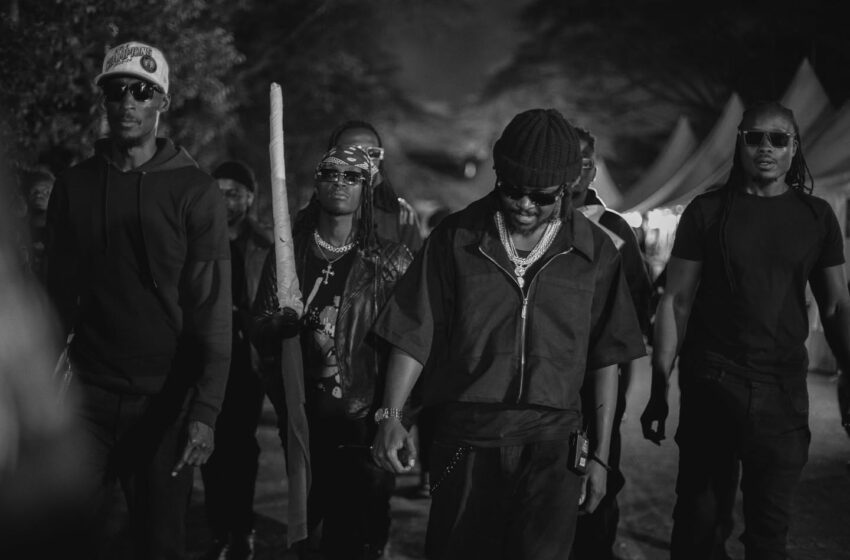
Rapper and songwriter Nyamari Ongegu, popularly known as Nyashinski, has suffered another setback in a copyright dispute that could now expose the financial details of a lucrative brand endorsement deal with Tecno Kenya.
The celebrated Kenyan musician will be required to produce contract documents relating to the multi-million-shilling agreement he signed with the smartphone manufacturer in May 2023, after the High Court dismissed his appeal seeking to stop the disclosure.
The dispute centres on Wach Wach, a song whose beat was produced by Nigerian music producer Sam Are Eliapenda. The track later featured prominently in Tecno’s marketing campaigns for the Camon 20 smartphone after Nyashinski became the face of the campaign.
Sources familiar with the endorsement deal have told Business Daily that the agreement was worth approximately Sh12 million. The exact value, however, could now be established through the documents Nyashinski has been ordered to produce as the copyright case progresses.
Read Also: Pharmacy Board Looks to Shape Future of Pharmaceutical Practice
Eliapenda argues that his publishing rights in Wach Wach entitle him to a share of the money generated from the commercial use of the song. The producer says he owns 50 percent of the publishing rights, even though Nyashinski holds 100 percent of the song’s master rights.
How the Tecno Deal Became a Copyright Dispute
The legal battle began in 2023 when Eliapenda filed a case at a Magistrate’s Court, accusing Nyashinski of infringing his copyright by entering into the Tecno endorsement arrangement without his consent.
The producer said he had attempted to reach an agreement with Nyashinski before resorting to litigation. His argument was that the use of Wach Wach in advertisements featuring the rapper created commercial value from a song in which he held publishing rights.
Eliapenda subsequently asked the court to compel Nyashinski to produce the endorsement agreement and financial records connected to the deal. The documents, he argued, would help establish the amount earned and determine the losses he claimed to have suffered.
On August 9, 2024, Magistrate Selina Muchungi ordered Nyashinski to produce details of the contract, including bank transaction records and royalty reports relating to the disputed song.
The court found the documents necessary and relevant to the fair determination of the case.
Nyashinski challenged the decision at the High Court on August 21, 2024, arguing that the disclosure could expose sensitive personal and commercial information.
The rapper said the magistrate’s decision failed to provide adequate safeguards for his personal data, financial information, legal obligations and personal brand. He also warned that disclosure could expose him to blackmail, extortion, fraud and commercial exploitation.
Nyashinski further argued that the contract with Tecno contained a non-disclosure clause and that Eliapenda was not a party to the agreement. He questioned why the producer should have access to a contract between himself and the technology company.
He also argued that disclosure of the agreement could expose trade secrets and place him at a commercial disadvantage.
The High Court initially granted Nyashinski temporary relief in 2025 by staying execution of the magistrate’s order until the appeal was determined.
“On careful consideration of the application, there is no doubt that the applicant (Nyashinski) stands to suffer loss if no orders are granted in the event the appeal succeeds. That is so because the fear the applicant has will be long realised with no possibility of reversal. Once the documents are released on discovery, then the process intimated to by the applicant will automatically set in motion. The application therefore is merited. There be a stay of execution of the ruling delivered by Hon Selina Muchungi pending determination of the appeal,” the High Court ruled.
That protection has now ended.
Last Friday, the High Court dismissed Nyashinski’s appeal, allowing the earlier order requiring production of the documents to take effect.
“The magistrate exercised proper discretion in finding that the 1st applicant (Nyashinski) & Tecno Mobile should produce the documents requested by the 1st respondent (Sam Are Eliapenda Jedidiah). The Magistrate’s finding was sound in law. Appeal dismissed with costs to the 1st respondent,” the court ordered.
The Difference Between Master Rights and Publishing Rights
At the heart of the dispute is a distinction that is often misunderstood outside the music industry: owning a song’s master recording is not necessarily the same as owning its publishing rights.
According to the split sheet agreement cited in the case, Nyashinski owns 100 percent of the master rights to Wach Wach. Eliapenda, however, claims a 50 percent share of the publishing rights, with Nyashinski owning the other 50 percent.
Read Also: Top Comoros Official Hospitalized in Nairobi Amid Rising Tensions in Moroni
Master rights generally concern the ownership of a particular recorded version of a song. Publishing rights, on the other hand, relate to the underlying musical composition and the rights attached to its exploitation.
That distinction forms the foundation of Eliapenda’s case.
The producer argues that the commercial use of Wach Wach in the Tecno campaign generated value from the composition in which he owns half of the publishing rights. He therefore wants the endorsement documents disclosed to establish the financial implications of the campaign.
“The rights of the appellant are not superior to the rights of any other persons; thus, the appellant cannot claim privacy after publicly disenfranchising me of millions of shillings through the copyright-infringing advertisement made together with him and the 2nd respondent and now claim privacy,” Eliapenda states in his court pleadings.
Nyashinski disputes that interpretation.
His defence is that the Tecno agreement was not a publishing agreement as alleged by Eliapenda. He maintains that the deal covered his image rights, appearances, video and photography shoots, as well as his association with Tecno on social media.
Through his company, GETA International, Nyashinski also maintains that he entered into a fair-use agreement with Tecno allowing the company to use Wach Wach.
His position is that he had the authority to grant that permission because he owns 100 percent of the master rights to the recording and therefore did not require the producer’s consent.
The latest High Court decision does not, by itself, finally determine the underlying copyright dispute or establish how any eventual compensation should be divided. It instead clears the way for the requested documents to be produced and examined as the case returns to the Magistrate’s Court.
The contract could therefore become an important piece of evidence, potentially revealing the commercial structure of the Tecno campaign, the amount paid to Nyashinski and the nature of the rights granted for the use of Wach Wach.
Read Also: Kenyan marathoner remanded over Ksh8 million land fraud case
What began as a major brand endorsement has consequently developed into a closely watched legal battle over who gets paid when a commercially successful recording crosses from the music industry into advertising.

