
Silencing Whistle: Why Ministry’s Passive Stance on Kenya’s Football Crisis Is Unforgivable

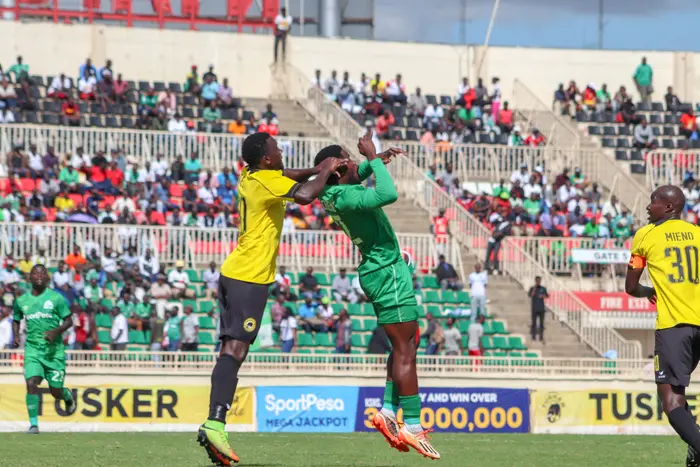
A bus carrying Mara Sugar players had already navigated hundreds of kilometers across the country for their scheduled opening fixture against 3K FC, only for the squad to learn upon arrival that their weekend match had been halted by a last-minute court order.
Similar frustrating scenes played out for teams like Shabana and Bandari, whose club management had already spent thousands of shillings on fuel, team accommodation, and meal allowances before learning that another legal injunction had frozen the FKF Premier League kickoff.
Heavy machinery continues to roar across the Moi International Sports Centre Kasarani as contractor teams overhaul the turf and navigate discussions with CAF over VIP skybox installations, while final touches take shape at the nearly completed Raila Odinga International Stadium in Talanta Sports City.
Read Also: Pharmacy Board Looks to Shape Future of Pharmaceutical Practice
These developments persuade onlookers that local football stands on the precipice of a golden era.
Multi-billion shilling infrastructure investments and architectural renders are routinely paraded before international delegates as proof of a nation transforming its athletic landscape ahead of the Africa Cup of Nations PAMOJA 2027.
Yet, just beyond the freshly painted boundary walls and high-profile dignitary tours, a dark and absurd reality continues to unfold across the local sporting landscape. Domestic football in Kenya is currently suffering through an agonizing, self-inflicted state of complete operational paralysis.
Fresh legal drama at the High Court in Murang’a has once again halted the FKF Premier League from kicking off as scheduled. Justice Dorah Chepkwony ruled that the 2026/27 campaign cannot commence without a promotion-relegation playoff between Kariobangi Sharks and Mombasa United. The order follows an urgent application filed by sports enthusiast Evans Nduta challenging the start of the season alongside his substantive petition against the 2025 FKF Rules. With the court setting the matter for hearing on Thursday, extreme uncertainty shrouds whether the Federation will comply.
During a recent Kamukunji with branch chairmen, FKF President Hussein Mohammed signaled an uncompromising stance, indicating he would no longer honor court orders stopping football activities. Visiting squads—having already incurred massive logistics costs for matches like Mara Sugar’s clash with 3K FC—were left stranded without playing a single minute.
Brewing clashes between the judiciary, stranded clubs, and federation officials leave players, sponsors, and supporters trapped in complete limbo. Tragic ironies of our sporting landscape have never been starker: we are busily building multi-billion shilling monuments while allowing the domestic top flight itself to decay in administrative gridlock.
Decisions made behind closed doors by entrenched sports administrators continue to prioritize political point-scoring over the actual progression of the FKF Premier League. Every passing week brought on by this administrative impasse inflicts real, quantifiable financial damage on those who can least afford it. Professional players, many of whom serve as primary breadwinners for extended households, face frozen salaries and severe contractual uncertainty.
Local stadium vendors, small-scale transport operators, referees, and youth academy coaches who rely on matchday economic activity are left stranded without basic income. Meanwhile, pre-season financial commitments made by FKF Premier League club owners to recruit elite talent and secure training facilities continue to drain away into an abyss of endless legal postponements.
The Deafening Silence from Main Street to the Cabinet
Unyielding silence continues to emanate from the Ministry of Youth Affairs, Creative Economy, and Sports throughout this entire administrative nightmare. Policymakers and government representatives appear content to sit back as passive spectators, observing the destruction of our top-tier footballing ecosystem from a safe, detached distance.
Read Also: Top Comoros Official Hospitalized in Nairobi Amid Rising Tensions in Moroni
Hiding behind vague, recycled warnings regarding potential FIFA sanctions over third-party interference has become a convenient excuse for absolute inaction. Vast differences exist between illegal political interference in federation management and decisive, high-level mediation aimed at safeguarding national socio-economic stability.
Crucial public sectors employing thousands of young men and women cannot collapse into utter dysfunction while government leadership remains optional. Allowing institutional disputes to choke the life out of local talent sends a devastating signal to investors, sponsors, and the international community. Modern, glossy stadiums mean nothing if the FKF Premier League meant to populate them is permanently broken by administrative hubris. True sports development requires functional, transparent, and stable governance structures that respect the integrity of competition above all else.
Leaving local sports management to wander through endless legal corridors without a unifying voice threatens to undo decades of grassroots investment. Young players who spent their formative years honing their skills on dusty neighborhood pitches are seeing their ultimate dreams sacrificed on the altar of administrative pride.
Foreign scouts and global partners looking toward East Africa for emerging talent are met with a chaotic mess of postponed FKF Premier League fixtures and contested standings. National teams cannot be expected to perform with distinction on the international stage when the domestic foundation beneath their feet is constantly crumbling.
Restoring Integrity Before the World Arrives
Fixing this deep-rooted institutional crisis requires immediate, courageous, and transparent intervention before the damage becomes entirely irreversible. The sports ministry must abandon its passive observer policy and immediately step in to facilitate an honest, neutral reconciliation between all warring factions in the FKF Premier League court cases.
Convening a structured roundtable involving independent legal experts, club representatives, and federation administrators is the only realistic path toward resolving the regulatory deadlock. Clear ground rules, unified governance standards, and strict timelines must be established to ensure that court battles no longer replace actual athletic competition.
Kenya stands at a critical historical crossroads where sports can either serve as a powerful catalyst for economic empowerment or remain a national embarrassment of mismanaged potential. Elevating the FKF Premier League back to its rightful status requires leaders who care more about the athletes on the pitch than the titles on their business cards.
Thousands of passionate fans who routinely fill local stands, wave their team colors, and dedicate their weekends to supporting top-flight clubs deserve far better than endless legal press releases.
Restoring order to our domestic league is not just about saving a single FKF Premier League season; it is about protecting the collective dignity of an entire sporting culture.
The clock is ticking rapidly, and the eyes of the continent will soon be focused entirely on our readiness to host the biggest tournament in African history. Infrastructure alone will never deliver a successful legacy if the soul of the game is left to rot in legal limbo.
Read Also: Kenyan marathoner remanded over Ksh8 million land fraud case
Government officials must step out of the shadows, end the silence, bring sanity back to domestic league management, and finally put the game back on the pitch where it belongs.