Controller of Budget flags exchequer gaps as parliament faces tougher public finance oversight

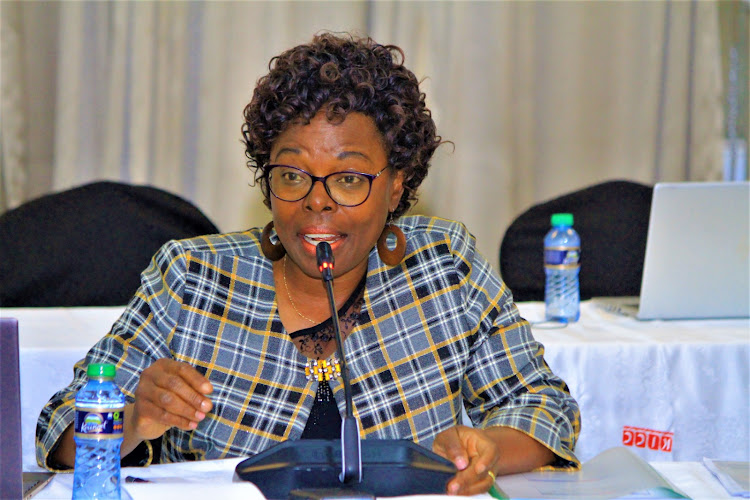
Controller of Budget Margaret Nyakang’o. (Photo: Handout)
Kenya’s public finance system is facing renewed scrutiny after Controller of Budget Margaret Nyakang’o raised concerns over the visibility and oversight of billions of shillings collected through government funds and levies but held outside the National Exchequer framework.
The concerns have placed renewed attention on how public money is collected, held, released and spent, and whether existing parliamentary controls are strong enough to ensure every shilling raised on behalf of the national government remains subject to appropriate constitutional and statutory oversight.
The debate comes after the Controller of Budget’s FY2025/26 National Government Budget Implementation Review Report was released in September 2026. The report examines government revenue, expenditure, exchequer releases and budget implementation during the financial year that ended June 30, 2026.
Read Also: Pharmacy Board Looks to Shape Future of Pharmaceutical Practice
The issue is bigger than individual ministries or programmes. It touches the constitutional architecture governing Kenya’s public finances, particularly rules surrounding the Consolidated Fund, parliamentary appropriation and the Controller of Budget’s authority to approve withdrawals from public funds.
Exchequer Compliance Audit: Where Public Money Must Be Accounted For
The Controller of Budget occupies a critical position in Kenya’s public finance system.
Article 228 of the Constitution of Kenya establishes the office and gives the Controller responsibility for overseeing implementation of national and county budgets by authorising withdrawals from public funds.
The Office of the Controller of Budget explains that its mandate is derived from Article 228, the Controller of Budget Act, the Public Finance Management Act and other applicable legislation.
Article 206 provides the broader framework.
Money raised or received by or on behalf of the national government is generally required to be paid into the Consolidated Fund, subject to constitutional or statutory exceptions.
The Public Finance Management Act 2012 further establishes procedures governing the National Exchequer Account and withdrawals from the Consolidated Fund. The Act requires the National Treasury to make a requisition for an authorised withdrawal and submit it to the Controller of Budget for approval.
The current controversy centres on what happens when public money is collected through funds or levies established under separate laws.
Nyakang’o recently said her office does not have direct visibility over several funds and levies because they are not held under the Consolidated Fund. Among those she cited were the Social Health Insurance Fund, National Infrastructure Fund, Primary Healthcare Fund and Sovereign Wealth Fund.
The existence of a fund outside the Consolidated Fund does not, by itself, establish that the fund is unlawful. Kenya’s Constitution allows Parliament to create statutory exceptions and separate public funds.
The key question is therefore whether each fund has a valid legal foundation, whether it is operating within that law and whether adequate accountability mechanisms allow Parliament and other oversight institutions to scrutinise its finances.
Read Also: Top Comoros Official Hospitalized in Nairobi Amid Rising Tensions in Moroni
The Growing Concern Over Off-Exchequer Funds
Nyakang’o’s remarks have triggered a wider debate about the relationship between statutory funds and the constitutional exchequer system.
The Controller said her office could not directly trace expenditure from some government funds and levies once money moved through structures operating outside the Consolidated Fund.
That concern is significant because the Controller’s constitutional role is linked to authorising withdrawals from public funds.
Former Law Society of Kenya President Faith Odhiambo subsequently questioned whether arrangements involving funds outside the Consolidated Fund could create gaps in public finance oversight. Her comments specifically pointed to Articles 206 and 228 of the Constitution.
Health Cabinet Secretary Aden Duale, however, disputed the characterisation that such funds operate outside accountability. He argued that the funds identified by the Controller were created through Acts of Parliament and therefore have legal procedures governing their management, withdrawal and audit.
The competing positions highlight an important distinction: a fund can be legally established outside the Consolidated Fund while still being subject to statutory reporting, audit and parliamentary oversight.
The question now is how effective those mechanisms are in practice.
Billions Flow Through the Formal Exchequer
The scale of money moving through Kenya’s formal exchequer system illustrates why these controls matter.
The Controller of Budget’s FY2025/26 report provides detailed information on national government revenue and expenditure and forms part of a series of National Government Budget Implementation Review Reports published by the office.
The reports give Parliament and the public a mechanism for examining whether government spending broadly follows approved budgets and whether ministries, departments and agencies are implementing their programmes according to approved allocations.
The PFM framework also links the National Exchequer Account to the payment of public services.
Under the law, the National Treasury is required to facilitate payment into the account of money raised or received by or on behalf of the national government and pay amounts due for public services without undue delay.
That framework creates a chain linking revenue collection, budget approval, exchequer release and expenditure.
Breaking visibility at any stage can make it more difficult for oversight institutions to determine whether public resources were used for the purposes approved by Parliament.
Article 223 and Spending Before Parliamentary Approval
Another important area of public finance oversight is spending under Article 223 of the Constitution.
The provision allows the national government to spend money that has not been appropriated by Parliament in specific circumstances, including urgent and unforeseen needs.
However, such expenditure does not permanently escape parliamentary scrutiny.
The Public Finance Management Act provides mechanisms through which additional expenditure is reported and subsequently incorporated into the parliamentary budget process.
The Controller’s latest reporting has consequently placed additional attention on spending outside originally approved allocations.
The issue is not whether government can ever respond to an emergency.
It is whether expenditure described as urgent or unforeseen meets the legal threshold and whether Parliament receives the information necessary to determine whether the spending should ultimately be approved.
That distinction is particularly important because Article 223 can become controversial when expenditure relates to activities that appear to have been foreseeable during the original budget process.
Parliament’s Role in Expenditure Scrutiny
Parliament is central to Kenya’s public finance accountability system.
The National Assembly approves national government expenditure while parliamentary committees examine how money is subsequently used.
The Budget and Appropriations Committee plays a central role in examining budget estimates and monitoring implementation.
The Public Accounts Committee also examines accounts showing appropriations voted by Parliament for public expenditure.
These committees can demand explanations from accounting officers, examine implementation reports and follow up on recommendations arising from oversight processes.
The growing debate around off-exchequer funds therefore gives Parliament another area requiring detailed examination.
Read Also: Kenyan marathoner remanded over Ksh8 million land fraud case
Committees can ask whether a particular fund was established through legislation, identify the institution responsible for managing it, examine its revenue sources and establish how Parliament receives financial reports.
They can also examine whether the Controller of Budget, Auditor-General and National Treasury have sufficient information to perform their respective constitutional and statutory functions.
New Scrutiny Over Broad Expenditure Categories
The debate is not limited to funds operating outside the Consolidated Fund.
The Controller’s FY2025/26 report has also attracted attention to expenditure classified under broad categories such as “other expenses”.
A September 2026 analysis of the report said about KSh160 billion was recorded under the broad “other expenses” category across recurrent and development spending. The report identified large amounts attributed to security operations and other activities where detailed public explanations were limited.
Some expenditure, particularly security-related spending, may legitimately require confidentiality.
The oversight question is therefore not whether every individual security expenditure should be publicly disclosed.
The question is whether confidential or broadly classified spending remains subject to the appropriate legal controls and audit processes.
That distinction matters because transparency does not necessarily mean publishing sensitive operational information. It can also mean ensuring that authorised oversight institutions have sufficient information to establish whether expenditure was lawful and properly accounted for.
Impact on Ministries, Departments and Agencies
Strict exchequer compliance has direct implications for ministries, departments and agencies.
An approved budget does not mean an accounting officer can spend money without observing the procedures governing withdrawals, procurement, commitments and reporting.
The PFM Act framework connects authorised expenditure with the National Exchequer Account and the Controller of Budget’s approval process.
Greater scrutiny could therefore require MDAs to provide clearer documentation before accessing funds and give more detailed explanations when seeking additional allocations.
That may affect the timing of some projects and payments, especially when cash availability is constrained.
At the same time, stronger controls can make it easier to establish whether an allocation actually reached its intended programme.
The Controller’s reports provide Parliament with a regular mechanism for identifying delays, under-spending, over-expenditure and other budget implementation challenges.
What It Means for County Governments
County governments are also directly connected to the exchequer system.
The Constitution provides for transfers from nationally raised revenue to county governments, while the PFM framework establishes procedures for disbursement and management of county resources.
The PFM Act requires the National Treasury to disburse money to counties according to an approved schedule.
During the first nine months of FY2025/26, counties had access to KSh386.59 billion, including KSh275.98 billion from the equitable share of nationally raised revenue, according to figures reported from the Controller of Budget’s county implementation review.
The implication is that stronger exchequer controls can affect counties in two ways.
Counties need predictable transfers to finance salaries, healthcare, infrastructure and other devolved services. At the same time, withdrawals from county public funds must remain subject to legal authorisation and financial controls.
The challenge is therefore balancing timely transfers with proper accountability.
Why Parliamentary Oversight Matters Now
Kenya’s public finance architecture depends on several institutions working together.
The National Treasury manages the government’s financial resources and cash management framework. Parliament approves expenditure and conducts oversight. The Controller of Budget monitors budget implementation and authorises withdrawals within the scope of its constitutional mandate. The Auditor-General independently audits public accounts.
The effectiveness of the system depends heavily on whether these institutions have access to sufficient information.
The current dispute over funds and levies outside the Consolidated Fund therefore raises a practical accountability question: can Parliament and independent oversight institutions obtain enough information to establish how public money was collected, transferred and spent?
That question does not necessarily require every statutory fund to be brought into the Consolidated Fund.
It requires the legal basis for each fund to be clear and its reporting, audit and expenditure controls to be sufficiently robust.
The Controller of Budget’s latest concerns have consequently placed Kenya’s public finance management system under renewed scrutiny.
As Parliament examines FY2025/26 expenditure and prepares for future budget cycles, attention is likely to remain on national exchequer funds oversight, public finance management compliance and parliamentary expenditure scrutiny.
The central issue is ultimately traceability.
Money raised from Kenyans should be capable of being followed through the public finance system—from collection and allocation to expenditure and accountability—within the legal framework established by the Constitution and Parliament.