
CAF 2027 AFCON Venue Assessment: Kenya Acceleration Push, Pamoja Bid Logistics, Kasarani Progress

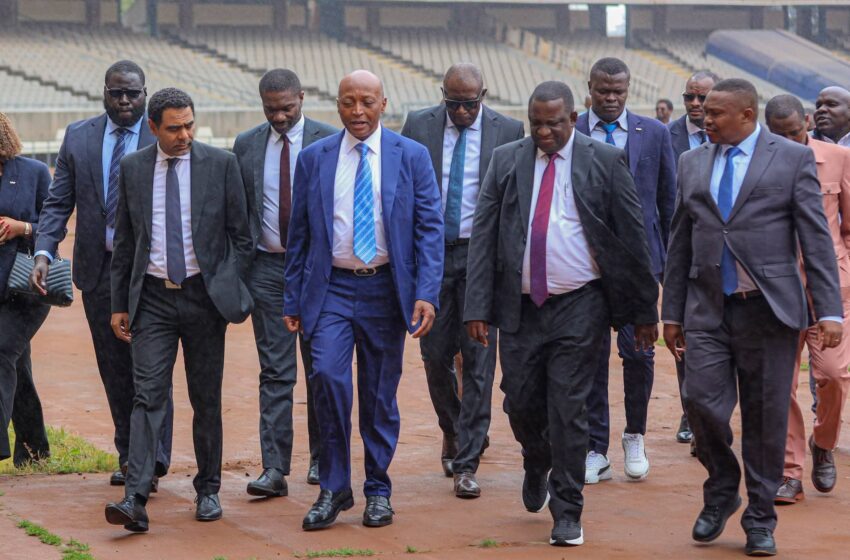
Kenya’s preparations to co-host the 2027 Africa Cup of Nations have entered a decisive stage after Confederation of African Football (CAF) officials conducted fresh assessments of stadiums, training grounds, hotels, airports and other tournament infrastructure.
The latest inspections have placed Nairobi’s Talanta Sports City and Moi International Sports Centre Kasarani at the centre of Kenya’s preparations under the Pamoja Bid involving Kenya, Uganda and Tanzania.
CAF President Patrice Motsepe inspected both Nairobi venues in September, expressing satisfaction with the progress at the newly built Talanta Sports International Stadium while identifying additional work required at Kasarani.
PAY ATTENTION: Follow Kenya Frontline WhatsApp channel for more news
The latest review followed an eight-day CAF inspection mission across Kenya, Uganda and Tanzania. The delegation included specialists from competitions, safety and security, transport, marketing, media, television and logistics, showing that stadium construction represents only one part of the hosting test.
The tournament is scheduled to run from June 19 to July 17, 2027, marking the return of AFCON to East Africa after more than five decades. Kenya, Uganda and Tanzania are preparing to stage the competition under the Pamoja arrangement.
The pressure is now shifting from construction announcements to operational readiness. Every venue must demonstrate that its pitch, lighting, broadcasting systems, security arrangements, hospitality areas, media facilities and spectator infrastructure can support Africa’s biggest football tournament.
CAF Technical Compliance Tests More Than Stadium Construction
The CAF AFCON 2027 stadium inspection process covers much more than the physical appearance of a football ground.
CAF assesses the ability of a venue to function during a high-pressure international tournament, including team movements, media operations, security, medical response, hospitality, broadcasting and spectator management.
Kasarani has attracted particular attention because several areas identified during earlier inspections still required significant work. Recent reporting indicated that CAF inspectors raised concerns about the pace of progress, while government officials maintained that contractors were addressing the outstanding requirements.
The pitch remains one of the most important components.
Elite football requires a consistent playing surface supported by effective drainage, irrigation and maintenance systems. The quality of the pitch also affects television production, player safety and the ability to stage several matches during a compressed tournament schedule.
Floodlighting presents another technical requirement. CAF has previously identified high lighting standards linked to international broadcasting and match operations.
Broadcasting infrastructure has become equally important.
Read Also: Pharmacy Board Looks to Shape Future of Pharmaceutical Practice
Modern AFCON matches require extensive camera positions, commentary facilities, media workspaces, interview areas, television compounds, fibre connectivity and reliable power systems.
Kenya’s broadcasting preparations have already included assessments of media centres, fibre connectivity, backup power, camera access points and outside-broadcast facilities at Talanta Stadium.
Video Assistant Referee technology adds another layer.
VAR requires dedicated technical infrastructure, secure communications and suitable camera coverage. Goal-line technology, semi-automated offside technology, player tracking and live data systems also form part of the modern football technology environment.
The result is a venue assessment process where construction progress must eventually translate into fully tested systems.
| Metric Category | Report Statistic | Industry Impact |
|---|---|---|
| AFCON 2027 tournament | June 19–July 17, 2027 | Establishes the final preparation window |
| Participating nations | 24 teams | Requires extensive team, media and hospitality facilities |
| Talanta Stadium | 60,000 capacity | Provides Kenya with a major modern football venue |
| Kasarani Stadium | Major Nairobi venue | Requires refurbishment plus operational testing |
| CAF inspection | Eight-day regional mission | Assessed stadiums, hotels, airports and training sites |
| Testing timeline | Stadium use targeted ahead of tournament | Allows technical faults to be identified before competition |
| Hosting model | Kenya, Uganda, Tanzania | Requires cross-border tournament coordination |
Talanta Sports City Becomes Kenya’s Major Progress Marker
Talanta Sports City has emerged as the strongest symbol of Kenya’s stadium construction programme.
The newly built 60,000-capacity facility was inspected by Motsepe during his September visit. CAF officially reported that the President was impressed by the progress made at the stadium.
The venue’s modern design gives Kenya an important advantage in its preparation programme.
Unlike Kasarani, which is undergoing major refurbishment, Talanta has been developed as a new stadium with contemporary facilities intended to support football, athletics, entertainment and large-scale events.
Recent government statements have placed the facility at about 95 percent completion based on its original design, while CAF’s hosting assessment gave it an 80 percent rating against the requirements being evaluated.
The difference between construction completion and CAF readiness is significant.
A stadium can appear almost finished while still requiring testing of access controls, communications, lighting, security systems, emergency procedures, broadcast infrastructure and hospitality operations.
The AFCON 2027 stadium construction progress therefore needs to be measured through operational milestones rather than photographs of completed sections.
Talanta’s proximity to Nairobi’s major transport network also gives it an important logistical role.
Teams, supporters, broadcasters and officials require predictable movement between airports, hotels, training grounds and stadiums. Nairobi’s existing hospitality ecosystem provides a wider base that can support this network.
Kasarani Remains a Critical Readiness Test
Kasarani presents a different challenge.
The stadium has a long history of hosting major football and athletics events, but its age means that significant refurbishment is required before it can meet the demands of another continental football tournament.
The latest CAF assessment placed the facility under close scrutiny. Reports from the August inspection indicated that progress had fallen below expectations in several areas, while government officials subsequently said contractors were working on the recommendations.
Read Also: Kenyan marathoner remanded over Ksh8 million land fraud case
Principal Secretary for Sports Elijah Mwangi said the contractor was already addressing CAF’s recommendations and that the government expected the work to be completed by December.
The government also faces a balancing act because Kasarani has a role beyond AFCON.
Nairobi is scheduled to host the 2029 World Athletics Championships, meaning the facility must remain suitable as an athletics venue while football-related upgrades are completed.
That makes the World Athletics stadium standards relevant to Kenya’s wider infrastructure strategy.
Football and athletics place different demands on stadium design. Pitch dimensions, track protection, spectator arrangements, field-of-play access, broadcasting positions and hospitality requirements must all be coordinated.
CAF’s timetable therefore requires Kenya to complete football-related improvements without undermining Kasarani’s future athletics function.
Pamoja Bid Depends on Regional Coordination
Kenya’s stadium programme cannot be viewed separately from developments in Uganda and Tanzania.
The Pamoja Bid is a three-country hosting arrangement requiring the partners to coordinate stadiums, transport, immigration, accommodation, security, medical services, communications and fan movement.
CAF’s eight-day inspection covered facilities across all three countries, including Talanta Stadium in Nairobi, Mandela National Stadium in Kampala and Benjamin Mkapa Stadium in Dar es Salaam. The inspection also included training facilities, hotels and airports.
That regional approach creates both an opportunity and a logistical challenge.
A supporter could attend a match in Nairobi before travelling to Kampala or Dar es Salaam. Teams and officials could also move between countries during the competition.
Border procedures therefore become part of the tournament experience.
Airport capacity is another important component. International supporters will depend on efficient arrivals, accreditation procedures, transfers and hotel connections.
The same applies to equipment.
Broadcasting companies, sponsors and technical teams will transport significant quantities of equipment between venues. Delays at airports or borders could affect tournament operations even when individual stadiums are ready.
The Pamoja concept therefore depends on coordination extending beyond football federations.
Government ministries, immigration authorities, airports, police, medical services, tourism agencies and local organising committees must work within a common operational framework.
Training Grounds Add Another Layer
Match venues receive most of the public attention, but training facilities can determine the quality of tournament preparation.
Each participating national team requires a secure training base with a suitable pitch, changing facilities, medical areas and controlled access.
CAF’s inspection programme has therefore included training grounds alongside stadiums. The September mission assessed supporting infrastructure in Kenya, Uganda and Tanzania rather than limiting its work to main match venues.
Kenya has identified several training facilities linked to its AFCON preparations.
The challenge is maintaining consistent standards across these sites.
A modern match stadium cannot compensate for poor training pitches or inadequate team facilities.
The same principle applies to hotels.
Teams require suitable accommodation with reliable security, nutrition, medical support and transport links. Match officials and CAF personnel also require dedicated hospitality arrangements.
Technology Will Shape Venue Readiness
Technology has become central to modern AFCON operations.
VAR is now an established part of elite football, while broadcasters require extensive connectivity to deliver live matches across Africa and global markets.
Talanta’s broadcasting preparations have already included fibre connectivity, backup power and camera access points.
Kasarani must similarly demonstrate that its infrastructure can support modern television production.
The challenge extends beyond installing cables.
Systems need testing under match conditions. Backup power must function during outages. Camera positions must provide unobstructed views. Media areas must accommodate journalists, photographers and broadcasters.
The Venue Operations Centre must also allow security and stadium officials to monitor activity across the facility.
These systems ultimately determine whether a stadium is tournament-ready.
Economic Impact Extends Beyond Matchday Revenue
AFCON 2027 could create an economic chain extending well beyond stadium gates.
Hotels stand to benefit from visiting teams, officials, journalists, supporters and sponsors. Airlines, restaurants, transport operators, tourism companies, security providers and event suppliers could also experience increased demand.
Nairobi’s position as Kenya’s main international aviation hub gives the capital a particularly important role.
Talanta and Kasarani could also provide a foundation for future international events.
A modern stadium can host football matches, athletics competitions, concerts, conferences and other large gatherings. Long-term value will therefore depend on maintenance, professional management and regular use after AFCON.
Read Also: Top Comoros Official Hospitalized in Nairobi Amid Rising Tensions in Moroni
Kenya’s investment in stadium infrastructure also intersects with its broader ambitions as an international sports destination.
The country already has a strong athletics identity. Adding modern football infrastructure could diversify its sporting-events portfolio.
January Testing Window Raises Pressure
The remaining months are critical.
Motsepe said stadiums need to be used ahead of the tournament so that organisers can test facilities and identify areas requiring further improvement. BBC Sport reported that CAF wanted stadiums to begin testing around January 2027.
That creates a narrow operational window.
Construction must be followed by commissioning. Commissioning must be followed by testing. Testing must then produce enough time to correct defects before the tournament begins.
Kenya’s biggest challenge therefore lies in converting construction speed into operational reliability.
Talanta appears to have made significant progress, while Kasarani still has a substantial list of requirements to address.
CAF has continued to engage the three host countries rather than announcing a change to the hosting arrangement. Motsepe has publicly maintained confidence in the Pamoja hosts while calling attention to the need to accelerate preparations.
Kenya’s AFCON Test Now Moves Into Final Phase
The latest CAF AFCON 2027 venue inspection Kenya process has given the country a clearer picture of the remaining work.
Talanta Sports City represents the biggest new infrastructure achievement, while Kasarani remains a major refurbishment project whose progress will continue attracting CAF attention.
The wider Pamoja Bid adds another dimension because Kenya’s readiness must align with Uganda and Tanzania.
The tournament will succeed operationally only if stadiums, training facilities, hotels, airports, transport networks, security agencies, medical services and broadcasters operate as one system.
Kenya’s next milestone is therefore not another construction announcement.
It is the point at which CAF can test the completed facilities under realistic match conditions.
The stadium lights will need to work. The pitches will need to withstand elite football. VAR and broadcast systems will need to function without disruption. Spectator entrances will need to handle large crowds. Security teams will need to coordinate across multiple zones. Media centres will need to support international coverage.
AFCON 2027 is scheduled to begin on June 19, 2027.
Between now and then, Kenya’s preparations will be judged less by the appearance of its stadiums and more by whether those facilities can perform when the continent arrives.