
Kasarani Stadium Pitch Progress 2026: Bermuda Grass, Skybox Construction Under AFCON 2027 Inspection Pressure

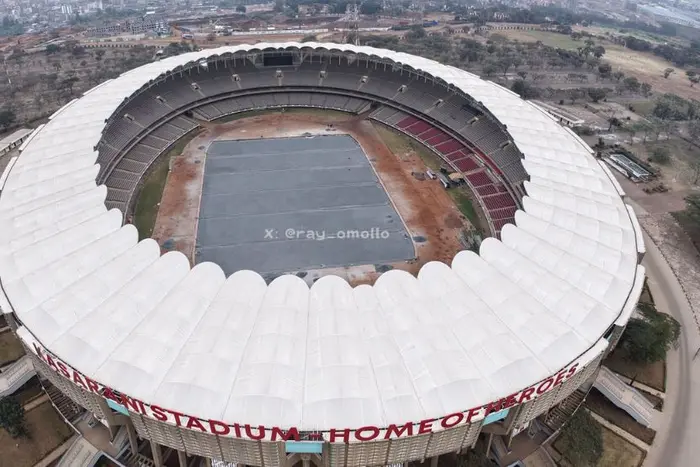
Kasarani Stadium progress Image source: Raymond Omollo
Moi International Sports Centre Kasarani is facing a crucial phase of rehabilitation as Kenya prepares to co-host the 2027 Africa Cup of Nations (AFCON). Pitch establishment, VIP skybox construction and improvements to stadium operations are among the major workstreams that will determine whether the Nairobi venue meets the requirements for the continental tournament.
The stadium is expected to play an important role in the competition, scheduled for June 19 to July 17, 2027. Its readiness will depend on more than visible construction progress, with playing-surface quality, spectator safety, hospitality facilities, lighting and broadcast infrastructure all requiring technical assessment.
Recent reporting has highlighted progress on grass planting at Kasarani, alongside concerns over the construction of additional VIP hospitality facilities. However, the precise completion percentage of the pitch, the number of fully commissioned skyboxes and the date of the next technical walkthrough require confirmation from the responsible authorities.
Read Also: Pharmacy Board Looks to Shape Future of Pharmaceutical Practice
The Confederation of African Football has been conducting assessments of tournament infrastructure across Kenya, Uganda and Tanzania. Those assessments form part of the wider preparation programme for AFCON 2027, placing pressure on host governments to complete outstanding work and demonstrate that facilities are ready for testing.
Bermuda Grass Establishment Becomes a Key Test
The main playing surface is one of the most technically sensitive components of the Kasarani rehabilitation programme. Grass planting is an important milestone, but it does not automatically mean that the pitch is ready for international football.
Bermuda grass is widely used on sports fields because suitable varieties can tolerate frequent mowing, recover from wear and perform well under appropriate growing conditions. Its effectiveness at Kasarani will depend on the selected variety, root development, soil composition, irrigation and drainage performance.
The pitch must develop a consistent surface that supports predictable ball movement and reliable player footing. Uneven growth, weak rooting or areas that retain excessive water could compromise playing conditions, particularly during periods of heavy rainfall.
A specialist maintenance programme should include controlled irrigation, mowing, fertilisation and regular inspections of the root zone. Groundskeepers must also monitor surface firmness and drainage to prevent the field from becoming excessively soft or uneven.
Pitch maintenance and inspection considerations
A stadium infrastructure and pitch-maintenance consultant in Nairobi would typically assess grass coverage, root establishment, drainage efficiency, surface consistency and maintenance procedures when evaluating a newly developed football pitch. These are technical assessment criteria, not a direct quotation from an identified consultant.
The final assessment should establish whether the surface can withstand training sessions, competitive matches and recovery periods between fixtures. Trial matches can help expose weaknesses that may not be obvious during a visual inspection.
The CAF stadium infrastructure assessment framework provides the broader context for evaluating competition venues, although the precise technical criteria applicable to Kasarani should be confirmed against the requirements issued for the 2027 tournament.
VIP Skybox Construction Raises Structural Questions
The proposed VIP skyboxes represent another significant component of the stadium upgrade. Premium hospitality facilities provide private viewing areas for invited guests, corporate partners, officials and tournament stakeholders.
Construction within an existing stadium presents engineering challenges because new structures must work safely with the original building. Engineers need to assess load-bearing capacity, access routes, fire safety, ventilation, electrical systems and the integration of additional services.
In May 2026, Sports Cabinet Secretary Salim Mvurya was reported to have discussed concerns with CAF regarding the proposed skyboxes and their potential effect on existing infrastructure and project timelines. The issue illustrates the challenge of balancing hospitality requirements with the practical constraints of upgrading an established venue.
The government and project contractors must ensure that the final design reflects the specifications agreed with the tournament organisers. Any changes to the original construction plan should be assessed for their effects on safety, functionality and delivery schedules.
The number of suites completed is only one measure of progress. Each facility must also have the required utilities, secure access, suitable seating and operational arrangements before it can be considered ready for tournament use.
Construction should not interfere with emergency exits, spectator circulation, media access or the movement of players and officials. These requirements make coordination between structural engineers, stadium management, contractors and safety officials particularly important.
Kasarani Stadium Rehabilitation Milestones
The following table summarises the main areas that require assessment. The inspection targets describe the outcomes that need to be demonstrated; they are not independently verified completion dates or official CAF deadlines for each workstream.
| Facility Section | Engineering Upgrade Scope | CAF Inspection Completion Target |
|---|---|---|
| Main competition pitch | Bermuda grass establishment, root-zone development, drainage and irrigation | Demonstrate an established, consistent playing surface that meets the applicable competition requirements |
| VIP skyboxes | Structural additions, hospitality suites, utilities and safe access | Complete construction and demonstrate compliance with the final approved specifications |
| Floodlighting | Installation, illumination testing and technical certification | Verify that lighting meets the applicable match and broadcast requirements |
| Spectator circulation | Entry and exit routes, turnstiles and spectator segregation | Demonstrate safe, controlled movement throughout the stadium |
| Venue Operations Centre | Command, communications and stadium monitoring systems | Verify operational readiness and coordination procedures |
| Media facilities | Press conference rooms, workspaces and broadcast infrastructure | Demonstrate that media and broadcasting operations can function effectively |
| Security systems | CCTV, access control, fire detection and emergency coordination | Test the relevant systems and confirm that safety procedures are operational |
| Perimeter infrastructure | Fencing, controlled access and circulation routes | Verify secure access and compliance with applicable stadium requirements |
The table outlines the main technical workstreams rather than confirming that any specific section has been completed. Final acceptance will depend on inspections, testing and the documentation required by the responsible authorities.
Floodlighting, Security and Broadcast Systems
A new pitch and completed hospitality suites will not, by themselves, make Kasarani ready for AFCON. Stadium systems must operate together to support matches, spectators, officials and international broadcasters.
Read Also: KNEC Grade 10 Assessment 2026: Guidelines, Timelines & School Requirements
Floodlighting is particularly important for evening fixtures and television coverage. Testing should establish whether illumination is consistent across the playing area and meets the technical standards applicable to the competition.
Security infrastructure is equally important. CCTV cameras, access-control equipment, turnstiles, fire detection and emergency communication systems must function reliably. Stadium operators also need clear procedures for responding to incidents and coordinating with emergency services.
The Venue Operations Centre should provide a central point for monitoring stadium activity and coordinating operational decisions. Its effectiveness depends on working communications systems, trained personnel and clear responsibilities.
Broadcast facilities require similar attention. Camera positions, commentary areas, media workspaces and cable routes must be integrated into the stadium layout without obstructing spectators or compromising safety.
The AFCON 2027 tournament preparations therefore involve a wider programme than construction alone. Contractors must complete the physical works, while stadium managers and technical teams verify the performance of the systems that will be used during competition.
CAF Technical Walkthroughs and Venue Readiness
Technical walkthroughs provide an opportunity to examine completed works, identify outstanding deficiencies and determine whether further corrective action is necessary.
At Kasarani, an assessment of the playing surface would need to consider grass establishment, drainage and overall consistency. The hospitality facilities would require scrutiny of structural completion, safe access and supporting services.
Inspectors would also need to consider lighting, security, emergency arrangements, spectator circulation and media operations. Documentation and test results can help establish whether installed systems meet the relevant requirements.
A distinction must be maintained between construction completion and commissioning. Installing equipment does not necessarily demonstrate that it functions correctly. Systems may require testing, certification, staff training and operational exercises before the venue can reliably host a major international event.
The CAF inspection updates for AFCON 2027 host countries provide context for the broader venue assessment programme. However, a specific date for the next Kasarani walkthrough, or confirmation that a particular inspection has been passed, should only be published after verification from an official announcement.
Training facilities also form part of the preparations. Teams require suitable grounds for practice, while tournament organisers must coordinate accommodation, transport, security and other supporting services.
AFCON 2027 Deadline Increases Delivery Pressure
The tournament is scheduled to take place from June 19 to July 17, 2027. That timetable leaves the host countries with a defined period to finish construction, test facilities and resolve any deficiencies identified during technical assessments.
For Kenya, Kasarani’s rehabilitation carries significance beyond the tournament. Improvements to the stadium could support future international sporting events, provided the facilities are maintained and managed effectively after the competition.
The long-term value of the investment will depend on regular pitch maintenance, servicing of lighting and security systems, and continued upkeep of hospitality and media facilities. A stadium that meets tournament requirements must also remain safe and functional once the event ends.
Read Also: Top Comoros Official Hospitalized in Nairobi Amid Rising Tensions in Moroni
The immediate challenge is to convert visible progress into demonstrable operational readiness. Bermuda grass must develop into a dependable playing surface, skybox construction must meet approved specifications, and the supporting stadium systems must be tested.
Kasarani’s eventual readiness will be determined not simply by the appearance of the completed works, but by whether the venue can safely and reliably support international football. As preparations for AFCON 2027 continue, verified construction updates and clear inspection outcomes will be essential in measuring the project’s progress.