
Elections Law Amendment Bill 2026 Debates: National Assembly High Election Costs Political Party Nomination Rules

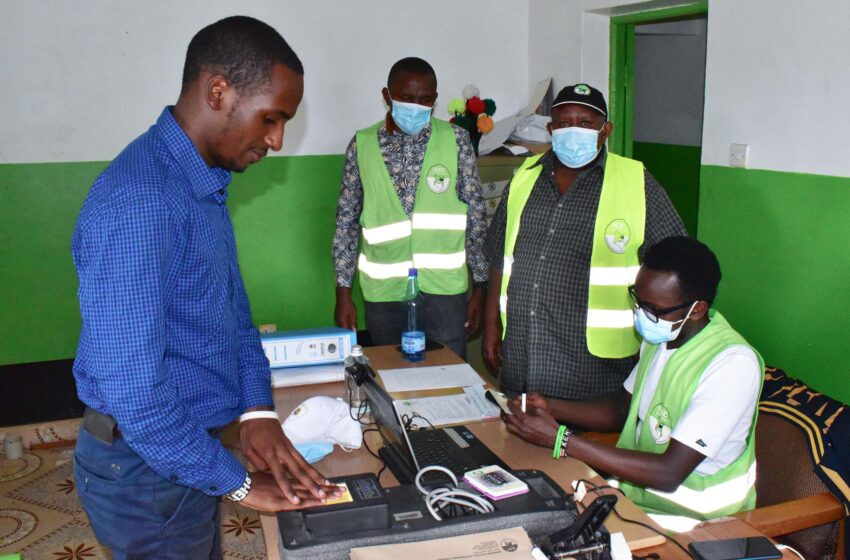
Electoral reform debate is gathering momentum as Parliament considers changes to the legal framework governing elections ahead of the 2027 General Election. At the centre of the discussion are the administration of elections, the regulation of political party nominations, access to election technology and the need to strengthen public confidence in the electoral process.
The National Assembly considered the Elections (Amendment) (No. 2) Bill, 2024, during its sitting on October 1, 2026. The proposal originated from the National Dialogue Committee (NADCO), established through a parliamentary resolution in 2023 to facilitate political dialogue and recommend legal and policy reforms. Its progress comes as electoral institutions prepare for the next general election, placing renewed attention on the laws governing candidates, political parties and the Independent Electoral and Boundaries Commission (IEBC). (Parliamentary Hansard).
Although the debate is taking place under a broader reform agenda, it is important to distinguish the various legislative proposals. The parliamentary record identifies the Elections (Amendment) (No. 2) Bill, 2024, rather than a confirmed Elections (Law) Amendment Bill, 2026 containing all the spending caps and nomination quotas outlined in some preliminary accounts.
Read Also: Pharmacy Board Looks to Shape Future of Pharmaceutical Practice
The wider discussion nevertheless raises important questions about the cost of conducting elections, the transparency of party primaries, the inclusion of marginalised groups and the ability of electoral institutions to implement legal changes before the next nationwide vote.
Election Costs Put Public Accountability in Focus
Conducting a national election requires extensive logistical planning, including voter registration, procurement of election materials, recruitment and training of polling officials, deployment of technology and transportation of personnel across the country.
These operations place considerable demands on public finances. The challenge is particularly pronounced in a country with 47 counties, diverse geographical conditions and electoral areas that require different logistical arrangements.
Debate about election expenditure therefore extends beyond the headline budget. It concerns whether public resources are used efficiently, whether procurement decisions offer value for money and whether electoral institutions can deliver credible results without unnecessary administrative waste.
Article 81 of the Constitution establishes the principles governing Kenya’s electoral system, including the requirement for elections to be free and fair, transparent, impartial, accurate and accountable. Article 86 further sets out requirements for voting systems and the counting, tallying and transmission of results.
These constitutional provisions provide a framework for assessing electoral expenditure and operational performance. However, they should not be interpreted as establishing a specific statutory spending cap on ballot printing, campaign logistics or election administration.
Any proposed expenditure limits would need to be clearly defined in the relevant legislation, supported by practical costing and assessed against the operational requirements of the IEBC.
For taxpayers, the central question is whether the money allocated to elections produces a reliable and transparent voting process. Lower expenditure alone would not represent success if it resulted in inadequate polling materials, insufficiently trained officials or delays in transmitting results.
A credible reform programme must balance financial discipline with the constitutional obligation to protect the integrity of the vote.
Political Party Nominations Face Greater Scrutiny
Political party nominations remain one of the most contentious stages of Kenya’s electoral process. Competition for party tickets can be intense, particularly in constituencies where a party enjoys substantial electoral support.
The nomination process determines which candidates appear on party tickets during the general election. Disputes over the exercise can therefore affect political careers, party unity and the ability of candidates to campaign within the statutory timetable.
The Elections Act provides a legal framework for candidate nominations. Section 13 requires political parties to nominate candidates at least 90 days before a general election, in accordance with their constitutions and nomination rules.
Political parties must also comply with the relevant requirements governing party lists, candidate eligibility and the submission of nomination documents. The Independent Electoral and Boundaries Commission has responsibilities under electoral law, while the Office of the Registrar of Political Parties oversees compliance with the Political Parties Act.
The distinction between these institutions matters. The Registrar deals with the regulatory framework governing political parties, while the IEBC exercises responsibilities assigned to it under election law, including the conduct and supervision of elections and relevant nomination processes.
Reform proposals affecting party primaries must therefore specify which institution is responsible for each stage, how compliance will be assessed and what remedies will be available to candidates who believe the rules have been violated.
Read Also: Top Comoros Official Hospitalized in Nairobi Amid Rising Tensions in Moroni
Clear nomination procedures could reduce uncertainty and help political parties prepare their candidate lists within the required timelines. They could also limit disputes arising from inconsistent rules, disputed results or alleged irregularities during primaries.
However, the effectiveness of any new framework will depend on enforcement. Rules that are poorly communicated or applied inconsistently could create additional disputes instead of resolving existing problems.
Inclusion of Persons With Disabilities Remains Important
Representation of persons with disabilities is another important issue in electoral reform.
Article 54 of the Constitution guarantees the rights of persons with disabilities, including the right to participate in public life and to access electoral processes. Article 90 establishes the framework for allocating certain parliamentary and county assembly seats through proportional representation using party lists.
Article 90 also requires party lists, subject to the constitutional provisions governing the relevant seats, to alternate between male and female candidates and reflect regional and ethnic diversity where applicable.
These requirements provide an existing constitutional foundation for inclusive political representation. They do not, however, establish a universal five per cent quota for persons with disabilities across all political party nomination lists.
Any proposal to introduce such a threshold would require verification against the actual text of the relevant bill or amendment before it could be reported as a specific legislative requirement.
The broader policy question remains significant. Political parties influence who gains access to elective office, and their nomination procedures can either widen participation or reinforce barriers faced by underrepresented groups.
Effective inclusion requires more than placing names on a list. Parties must consider accessible nomination venues, appropriate communication formats, fair participation in internal campaigns and transparent criteria for selecting candidates.
The Constitution of Kenya provides the starting point for assessing these obligations. Any additional statutory measures should be evaluated against the existing constitutional framework and the practical challenges experienced by aspiring candidates.
Election Disputes and the Importance of Timely Resolution
Disputes arising from party primaries can have consequences beyond the candidates involved. Prolonged litigation may affect the preparation of final nomination lists, the printing of ballot papers and the IEBC’s ability to complete other statutory tasks on time.
The law already provides mechanisms for addressing nomination disputes. Political parties have responsibilities under the Political Parties Act and the applicable nomination regulations, while the IEBC and the courts exercise jurisdiction in accordance with the relevant legal provisions.
The Elections (Party Primaries and Party Lists) Regulations, 2017 set out principles for party primaries and party-list nominations, including fairness, transparency, accountability, inclusivity and equal opportunities for eligible candidates.
These principles are important because candidates must have a meaningful opportunity to challenge decisions they believe were reached improperly.
At the same time, dispute-resolution mechanisms must operate within clear deadlines. Delayed decisions can create uncertainty for political parties and electoral administrators, particularly as the general election approaches.
Any proposed amendment introducing new filing deadlines or decision-making procedures should clearly identify the relevant authority, the applicable time limit and the legal consequences of non-compliance.
A proposed 24-hour dispute-filing requirement, for example, should not be treated as existing law without confirmation from the relevant statutory text.
Election Technology Adds Another Layer to Reform
The management of election technology has also featured prominently in the wider legislative debate.
Proposals under the Elections (Amendment) Bill, 2024, have addressed the IEBC’s control of election technology, access to election servers and the handling of election information. These questions are central to transparency because technology plays an important role in transmitting and verifying election results.
The National Assembly’s parliamentary records provide a reference point for tracking the status of bills and identifying the specific proposals under consideration.
Effective technological oversight requires clearly defined responsibilities for system ownership, access to information, data security and the preservation of election records. It must also allow authorised scrutiny while protecting sensitive information against unauthorised access.
For voters and candidates, the ultimate concern is whether the system produces accurate results that can be independently verified through lawful procedures.
Changes to election technology should therefore be assessed not only on their technical merits but also on whether they improve accountability, resilience and public confidence.
Key Issues in the Electoral Reform Debate
| Reform area | Existing legal framework | Main issue for consideration |
|---|---|---|
| Election expenditure | Constitutional principles on electoral integrity and public finance | Transparency, procurement efficiency and value for money |
| Party nominations | Elections Act and Political Parties Act | Fair procedures, candidate eligibility and compliance |
| Disability inclusion | Constitution, including Article 54 | Meaningful access and representation |
| Party lists | Constitution, Article 90, and election regulations | Gender balance, diversity and lawful nomination procedures |
| Dispute resolution | Elections Act, Political Parties Act and applicable regulations | Timely decisions and access to remedies |
| Election technology | Electoral legislation and relevant constitutional requirements | System oversight, access to information and verifiable results |
The table summarises the existing legal context and the main questions facing policymakers. It does not represent a list of confirmed new provisions contained in a single 2026 amendment bill.
Parliament Faces a Narrowing Reform Window
The timing of electoral reforms is important because election preparation involves interdependent administrative tasks. Legal changes introduced close to a general election can affect procurement, staff training, voter communication and the preparation of nomination procedures.
The IEBC must be able to plan its operations against a stable and clearly understood legal framework. Political parties also need sufficient time to communicate their nomination rules to members and resolve internal disagreements.
Parliament consequently faces two related responsibilities: scrutinising proposed amendments carefully and ensuring that necessary changes are completed early enough for effective implementation.
Public participation is equally important. Candidates, political parties, civil society organisations, persons with disabilities and ordinary voters can provide practical perspectives on how proposed rules may affect participation and electoral credibility.
Consultation should also help lawmakers identify provisions that might create unintended consequences, overlap with existing legislation or impose obligations that electoral institutions cannot realistically enforce.
What the Reforms Could Mean for the 2027 Election
The outcome of the legislative process will determine which proposed changes become binding law and when they take effect.
Until the relevant bills have completed the required parliamentary stages and received presidential assent where necessary, proposals must be distinguished from enacted legislation. The precise provisions of each bill also matter: a debate about electoral costs does not automatically introduce expenditure caps, just as a discussion about inclusion does not automatically establish a new nomination quota.
For political parties, the immediate priority is compliance with existing nomination requirements and preparation for the statutory timetable. For electoral administrators, the challenge is to maintain operational readiness while monitoring legislative developments.
Read Also: KNEC Grade 10 Assessment 2026: Guidelines, Timelines & School Requirements
For voters, the wider objective is a process that offers equal opportunities to eligible candidates, protects participation and delivers results through transparent and accountable procedures.
Kenya’s electoral reform debate will ultimately be judged by whether legal changes improve the experience of voters and candidates in practice. Financial discipline, inclusive representation and timely dispute resolution are important goals, but they must be supported by precise legislation, adequate resources and consistent enforcement.