
CAF Makes U-Turn on AFCON Format as Tournament Returns to Two-Year Cycle

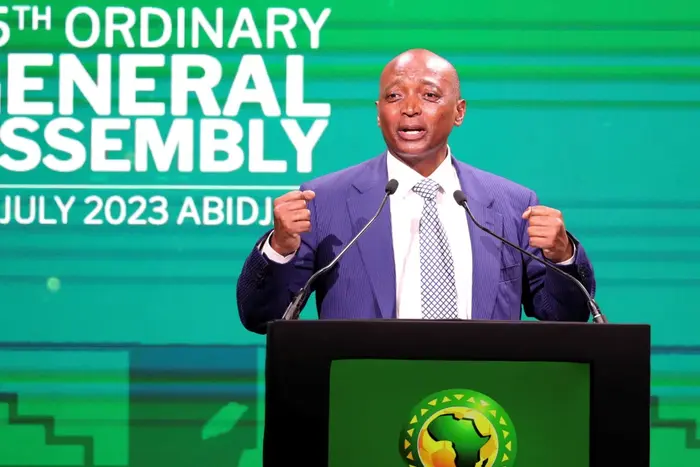
CAF President Patrice Motsepe Photo Credit: CAF Media
The Africa Cup of Nations (AFCON) will return to its traditional two-year schedule after the Confederation of African Football (CAF) Executive Committee unanimously reversed its earlier decision to stage the continental showpiece every four years, ending months of uncertainty surrounding the future of one of African football’s biggest competitions.
The announcement, made on October 29, 2026, marks a significant shift in CAF’s competition strategy under President Patrice Motsepe, who had previously supported plans to introduce a four-year AFCON cycle alongside a proposed Africa Nations League competition.
The reversal follows a reassessment of the financial and developmental implications of the proposed changes, with CAF acknowledging that the new competition would require several years before generating the resources needed to sustain African football and make its tournaments globally competitive.
Read Also: Pharmacy Board Looks to Shape Future of Pharmaceutical Practice
CAF President Dr Patrice Motsepe said the decision was guided by the need to protect the interests of African football, its 54 member associations and players representing clubs across the world.
“The decision by the CAF EXCO that the CAF AFCON should take place every Two Years was based on advancing, protecting and promoting the interest of African Football and CAF’s 54 Member Associations, as well as the interest of African players employed by Football Clubs outside Africa,” Motsepe said.
Why CAF Abandoned the Four-Year AFCON Plan
The decision to move AFCON to a four-year schedule was initially presented as part of a wider restructuring of African football competitions.
CAF had planned to introduce a new Africa Nations League, a pan-African competition expected to take place every two years and provide another major international football event outside the FIFA World Cup cycle.
The proposed tournament was intended to replace the traditional AFCON in the continental calendar while creating additional commercial opportunities for the governing body.
However, the financial sustainability of the new competition became a major concern.
According to CAF, the Africa Nations League would require several years before it could generate substantial financial returns and make the necessary contribution towards football development across the continent.
The governing body therefore reconsidered whether it was practical to replace an established competition with a new tournament whose financial benefits would take time to materialise.
Motsepe explained that CAF’s priority was to ensure African football remained competitive while protecting the interests of national associations and players.
The decision also comes against the background of growing concerns about international football calendars, particularly the challenges facing African players competing for European clubs and regularly travelling long distances to represent their countries.
AFCON 2027, 2028, 2031 and 2033 Confirmed
Under the revised arrangement, the next TotalEnergies Africa Cup of Nations will take place in 2027, with Kenya, Tanzania and Uganda jointly hosting the continental competition.
The tournament will be particularly significant for East African football, marking a historic opportunity for the three neighbouring countries to showcase their organisational capacity, infrastructure and sporting ambitions.
The subsequent editions are scheduled for 2028, 2031 and 2033.
The adjustment in the calendar takes into consideration the 2030 FIFA World Cup, with CAF indicating that its major national-team competitions will not be staged during the year of the global tournament.
Motsepe expressed confidence in the three East African hosts, insisting that the 2027 competition would be successful.
“The next TotalEnergies CAF AFCON will take place in 2027 in Kenya, Tanzania and Uganda and I am confident that it will be very successful,” he stated.
Kenya’s involvement provides further significance as the country prepares to host its first senior AFCON tournament since the competition was established in 1957.
Read Also: KNEC Grade 10 Assessment 2026: Guidelines, Timelines & School Requirements
The three countries will be expected to deliver suitable stadiums, training facilities, accommodation, transport networks and other essential infrastructure to accommodate participating teams, officials and supporters.
AFCON Began in 1957 With Just Three Countries
The Africa Cup of Nations has grown considerably since its inaugural edition in February 1957 in Sudan.
The first tournament featured only three participating countries: Egypt, Sudan and Ethiopia. South Africa had initially been invited but was excluded because of its apartheid policies.
Egypt became the first African champions after defeating Ethiopia 4-0 in the final, establishing a competition that would eventually become one of the most prestigious international football tournaments.
Over the decades, AFCON history has been defined by the expansion of participating nations and the emergence of new continental football powers.
The tournament initially featured four teams before expanding to eight, 12 and eventually 16 participants. The 2019 edition in Egypt marked another important milestone when the finals expanded to 24 teams.
The competition has also developed into a major global sporting attraction, providing African national teams with an international platform to demonstrate their quality and compete for continental honours.
AFCON Has Produced Generations of African Football Stars
Beyond national pride and continental rivalries, AFCON has played an important role in introducing some of Africa’s greatest football talents to international audiences.
The tournament has provided a stage for legendary players such as Cameroon’s Samuel Eto’o and Roger Milla, Ghana’s Abedi Pele, Ivory Coast’s Didier Drogba and Yaya Toure, as well as Liberia’s George Weah.
More recently, Egypt’s Mohamed Salah, Senegal’s Sadio Mane and Nigeria’s Jay-Jay Okocha have continued to strengthen the competition’s global reputation.
Egypt remain the most successful nation in the tournament’s history, having won seven titles, including three consecutive championships between 2006 and 2010.
Cameroon have lifted the trophy five times, while Ghana have four titles. Nigeria and Ivory Coast have also established themselves among the competition’s successful nations.
Read Also: Top Comoros Official Hospitalized in Nairobi Amid Rising Tensions in Moroni
The tournament has equally provided opportunities for emerging players to demonstrate their abilities, attract international attention and secure opportunities at leading clubs.
Its regular schedule has also allowed national teams to maintain competitive momentum, giving supporters more frequent opportunities to follow their countries at the highest continental level.
Motsepe Insists Decision Is in African Football’s Best Interests
Motsepe maintained that returning to the traditional format would strengthen African football financially and competitively while allowing CAF’s member associations to benefit from a more established tournament structure.
He also emphasised that AFCON represents more than a football competition, describing it as an opportunity to celebrate the continent’s diverse cultures, traditions and communities.
“The AFCON competition is also about celebrating African Football and Africa’s rich and diverse cultures, customs and traditions and bringing people together from Africa’s 54 Countries, the African Diaspora and throughout the world,” he added.
The latest decision represents an important moment for CAF as it continues efforts to improve commercial partnerships, broadcasting agreements and financial support for its member associations.
The return to a two-year cycle also restores a familiar rhythm to the African football calendar, ensuring that the continent’s biggest national-team competition remains a regular feature of international football.
Attention will now turn towards the 2027 edition in Kenya, Tanzania and Uganda, where the three co-hosts will have an opportunity to demonstrate their readiness to deliver a successful continental championship.
With the four-year proposal abandoned, CAF has reaffirmed the importance of AFCON as a central pillar of African football development, international recognition and cultural unity.