
Kenya Basic Education Bill 2026: New Law Could Hit Schools With KSh1 Million Fines Over Illegal Fees

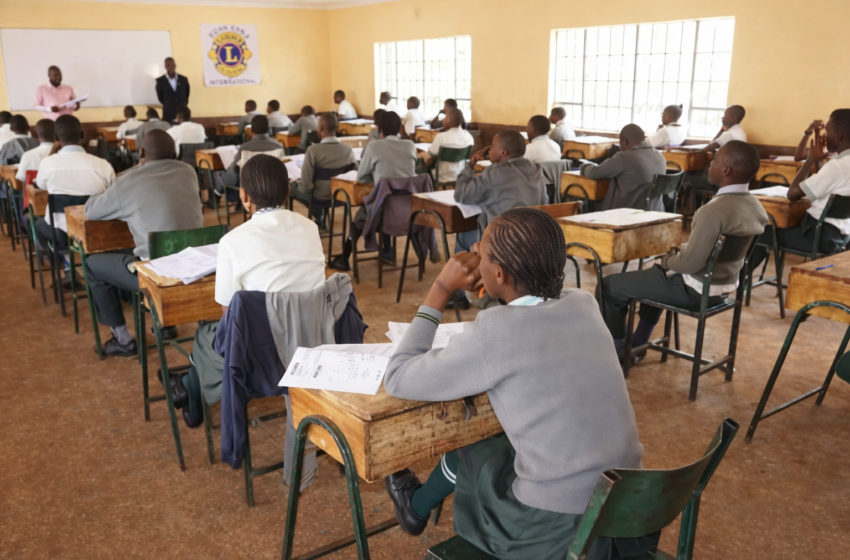
Kenya Junior School Education Assessment. IMAGE: Courtesy
Kenya’s education sector could be heading for a major legal shake-up as Parliament considers a new law that seeks to tighten school administration, protect learners and strengthen accountability in public basic education institutions. The proposed Basic Education Bill, 2026, National Assembly Bill No. 50, introduces tougher restrictions on school fees, revised admission requirements and stricter oversight of institutions that fail to comply with national education standards.
At the heart of the proposed legislation is the government’s commitment to protecting the constitutional right to free and compulsory basic education. Public schools would face strict limitations on the charges they can impose on parents, with headteachers and other responsible persons risking substantial penalties for collecting unauthorised payments.
Read Also: Pharmacy Board Looks to Shape Future of Pharmaceutical Practice
The proposals come amid persistent concerns from parents over additional school expenses, including development levies, remedial lessons, motivation fees and other contributions that have placed pressure on household budgets. Although Kenya already has legal protections for free basic education, enforcement has remained a challenge in institutions where parents are regularly asked to meet expenses beyond approved government funding arrangements.
“Establishing strict statutory limits on public school levies protects equitable access to basic education,” stated an education governance consultant in Nairobi. “Enforcing unified legal administrative frameworks prevents unauthorized charges while standardizing national capitation disbursements.”
Parliament Considers Major Changes to Basic Education Law
The Basic Education Bill, 2026, was published on July 24, 2026, as part of a wider programme of education reforms. It seeks to repeal and replace the Basic Education Act, 2013, which has provided the principal legal framework for the management and administration of basic education institutions.
The National Assembly formally listed the proposal among its legislative business in August 2026, before the Departmental Committee on Education began nationwide public participation in September.
According to the Kenya News Agency report on the education reform Bills, the committee commenced consultations in Uasin Gishu on September 14, with education stakeholders, parents, teachers and members of the public invited to contribute to the proposed changes.
The committee, chaired by Tinderet MP Julius Melly, is considering six proposed education laws intended to reshape different aspects of the country’s education system.
The Basic Education Bill is among the most extensive proposals because it addresses school governance, registration, inspections, learner protection, admission procedures and the responsibilities of national education authorities.
However, the legislation is still a Bill and should not be confused with an already enacted law. Its provisions must undergo parliamentary consideration and receive presidential assent before becoming enforceable in the proposed form.
Schools Could Face Sh1 Million Fines Over Unauthorised Fees
One of the most significant proposals is the introduction of stronger penalties against public school administrators who collect tuition fees or additional charges contrary to the law.
Section 11 of the proposed Bill reinforces the prohibition against charging Kenyan citizens tuition fees in public basic education institutions.
Read Also: Top Comoros Official Hospitalized in Nairobi Amid Rising Tensions in Moroni
The provision is anchored in Article 53(1)(b) of the Constitution, which guarantees every child the right to free and compulsory basic education.
Section 12 goes further by requiring public schools to obtain approval from the Cabinet Secretary for Education before imposing additional charges.
This provision targets payments that schools sometimes introduce independently, including development contributions, remedial fees, infrastructure levies and other charges that may not have received the required government authorisation.
Under the proposed legislation, any person who contravenes the provisions on additional charges could face a fine not exceeding Sh1 million, imprisonment for up to three years, or both upon conviction.
The proposed law also requires institutions collecting approved charges to issue official receipts, strengthening financial transparency and accountability.
Importantly, Section 12 expressly states that no child should be barred from attending school because of failure to pay the charges covered by the provision.
The proposal could therefore change how school administrators approach financial demands, particularly where parents have previously faced pressure to clear additional payments before their children are allowed into classrooms.
The proposed Sh1 million school-fee penalty provisions have already attracted attention among education stakeholders, particularly because the legislation seeks to move beyond administrative warnings towards clearly defined criminal penalties.
Capitation Funding Becomes Central to School Accountability
The proposed restrictions on school charges also bring government capitation funding into sharper focus.
Public schools rely on government allocations to support teaching and learning materials, administration and other operational requirements. These funds are essential to maintaining the promise of free basic education.
However, schools frequently face financial pressures arising from infrastructure needs, classroom shortages, maintenance requirements and other operational demands.
Read Also: KNEC Grade 10 Assessment 2026: Guidelines, Timelines & School Requirements
The proposed legislation seeks to ensure that such financial challenges do not become an excuse for introducing unauthorised charges.
The Ministry of Education will consequently need to strengthen the management, distribution and monitoring of capitation allocations to ensure that public schools can operate without shifting unapproved financial obligations to parents.
School heads and Boards of Management will also be expected to maintain proper financial records and demonstrate that government allocations are used for their intended purposes.
Nevertheless, the Bill does not automatically increase capitation funding or guarantee that all school operational expenses will be covered. Its success will depend partly on whether government funding is sufficient, predictable and released on time.
Parents will have a stronger legal basis to question additional payments that have not received the required approval if the proposed provisions become law.

