
Education Ministry Sets January 4 School Reopening as 2027 Calendar Aligns National Examinations

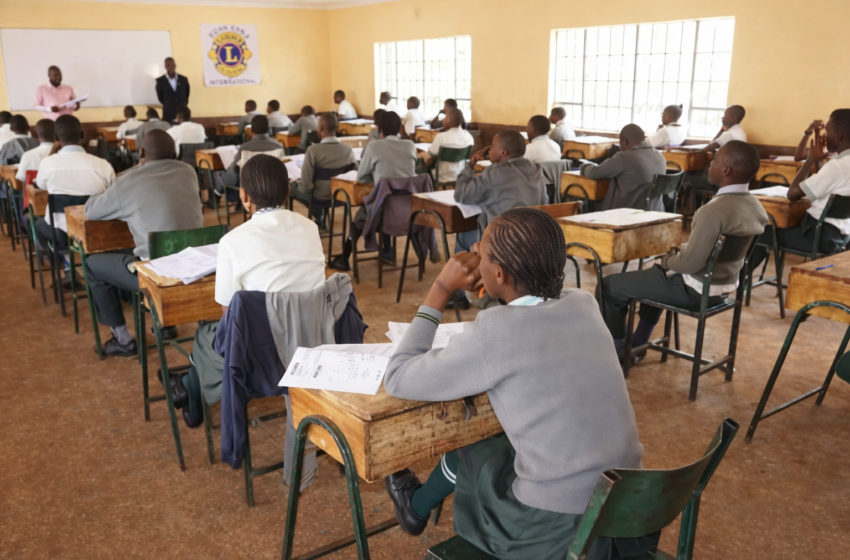
Kenya Junior School Education Assessment. IMAGE: Courtesy
Parents, learners and teachers across Kenya now have a clearer picture of the 2027 academic year after the Ministry of Education released a new school calendar setting January 4 as the opening date for the first term.
The schedule, contained in a circular dated October 19, 2026, provides opening and closing dates, mid-term breaks, holiday periods and national assessment windows for pre-primary, primary, junior, senior and secondary schools. It also outlines a separate academic programme for diploma teacher training colleges.
Principal Secretary for Basic Education John Lekakeny Ololtuaa issued the circular to regional, county and sub-county directors of education, directing them to distribute the calendar to basic education institutions. The announcement provides schools with an administrative framework for planning teaching programmes, examinations, staffing and learner activities throughout the year.
“Standardizing annual school term calendars provides instructional predictability for basic education institutions,” stated a Nairobi-based education administration consultant. “Aligning term lengths with national assessment windows ensures syllabus completion across primary and secondary tiers.”
The 2027 schedule comes at an important stage in Kenya’s transition from the 8-4-4 system to the Competency-Based Education (CBE) framework. It also places national assessments and the Kenya Certificate of Secondary Education (KCSE) within a defined examination period, requiring schools to plan their academic programmes around the published dates.
January 4 marks the start of the 2027 academic year
The Ministry has scheduled Monday, January 4, 2027, as the opening date for pre-primary, primary, junior, senior and secondary schools.
However, the first-term closing dates differ between primary and junior institutions and senior and secondary schools.
Pre-primary, primary and junior schools will close on April 9 after a 14-week term. Senior and secondary schools will conclude their first term on April 2, after 13 weeks.
The difference gives the two education categories slightly different April holiday periods, although both will resume for the second term on May 3.
The calendar also provides for a first half-term break from February 19 to February 28, 2027. The break offers learners and teachers an opportunity to rest before completing the remaining weeks of the first term.
According to the published circular, the second term will run for 13 weeks, opening on May 3 and closing on July 30. A second half-term break is scheduled from June 9 to June 20.
Learners will then proceed for the August holiday, which runs from July 31 to August 29, before returning to school on August 30 for the final term.
Full 2027 school term dates and holiday periods
The Ministry’s calendar provides different first-term arrangements for primary and junior institutions compared with senior and secondary schools. The second and third terms follow the same opening and closing dates.
| Calendar Period | Pre-Primary, Primary and Junior Schools | Senior and Secondary Schools |
|---|---|---|
| Term One | January 4 – April 9, 2027 (14 weeks) | January 4 – April 2, 2027 (13 weeks) |
| First Half-Term | February 19 – February 28, 2027 | February 19 – February 28, 2027 |
| April Holiday | April 10 – May 2, 2027 (3 weeks) | April 3 – May 2, 2027 (4 weeks) |
| Term Two | May 3 – July 30, 2027 (13 weeks) | May 3 – July 30, 2027 (13 weeks) |
| Second Half-Term | June 9 – June 20, 2027 | June 9 – June 20, 2027 |
| August Holiday | July 31 – August 29, 2027 (4 weeks) | July 31 – August 29, 2027 (4 weeks) |
| Term Three | August 30 – November 5, 2027 (10 weeks) | August 30 – November 5, 2027 (10 weeks) |
| December Holiday | November 8, 2027 – January 3, 2028 | November 6, 2027 – January 3, 2028 |
The differences in the first-term duration and April holiday are important for parents arranging travel, childcare and other family commitments. Schools will also need to coordinate internal academic plans according to the category-specific closing dates.
The Ministry has not prescribed a uniform 13-week duration for every term. The published calendar instead provides a 14-week first term for primary and junior schools, a 13-week first term for senior and secondary schools, and a 10-week third term across both categories.
National assessments scheduled for November
One of the most significant features of the 2027 calendar is the placement of national assessments within the final term.
The Ministry has scheduled the Kenya Primary School Education Assessment (KPSEA), Kenya Intermediate Level Education Assessment (KILEA), Kenya Junior School Education Assessment (KJSEA) and Kenya Pre-Vocational Level Education Assessment (KPLEA) for November 1 to November 5, 2027.
The five-day assessment window falls within the third term, which officially closes on November 5.
The assessments will require coordinated preparation involving school administrators, teachers, examination officials, learners and the Kenya National Examinations Council (KNEC).
KPSEA forms part of the assessment framework for learners completing primary education, while KJSEA assesses learners at the end of the junior school level. KILEA and KPLEA cater for the relevant intermediate and pre-vocational education pathways.
KNEC is responsible for developing and administering national examinations and assessments, processing results and certifying learner achievements under its statutory mandate.
The council’s responsibilities are set out under the Kenya National Examinations Council Act No. 29 of 2012. Its functions include setting assessment standards, conducting national examinations and advising the government on matters relating to educational assessment.
Schools will therefore need to complete their teaching programmes and assessment preparations before the November window begins.
KCSE examinations set for November 8 to November 26
Secondary school candidates will have a separate examination period following the primary and junior assessment window.
The 2027 Kenya Certificate of Secondary Education (KCSE) examinations are scheduled to run from November 8 to November 26, covering three consecutive weeks.
The timetable places KCSE immediately after the five-day KPSEA, KILEA, KJSEA and KPLEA assessment period. This arrangement requires examination centres, education officials and other stakeholders to prepare for the logistical demands of administering different national assessments within a relatively short period.
The 2027 KCSE examination cycle also comes during the transition from the 8-4-4 curriculum to Competency-Based Education. The 2027 examinations are expected to represent the final KCSE cohort under the outgoing curriculum, subject to the applicable transition arrangements.
The change does not mean that all schools will immediately operate under identical curriculum structures. Institutions must continue following the approved curriculum and assessment requirements applicable to their respective learner cohorts.
KNEC’s examination administration responsibilities will remain central to ensuring that candidates are registered, examination materials are distributed securely and assessments are conducted according to the council’s regulations.
Schools and candidates should also wait for KNEC’s detailed examination timetables and any additional instructions rather than relying solely on the broad dates contained in the Ministry’s academic calendar.
Basic Education Act provides the legal foundation
The Ministry’s authority to oversee the administration and coordination of basic education is supported by the Basic Education Act, 2013 (Cap. 211).
The legislation provides the framework for the provision, regulation and management of basic education in Kenya. It also establishes structures for education standards, institutional governance and quality assurance.
The Act supports the government’s responsibility to ensure that children access compulsory basic education and that learning institutions operate within the established regulatory framework.
The annual calendar is an administrative instrument through which the Ministry communicates the approved school opening and closing dates. It should not be confused with a statutory provision prescribing a universal 13-week duration for every school term.
The Ministry’s circulars and guidelines portal provides access to official administrative communications and education policy documents. Such circulars help regional and county education offices communicate national directives to institutions.
The Education Standards and Quality Assurance framework also provides for monitoring the quality of teaching, learning and institutional management. School administrators are expected to ensure that the approved academic programme is implemented while maintaining the required standards.
Why schools must follow the approved calendar
The published dates provide a common planning framework for schools and education administrators.
Unauthorised changes to opening and closing dates could interfere with examination preparation, teacher deployment, learner welfare and the coordination of national education activities.
School heads therefore need to align their internal timetables, co-curricular programmes, examinations and syllabus coverage with the Ministry’s calendar.
The third term is particularly important because national assessments and KCSE fall within the November examination period. Schools must plan teaching and revision schedules carefully to avoid disrupting the assessment arrangements.
Any proposed changes to the approved school calendar should be handled through the relevant education authorities rather than introduced independently by individual institutions.
The calendar also helps parents organise transport, accommodation, school shopping and other household expenses around predictable reporting and holiday dates.
School fees and additional levies remain subject to regulation
The release of the calendar also gives parents an opportunity to plan school-related financial commitments for the coming year.
However, the publication of term dates does not itself authorise schools to introduce new charges or collect additional levies.
Section 29 of the Basic Education Act provides for free and compulsory basic education in public schools, subject to the exceptions and conditions set out in the legislation. The Act also provides that other charges may only be imposed with the approval of the Cabinet Secretary in consultation with the relevant County Education Board.
It further requires official receipts for levies collected.
The Ministry has previously warned school administrators against imposing unauthorised additional fees and charges on parents. Its official education communications provide updates on school fee policies and administrative directives.
Parents should therefore distinguish between approved school fees, authorised charges and additional levies that have not received the necessary approval.
The calendar establishes when learners are expected to attend school; it does not replace the existing legal and administrative framework governing school fees.
Three pillars governing the 2027 school calendar
| Calendar Governance Pillar | Statutory Reference / Authority | Administrative Directives |
|---|---|---|
| Annual Term Dates Framework | Basic Education Act, 2013 and Ministry of Education administrative circulars | Establishes the 2027 opening and closing dates, term durations, half-term breaks and holiday periods for different school categories. |
| National Assessment Window | KNEC Act No. 29 of 2012 and KNEC assessment regulations | Provides for the administration of KPSEA, KILEA, KJSEA and KPLEA from November 1–5, followed by KCSE from November 8–26. |
| School Fee and Levy Compliance | Basic Education Act, Section 29, and applicable Ministry of Education fee directives | Requires public schools to comply with approved fee arrangements and obtain the necessary authorisation for other charges. |
What the 2027 calendar means for parents and education administrators
The release of the calendar gives parents, teachers and school administrators several months to prepare for the next academic year.
Parents can organise school expenses and travel arrangements around the January reopening date, the April and August holidays, and the extended break at the end of the year.
Teachers and school heads will need to develop teaching programmes that account for the different term lengths, particularly the shorter third term and the national assessment period.
County and sub-county education offices will also have a responsibility to ensure institutions receive and follow the published schedule.
The Ministry’s decision to publish the calendar ahead of the new year provides a framework for coordinating the education system during a period of curriculum transition.

