
Rising Lionesses Make History as Kenya Stun Australia to Win Dakar 2026 Youth Olympic Gold

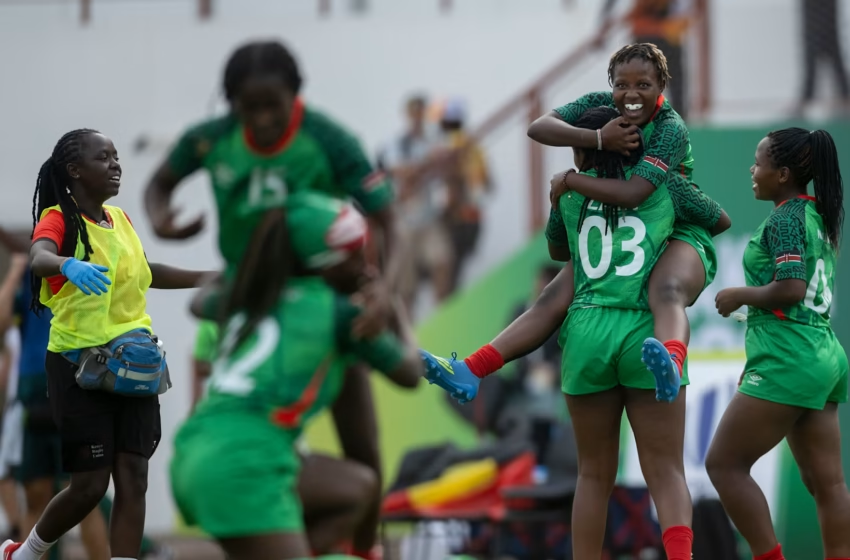
Rising Lionesses have written a remarkable chapter in the country’s sporting history after defeating Australia 17–12 in a dramatic final to win the women’s rugby sevens gold medal at the Dakar 2026 Youth Olympic Games.
The Kenyan Under-18 side secured the historic victory on Tuesday, November 3, at Complexe Iba Mar Diop in Senegal, scoring the decisive try in sudden-death extra time after the two teams had finished regulation time level at 12–12.
Mitchelle Chemtai delivered the winning moment, crossing the try line to complete a memorable comeback against an Australian team that had beaten Kenya 17–5 earlier in the competition. The result gave Kenya its first gold medal in a team sport at an Olympic event and made the country the first African nation to win Olympic or Youth Olympic rugby sevens gold.
Read Also: Pharmacy Board Looks to Shape Future of Pharmaceutical Practice
“Establishing structured youth high-performance pathways yields international tournament success,” noted a Nairobi-based sports administration auditor. “Sustained statutory sports fund allocation ensures junior national squads receive world-class technical preparation.”
The triumph also placed the spotlight on Kenya’s investment in youth rugby, the role of the Kenya Rugby Union (KRU) in identifying emerging talent and the importance of building a sustainable pathway from school and age-grade competitions into senior international rugby.
Rising Lionesses overturn earlier defeat to Australia
Kenya’s journey to the gold medal was not straightforward. The Rising Lionesses entered the final having already experienced defeat against Australia during the pool stage, losing 17–5 in a match that exposed the challenge posed by the tournament favourites.
However, the Kenyan team recovered from that setback and produced a stronger performance during the decisive stages of the competition.
Their campaign opened with a 12–5 victory over China before they recorded an emphatic 19–0 win against hosts Senegal. The loss to Australia followed, but Kenya responded by defeating Madagascar 15–5 in the semi-final to secure a place in the gold-medal match.
Australia, meanwhile, reached the final after overcoming Czechia 19–10 in the semi-final.
The contrasting routes into the final set up a rematch between two teams that had already experienced each other’s strengths. Australia had the earlier victory, but Kenya had the opportunity to correct the mistakes that had contributed to its pool-stage defeat.
The final became a test of discipline, fitness and composure, with both teams showing why they had reached the last match of the competition.
How Kenya secured the 17–12 victory
Australia made an early statement, opening the scoring through Darci Mackay before Kenya captain Zain Hido responded with a try to bring the scores level at 5–5 by half-time.
The contest remained closely fought after the break, with Australia regaining the advantage through Grace Buchanan, whose try was converted to give the Australians a 12–5 lead.
Kenya needed a response and found it through Josephine Kerubo, who crossed for a crucial try late in the match. Diana Wanjiku added the conversion, bringing the score to 12–12 and forcing the final into extra time.
The additional period introduced another layer of pressure. In a gold-medal match where one mistake could decide the outcome, both sides needed to maintain their defensive organisation while looking for an opportunity to attack.
Kenya eventually found the breakthrough through Chemtai, whose golden-point try ended the contest at 17–12 and triggered celebrations among the Kenyan players and technical team.
The victory was particularly significant because Australia had entered the final as one of the tournament’s leading contenders. Kenya’s ability to recover from the earlier defeat and win the rematch demonstrated the team’s capacity to adapt under pressure.
Read Also: KNEC Grade 10 Assessment 2026: Guidelines, Timelines & School Requirements
What the golden-point rule means in rugby sevens
The final also demonstrated the importance of understanding the technical rules governing knockout rugby sevens.
World Rugby’s competition guidance explains that a drawn pool match can end level, with teams sharing the available points. Knockout matches, however, require a winner. If the scores are level at the end of regulation time, sudden-death extra time is used.
Under the golden-point principle, the first team to score during extra time wins the match. The contest ends immediately after that score, meaning the winning team does not need to complete another phase of play.
The World Rugby rugby sevens competition guidance outlines this distinction between pool-stage draws and knockout-stage extra time.
Kenya’s final against Australia followed this principle. The teams were level at 12–12 after normal time, and Chemtai’s try provided the first score in extra time.
The distinction is important because the term sudden death is sometimes used loosely to describe all extra-time situations. In this case, the golden-point format meant that the first score settled the gold-medal contest.
The final’s technical outcome also underlined the importance of maintaining concentration throughout a rugby sevens match. A team may dominate large periods of play but still lose if it fails to manage the final moments or the decisive extra-time possession.
Sports Act provides a framework for athlete development
Kenya’s historic achievement raises questions about how the country supports young athletes beyond the excitement of an international medal.
The Sports Act No. 25 of 2013 provides the statutory framework for sports development, including the establishment of Sports Kenya, the Kenya Academy of Sports and the National Sports Fund.
Section 12 establishes the National Sports Fund, while its statutory provisions provide for financial support to sportspeople and sports organisations. The framework recognises that developing competitive athletes requires more than tournament participation.
The Sports Act also provides for the Kenya Academy of Sports, whose responsibilities include developing sporting talent and supporting training and capacity-building programmes.
For junior national teams, these structures are relevant to the broader requirements of athlete development, including coaching, technical education, access to facilities and preparation for international competitions.
However, the existence of a statutory funding framework does not establish that a particular amount was allocated to the Rising Lionesses’ Dakar campaign. Any claim about specific funding for the team would require confirmation from the relevant sports authorities or official financial records.
The current Sports, Arts and Social Development Fund (SASDF) also plays an important role in supporting sports development. Established under the Public Finance Management framework, it supports sports organisations, athletes, talent identification, training and participation in sporting events.
Its official mandate includes improving access to funding for sportspeople and organisations, supporting talent development and financing sports facilities and capacity-building programmes.
The long-term value of these arrangements will depend on consistent funding, transparent allocation and the ability to translate resources into opportunities for young athletes across the country.
KRU’s age-grade pathway creates opportunities for emerging talent
The Kenya Rugby Union has been expanding its age-grade structures to identify young players and provide them with opportunities to compete at progressively higher levels.
In July 2026, KRU announced regional Under-16 and Under-18 trials for boys and girls as part of its talent identification programme. The Nairobi regional exercise attracted 230 participants, with significant interest from girls seeking opportunities in the sport.
The initiative is designed to identify promising players, assemble regional teams and create opportunities for further national selection.
KRU also expanded its Development of the National Sports System (DNSS) age-grade programme alongside the 2026 SportPesa National Sevens Circuit. Under the programme, Under-18 and Under-16 competitions for boys and girls were included in the national circuit, providing young players with additional match experience.
The KRU age-grade programme was developed with support from the International Olympic Committee through the National Olympic Committee.
The initiative also sought to strengthen the wider rugby environment through training for coaches, physical education teachers, match officials and administrators.
These structures matter because international success at youth level cannot depend entirely on identifying a talented group shortly before a major tournament. A sustainable pathway requires regular competition, qualified coaching, athlete welfare and a system that allows emerging players to develop over several seasons.
From Rising Lionesses to the senior Kenya Lionesses
The next challenge will be ensuring that the Dakar gold medal becomes a foundation for further progress rather than an isolated achievement.
Kenya’s senior women’s rugby programme, the Lionesses, provides a potential destination for players who continue developing through the age-grade system.
Moving from Under-18 rugby to senior international competition, however, requires careful planning. Young players need opportunities to improve their technical skills, strength, conditioning, tactical awareness and decision-making while adapting to the physical demands of senior rugby.
KRU’s proposed eight-year 15s performance strategy for 2027–2035 identifies women’s development and stronger domestic competition as important priorities. The strategy also seeks to strengthen the connection between age-grade programmes and the senior national teams.
The union’s Pathway, Performance, Legacy strategy highlights the need for structured player development, more meaningful competition opportunities and stronger links between emerging players and the national programmes.
Although the strategy focuses on the 15-a-side game, its emphasis on development and continuity is relevant to the wider women’s rugby structure.
World Rugby’s age-grade welfare guidelines also provide an important framework for protecting young players. The guidelines emphasise appropriate age groupings, player safety, parental consent where applicable and preparation suited to the physical demands of the game.
Its age-grade player welfare guidance recognises that youth development must balance competitive ambition with the safety and long-term wellbeing of athletes.
For the Rising Lionesses, the transition into senior rugby will require individual player development plans, continued access to competitive matches and medical and conditioning support.
Three pillars behind Kenya’s youth rugby development
| Sports Governance Pillar | Governing Authority / Regulation | High-Performance Outcome |
|---|---|---|
| Youth Olympic Rugby Pathway | World Rugby age-grade welfare guidance, IOC competition framework and KRU technical structures | Supports age-appropriate selection, player development, international exposure and safe participation in youth competitions. |
| Sports Fund Allocation | Sports Act No. 25 of 2013 and Public Finance Management (Sports, Arts and Social Development Fund) Regulations, 2018 | Provides a framework for supporting athletes, sports organisations, talent identification, training and competition participation. |
| Tournament Technical Rules | World Rugby rugby sevens guidance and applicable Dakar 2026 competition regulations | Provides for sudden-death extra time in knockout matches that remain level after regulation, with the first score determining the winner. |
What Kenya must do after the historic gold
The Rising Lionesses have demonstrated that Kenyan women’s rugby can compete successfully against established international teams at youth level. Their victory also gives the sport an opportunity to attract more girls into school and community rugby programmes.
Read Also: Top Comoros Official Hospitalized in Nairobi Amid Rising Tensions in Moroni
Maintaining that momentum will require attention to the structures behind the medal. Regional competitions must remain accessible, coaches need regular technical development and young players should receive consistent opportunities to compete at national and international levels.
There is also a need for transparent sports funding, effective athlete welfare systems and stronger collaboration between KRU, schools, clubs, government agencies and the National Olympic Committee of Kenya.
The gold medal in Dakar is a major achievement, but its lasting significance will be measured by what follows. If the players are supported through the transition into senior rugby, the victory could help strengthen the future of the Kenya Lionesses and expand opportunities for the next generation of women rugby players.
For now, the Rising Lionesses have delivered a moment that will remain part of Kenyan sporting history. Their 17–12 victory over Australia has put the country’s youth rugby programme on the international stage and shown what disciplined preparation, resilience and opportunity can produce.

