
Promises, Payments and Power: The Storm Behind Harambee Stars

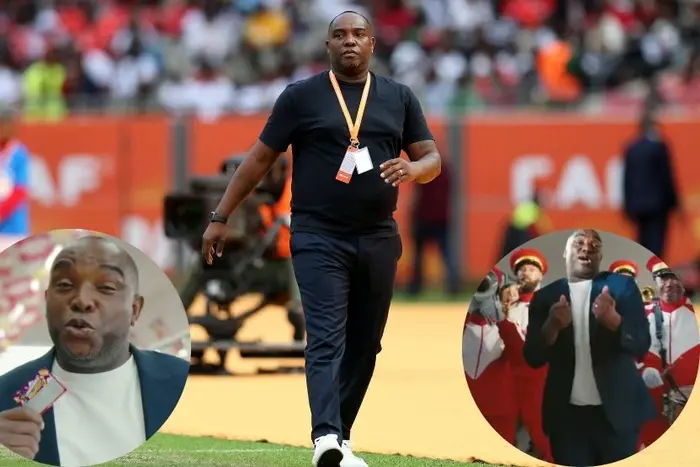
The relationship between Harambee Stars head coach Benni McCarthy and Football Kenya Federation (FKF) is facing one of its biggest tests since the South African tactician took charge of the national team in March 2025, with disagreements over work permits, unpaid salaries, player welfare and administrative responsibilities exposing growing cracks in what was initially expected to be a promising partnership.
Recent public exchanges between the coach and federation officials have brought the tensions into the spotlight, raising questions about whether both sides can maintain a united front as Kenya prepares for the 2027 Africa Cup of Nations.
McCarthy arrived in Kenya with a reputation built through an accomplished playing career and coaching experience in Europe. His appointment generated excitement among supporters who believed his international experience could help transform Harambee Stars into a competitive force.
However, the relationship has gradually become complicated by challenges that extend beyond football tactics and results, with disagreements over the team’s working environment increasingly dominating conversations around the national team.
“McCarthy and his handlers are very crafty. Why didn’t he raise the issue of work permits earlier? Those work permits were applied for, but they had to be issued by the government,” FKF Communications Officer Jeff Kinyanjui told RG Radio.
Read Also: KNEC Grade 10 Assessment 2026: Guidelines, Timelines & School Requirements
Kinyanjui’s remarks reflect the federation’s frustration with the manner in which the coach has publicly raised concerns about his working conditions. The work permit controversy became prominent in September 2026 when McCarthy disclosed that he and members of his foreign technical bench had been working without the necessary documentation. He explained that the situation made it difficult for them to remain in Kenya after international assignments and consistently monitor the domestic football scene.
FKF responded by maintaining that applications had been submitted and that the processing of the documents involved relevant government agencies. The federation insisted that the process required cooperation with authorities beyond its direct control. The disagreement nevertheless raised questions about who should take responsibility for ensuring that foreign technical personnel are properly documented before commencing employment.
This is reckless, especially coming from the Head of Communications at #FKF .
It tells you everything about how much of a kiosk FKF has become. You’re actually confessing that you do nothing to support the coach for the good of our football.
You are the problem!
#FootballKE https://t.co/iIv66TFhIk— Jakolal (@Rateng_1) November 21, 2026
The dispute has since expanded beyond immigration documentation, with financial concerns emerging as another major source of tension.
Players have previously raised concerns about delayed allowances, while questions have also been raised about payments owed to members of the technical bench. Such challenges have the potential to affect morale, particularly in a national team where players and officials are expected to maintain high professional standards despite the demands of international football.
In his November 20, 2026, statement addressed to Kenyan football supporters, McCarthy provided a more detailed account of the challenges facing the national team. He described coaching Harambee Stars as a great honour and privilege but argued that the circumstances surrounding the team’s preparations had made his responsibilities increasingly difficult. He raised concerns about accommodation, meals, transportation and delayed payments, insisting that players and technical staff deserved better treatment when representing the country.
The coach also revealed that members of his technical bench had gone several months without receiving their salaries. He recalled an incident in which the team allegedly lacked a functioning bus to transport players and officials back to their hotel after training.
McCarthy further questioned the quality of meals and accommodation arrangements, arguing that professional footballers needed adequate recovery conditions to compete effectively at international level.
One of the strongest messages in his statement concerned his responsibility to protect the interests of the players. McCarthy argued that representing Kenya should not mean enduring conditions that compromise professional standards. He also praised the players for their commitment during the two matches against South Africa, despite the difficulties surrounding their preparations. His position was that the national team needed an environment where players could thrive rather than merely survive.
The statement followed Harambee Stars’ 2-2 draw against South Africa in Johannesburg on November 13 before suffering a 2-1 defeat in the return fixture at Nyayo National Stadium on November 17. The results attracted scrutiny from supporters, although McCarthy pointed to the difference in international rankings between the two teams when assessing Kenya’s performances. The two matches also placed his tactical decisions and squad selections under renewed scrutiny.
Read Also: Pharmacy Board Looks to Shape Future of Pharmaceutical Practice
FKF has not remained silent amid the criticism. Its officials have defended the federation’s handling of administrative matters, arguing that the organisation has been working with government institutions to address outstanding issues.
The federation has also maintained that technical decisions, including player selection and match-day line-ups, remain exclusively within the responsibility of the head coach and his technical bench. This position reflects the federation’s determination to separate administrative shortcomings from decisions made on the pitch.
Benni McCarthy’s statement https://t.co/vS6uiJJgjA
— Ole Teya (@TeyaKevin) November 19, 2026
Another sensitive issue emerged following allegations involving goalkeeper coach Moeneeb Josephs during the South Africa fixture at Nyayo. McCarthy defended his colleague, saying Josephs denied making the alleged racist remark and that members of the technical bench who witnessed the incident disputed the accusation. The controversy added another difficult chapter to an already complicated period for the coaching team.
The disagreement raises broader questions about the relationship between FKF and the Ministry of Sports. Although the federation manages the national team’s football operations, funding and administrative arrangements often involve government institutions. The work permit controversy, salary delays and logistical challenges demonstrate how inadequate coordination can affect preparations and create unnecessary distractions for players and coaches.
Kenya’s preparations for the 2027 Africa Cup of Nations make the situation particularly important. As co-hosts alongside Uganda and Tanzania, the country has an opportunity to rebuild its football reputation and deliver a competitive national team. Achieving that ambition requires more than appointing an internationally experienced coach. Players need proper welfare arrangements, technical staff require stable working conditions and administrators must ensure that commitments are honoured.
The growing public disagreement also presents a difficult test for FKF President Hussein Mohammed. His administration must demonstrate that it can address legitimate concerns without allowing administrative disagreements to undermine the national team’s stability. Equally, McCarthy must translate his concerns into improved performances and continue building a squad capable of competing at continental level.
Read Also: Public Service Commission Recruitment 2026: How to Apply, Shortlist and Interview Process
Ultimately, the future of this partnership will depend on whether both sides can move beyond public exchanges and establish a functional working relationship. McCarthy needs institutional support, while FKF needs a technical bench focused on delivering results. With AFCON 2027 approaching, the biggest question is whether the two sides can put their differences aside before the growing tension becomes a bigger problem for Harambee Stars.

