3 Shocking Realities Shaping May 14 Emurua Dikirr By-Election


Sometimes politics presents a collision of legacy, emotion and raw power that defies the typical script of a rural by-election.
The upcoming contest in Emurua Dikirr is no longer just a local search for a representative; it has morphed into a high-stakes proxy war between the United Democratic Alliance (UDA) and the burgeoning Democracy for Citizens (DCP) party. With the endorsement of former Nandi Hills MP Alfred Keter for DCP’s Vincent Rotich and the visible frustration from the family of the late MP Johanna Ng’eno, the seat has become a litmus test for regional dominance.
The DCP party has managed to flip the script by leveraging a “firebrand” style of politics that resonates deeply with the local electorate. Kericho Senator Aaron Cheruiyot’s observation that the area aligns with rowdy, rally-driven politics highlights a strategic opening that Vincent Rotich has exploited. By taking his campaign directly to polling station centers and drawing massive crowds, Rotich has created a sense of inevitability that is forcing UDA into a defensive posture. This momentum is bolstered by the tactical, albeit long-distance, involvement of DCP leader Rigathi Gachagua, whose phone-call diplomacy has kept his presence felt without him physically stepping into the constituency.
Winning this seat would signify a massive shift in the Rift Valley’s political landscape, proving that a well-organized alternative can successfully challenge the UDA behemoth in its backyard. For the DCP, a victory here is not just about one seat in Parliament but it is about establishing a foothold and proving that their brand of “citizen-centric” politics can dismantle established party loyalties. If Rotich secures the win on Thursday, May 14, it will embolden other disgruntled leaders within the region to seek refuge under the DCP banner, potentially fracturing the unified voting block that has historically supported the current administration.
Can the DCP Win and Redefine Regional Power?

A victory for Vincent Rotich would signal that the South Rift is no longer a guaranteed stronghold for established giants. The DCP has successfully tapped into local frustrations by positioning itself as a grassroots alternative that values the “firebrand” energy the late MP was known for. By focusing on polling-station-level engagement, the party has bypassed traditional gatekeepers, creating a direct emotional link with voters who feel overlooked by the national bureaucracy.
The political cost of a DCP win would be a significant dent in the narrative of UDA’s invincibility. It would validate Rigathi Gachagua’s strategy of maintaining influence through proxy candidates and strategic alliances, even when he is not physically present on the trail. This win would transform the DCP from a “party to watch” into a legitimate powerhouse capable of swaying future general elections, forcing the government to rethink its engagement with the Rift Valley electorate.
Furthermore, a DCP triumph would likely trigger a realignment of leaders who have felt sidelined within the UDA structure. If Rotich takes the seat, it proves that there is life—and victory—outside the ruling party’s umbrella. This could lead to a fragmented legislative landscape where the government must negotiate more aggressively for local support, ultimately shifting the balance of power from central party offices back to the constituency level.
What Does a UDA Victory Mean for Ruto’s Dominance?
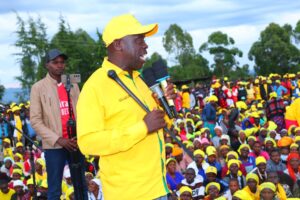
For President William Ruto, a UDA victory is the only way to reassert his role as the undisputed regional kingpin. The party has mobilized significant resources for David “Dollarline” Keter, treating this by-election as a referendum on the administration’s local popularity. A win would silence the noise generated by the DCP’s large crowds, proving that when the ballots are cast, the President’s party remains the primary choice for the Kalenjin heartland.
Capturing the seat would provide the UDA with a vital psychological victory ahead of future political cycles. It would demonstrate that the party’s machinery, including the emotional appeal of the late MP’s widow, Nayianoi Ntutu, is still powerful enough to overcome the “populist” wave brought by Alfred Keter and the DCP. This result would send a clear message to any internal rebels that the UDA remains the only viable path to power in the region.
Strategically, a “Dollarline” win allows the President to maintain a unified front in Parliament without the distraction of an antagonistic MP from his own backyard. It ensures that the development agenda of the UDA is not hampered by local political friction. Ultimately, for Ruto, winning Emurua Dikirr is about stability; it is about proving that the house is in order and that the “firebrand” politics of the opposition cannot penetrate the solid wall of UDA loyalty.
Will the Legacy of the Late MP Cause UDA to Lose?

The late Johanna Ng’eno was a political titan in Emurua Dikirr, and his absence has left the UDA in a precarious position. While the party is using his widow, Nayianoi, to consolidate support, there is a risk that the “Ng’eno vote” is more about his persona than his party affiliation. If the voters feel that the UDA’s candidate does not embody the late MP’s independent and fierce spirit, they may naturally drift toward the DCP, which has mirrored that very energy.
UDA stands to lose the unique “independent streak” that Ng’eno brought to the party, which often allowed it to capture votes from both the government and the opposition. By strictly aligning the seat with the national UDA brand, the party might alienate those who preferred Ng’eno’s occasionally rebellious stance. If the electorate perceives that the UDA is trying to “tame” the constituency’s political nature, they may rebel by voting for the DCP candidate as a tribute to Ng’eno’s legacy of defiance.
The conflict between the late MP’s family and the DCP leadership also creates a volatile environment that could backfire on the UDA. While Nayianoi’s anger over the DCP’s announcement of her husband’s death is a powerful emotional tool, it also highlights the deep divisions within the community. If the UDA is seen as weaponizing a family’s grief for political gain, they risk losing the respect of neutral voters. This loss of moral high ground, combined with a candidate who lacks the late MP’s charisma, could be the deciding factor that hands the seat to the DCP.