
5 Things You Need to Know About New Supreme Court Nominee Justice Mohamed Warsame

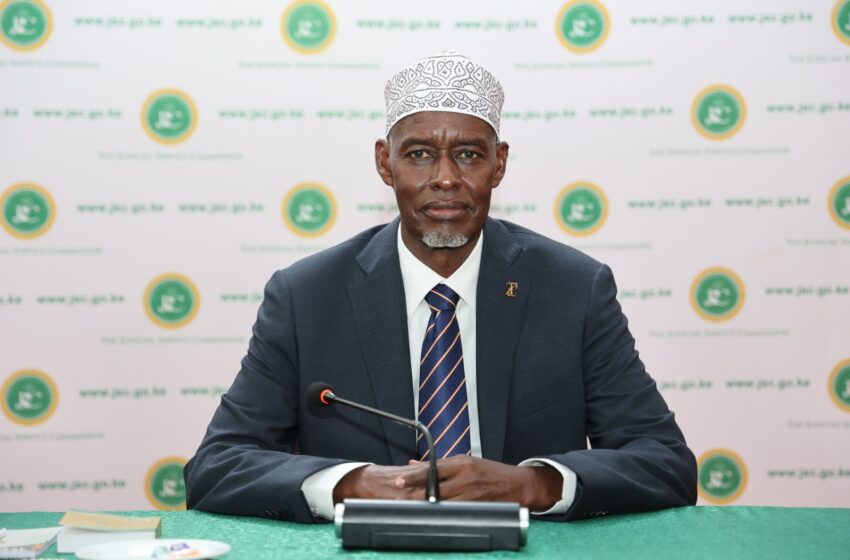
The Judicial Service Commission (JSC) nominated Justice Mohamed Abdulahi Warsame to the Supreme Court of Kenya, marking a pivotal moment for the country’s highest judicial organ.
Following the passing of Justice Mohamed Ibrahim in late 2025, the apex court required a jurist with the depth of experience and constitutional fortitude to maintain its stability.
Warsame’s nomination, announced by Chief Justice Martha Koome, comes after a rigorous and competitive vetting process that scrutinized his legal philosophy and professional track record.
Justice Warsame is a figure defined by his efficiency and principled approach to the law and his elevation is particularly significant as Kenya prepares for the 2027 General Election, where the Supreme Court will serve as the final arbiter of electoral disputes.
5.Extensive Judicial Experience Across Multiple Divisions
Justice Warsame’s legal foundation is built on academic and practical rigor. He holds a Bachelor of Laws (LLB) from the University of Nairobi and a Diploma in Law from the Kenya School of Law. Before his judicial appointment, he spent years as a practicing Advocate of the High Court, gaining firsthand insight into the challenges faced by litigants and the complexities of the Kenyan legal landscape.
His transition to the bench began in 2003 when he was appointed as a High Court Judge. Over the following decade, he navigated various critical legal arenas, including the Commercial and Criminal Divisions. These roles required him to handle everything from high-stakes corporate disputes to sensitive criminal matters, building a reputation for fairness and legal clarity.
Notably, he led the Judicial Review Division of the High Court, a role that is foundational for any Supreme Court hopeful. This specific division requires a keen understanding of the limits of administrative power and the protection of citizens’ rights against state excesses. This background ensures he arrives at the apex court with a seasoned understanding of how to balance executive authority with constitutional mandates.
4.A Proven Record of Clearing Case Backlogs
One of Justice Warsame’s most defining professional traits is his commitment to judicial productivity. Throughout his tenure in the High Court and his subsequent elevation to the Court of Appeal in 2012, he maintained an impressive record for the rate of case clearance in his court. In a legal system often criticized for systemic delays and “justice buried in paperwork,” his efficiency stood out as a beacon of reform.
His ability to deliver timely rulings has earned him significant respect within the Law Society of Kenya and among his judicial peers. By streamlining processes and maintaining a disciplined court diary, he has consistently demonstrated that the wheels of justice can turn quickly when managed with diligence.
His elevation to the Supreme Court is expected to bolster the productivity of the apex bench. As the court prepares for the 14th judge to join its ranks, his track record suggests he will play a vital role in ensuring that constitutional disputes and presidential election petitions are handled with the urgency they demand.
3.Reformist Leadership in Probation and Community Service
Beyond the traditional courtroom setting, Justice Warsame has demonstrated a deep concern for the social impact of the penal system. Serving as the Chairman of the Community Service and Probation Committee, he moved beyond legal theory to address the practical crisis of prison overcrowding. He recognized that the traditional carceral system was often ill-equipped to handle minor infractions.
During his chairmanship, he spearheaded a transformative initiative that led to the release of over 7,000 petty offenders from prisons across the country. By prioritizing community service over incarceration for minor offenses, he helped decongest Kenyan prisons and promoted a more rehabilitative approach to justice. This initiative saved the taxpayer significant resources and allowed thousands of individuals to reintegrate into society.
This reformist streak highlights his “constitutional vision”—a key metric used by the JSC during the vetting process. It shows a judge who understands that the law must serve the people and that justice is not found solely in punishment but in the betterment of the community.
2.A Trusted Representative within the Judicial Service Commission
Justice Warsame’s influence extends into the very governance of the Judiciary. In 2013, he was elected by his peers in the Court of Appeal to represent them as a Commissioner in the Judicial Service Commission (JSC).
His service within the JSC was not merely ceremonial; he was a member of both the Finance and Administration and Human Resource Committees. These roles involved making critical decisions regarding the recruitment of judicial officers and the management of the Judiciary’s budget. This administrative experience gives him a unique “behind-the-scenes” perspective on the operational needs of the courts.
By understanding the institutional and human resource challenges of the Judiciary, Justice Warsame brings a holistic perspective to the Supreme Court. He isn’t just a legal scholar; he is a seasoned administrator who understands how the entire judicial machinery must function to uphold the rule of law.
1.Defender of Constitutional and Religious Jurisprudence
Justice Warsame is known for his clarity on the intersection of law, culture, and religion. He has famously asserted that Islamic law is not merely a set of cultural rules but a sophisticated legal system that is not repugnant to justice. This nuanced understanding of pluralistic legal traditions is essential for a judge sitting on a Supreme Court that serves a diverse population.
His ability to navigate complex constitutional disputes while respecting Kenya’s various legal heritages makes him a formidable addition to the bench. He has consistently argued that the constitution must be interpreted in a way that is inclusive and reflective of the societal values it seeks to protect. This intellectual depth was a highlight of his recent public interviews.
His presence on the bench will restore the Supreme Court to its full seven-member strength at a critical time. As the 14th judge to serve on this court, his blend of traditional legal expertise and modern constitutional interpretation will be vital for the high-stakes decisions expected in the coming years.

