
Sabastian Sawe Prize Money Breakdown After Record Marathon and Government Bonus in Kenya


Breaking structural barriers in international athletics yields substantial financial changes for elite competitors. When Kenyan road-racing star Sabastian Sawe crossed the finish line at the London Marathon in an astonishing 1:59:30, he did more than just secure a victory. He became the first athlete in history to complete a competitive, legally certified marathon in under two hours, shattering previous record parameters by a full 65 seconds.
This historic negative-split performance—covering the second half of the course in a blistering 59:01—triggered a massive financial windfall. Beyond standard race winner allocations, breaking the ultimate running barrier unlocked multi-tiered commercial performance bonuses, global shoe brand incentives, and direct state-backed cash rewards.
The World Marathon Majors Payout Structure
Elite marathon networks operate on highly complex, performance-indexed financial models. Standard first-place finishes at World Marathon Majors events guarantee baseline payouts, but the real capital shifts occur through course and world record escalators. By eclipsing the late Kelvin Kiptum’s official mark of 2:00:35, Sawe activated top-tier performance clauses built into elite organizational contracts.
| Earning Category | Estimated Allocation (USD) | Primary Payout Facilitator |
| First Place Finish | $55,000 | London Marathon Event Purse |
| World Record Bonus | $125,000 | World Athletics Label Incentives |
| Sub-2 Hour Escalate | $250,000 | Event Timing & Sponsor Pools |
| Commercial Retainers | $750,000+ | Footwear Brand Milestone Clauses |
In addition to individual corporate contracts, performance bonuses are heavily linked to technical product sponsorships. Sawe’s record-breaking run in specialized racing footwear immediately amplified the market value of his technical sponsor, triggering internal brand clauses that drastically exceeded standard competitive earnings.
Presidential Recognition and the Enhanced National Sports Scheme
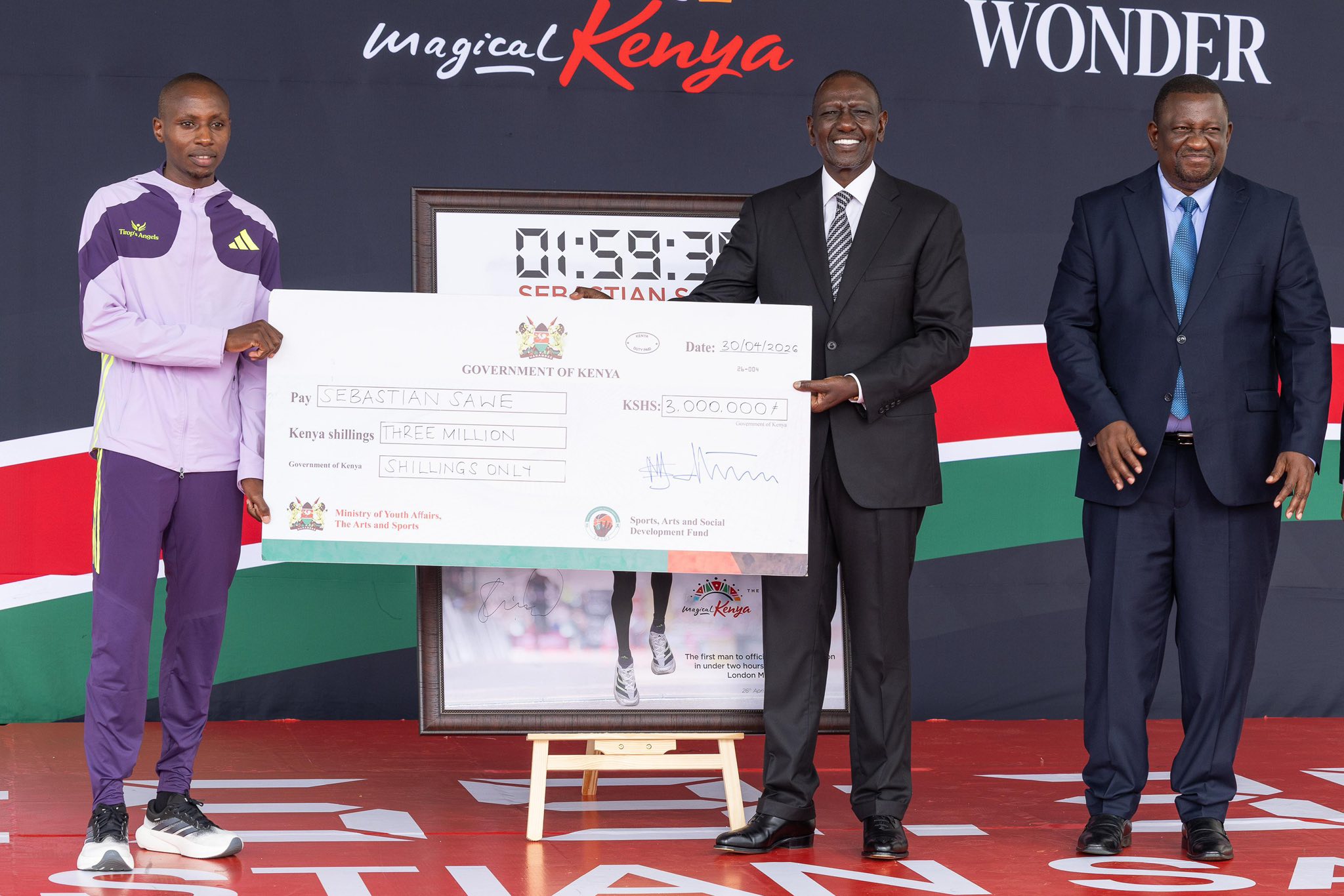
Beyond the international corporate circuit, the historic run earned Sawe massive state recognition at home. The administrative response from the state apparatus underscores a major shift in how the nation values its athletic ambassadors. President William Ruto officially presented Sawe with a Ksh 8 million government bonus during an official reception at State House, Nairobi.
State Honor Category     | Immediate Asset Allocation  | Institutional Purpose
Direct Cash Bounty       | Ksh 8,000,000               | Enhanced Talanta Hela Reward System
Custom Vehicle Asset     | "1:59:30" Number Plates      | Symbolic Sovereign Recognition
Infrastructure Package  | Affordable Housing Unit     | National Athlete Welfare Directive
This state payout marks an extension of the revised national reward framework introduced by the Ministry of Sports. Under the enhanced guidelines, the government has streamlined allocations for record-breakers to ensure elite sports stars receive competitive compensation that mirrors their global impact. The inclusion of custom vehicle registration plates further elevates the achievement into a permanent piece of national sporting history.
Economic Ripples Across the Local Athletics Ecosystem
The financial success of a historic run extends far beyond the individual athlete’s bank account. Elite long-distance running in East Africa functions as a significant economic driver for rural and semi-urban training hubs like Iten and Eldoret. When a runner achieves this level of commercial success, the capital is routinely reinvested into local economies through real estate development, commercial farming ventures, and the funding of private training camps.
Furthermore, these massive financial wins radically change the bargaining power of the next generation of running talent. Emerging athletes utilize these benchmark payouts to negotiate better management representation, secure premium foreign training allowances, and demand higher baseline retention fees from global kit manufacturers. Proving that competitive road racing can generate multi-million-dollar valuations, Sawe has permanently shifted the financial expectations of the entire regional sporting ecosystem.
Technical Pacing and the Future of Endurance Valuations
The strategic execution of the London run has set an entirely new benchmark for performance managers globally. Unlike exhibition time trials that rely on rotating lasers and wind-shielding vehicle formations, this performance was achieved under strict open-road competitive conditions. Sawe’s ability to maintain an average pace of 2 minutes and 49.9 seconds per kilometer across the entire distance has forced sports scientists and commercial brand developers to rewrite their performance projections.
Shift into athletic potential directly influences corporate sponsorship forecasting. Global sports brands are already adjusting their long-term budgets to account for faster times, investing heavily in smart biomechanical gear and advanced foam technologies. As long-distance running continues to merge hyper-advanced human conditioning with corporate financing, the financial incentives for breaking remaining time barriers will only continue to climb.
If you would want a deeper look into how professional sports management houses negotiate performance contracts, this athletic career development breakdown potrays how elite running stars manage their prize structures, corporate brand endorsements, and state bonuses after achieving major international victories.