David Maraga: 3 Reasons Ruto’s Re-election is ‘Disaster’ for Kenya

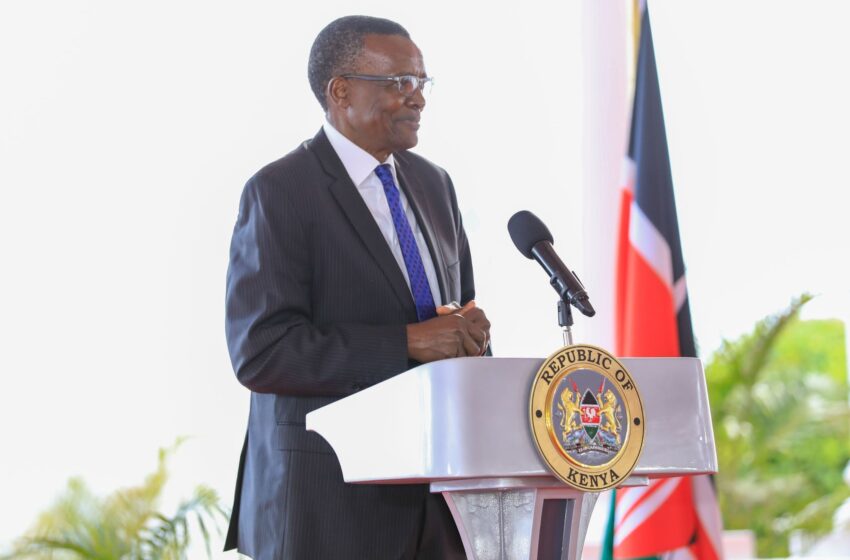
Former Chief Justice David Maraga has intensified his critique of the current administration, sounding a clarion call for Kenyans to reconsider the country’s political direction ahead of the 2027 general elections.
Now the presidential flag bearer for the United Green Movement (UGM), Maraga’s transition from the bench to the political arena has been marked by a fierce defense of public resources and constitutional integrity.
Maraga’s recent remarks quoted by Nation in Kisii County highlight a deep-seated concern that the current leadership is steering Kenya toward an economic precipice through questionable infrastructure deals, the disposal of strategic national assets, and diplomatic inconsistencies.
3. The Inflation of Mega-Projects and ‘Looting’ Concerns
A primary pillar of Maraga’s argument centers on the drastic inflation of costs for major infrastructure projects. He specifically points to the Rironi-Mau Summit road, a critical artery for East African trade.
Under the previous administration, the project was structured as a Sh160 billion deal with a French consortium. However, the current administration’s decision to cancel this agreement—incurring a Sh7 billion compensation fee—and re-award it to Chinese firms for approximately Sh200 billion has raised serious red flags.
Maraga contends that this Sh33.3 billion discrepancy is not merely an administrative shift but indicative of a systemic issue. He describes these mega-projects, including the controversial affordable housing units, as vehicles designed for the “purpose of looting public resources.”
When the cost of a road reaches an estimated Sh1 million per meter, the former Chief Justice argues that the burden on the Kenyan taxpayer becomes unsustainable, serving the interests of a few rather than the development of the many.
2. The Privatization of Strategic National Assets
The second major concern involves the government’s move to sell shares in highly profitable state-linked corporations. Maraga has been vocal about the proposed sale of Safaricom shares and the privatization efforts surrounding the Kenya Pipeline Company (KPC). His logic is rooted in economic pragmatism: why would a government divest from its most successful entities?
Safaricom recently reported a net profit of Sh100 billion for the 2025/26 financial year, fueled by the massive growth of M-Pesa and regional expansion. For Maraga, selling off stakes in such a “cash cow” while the country faces debt distress is counter-intuitive. He argues that if privatization is necessary, it should focus on underperforming parastatals rather than strategic assets that handle the nation’s energy and communication backbone. To him, this trend suggests a short-term liquidity grab that sacrifices long-term national stability and revenue.
1. Diplomatic Friction and Credibility Gaps
Beyond domestic policy, Maraga highlights a worrying trend in regional diplomacy. He points to a recent incident in Tanzania where President Ruto announced a joint oil refinery project in Tanga without the prior knowledge or consultation of President Samia Suluhu Hassan. The subsequent public reprimand from the Tanzanian leader served as a rare diplomatic embarrassment for Kenya.
Maraga views these “off-the-cuff” international commitments as a sign of a leadership style that lacks transparency and truthfulness. He argues that a President who “lies to Kenyans and now Tanzanians” undermines the country’s standing within the East African Community. For Maraga, the presidency requires a level of sobriety and institutional respect that he believes is currently absent.