
SK Macharia: 5 Interesting Things You Didn’t Know About Media Mogul’s Journey From Squatter to Billionaire

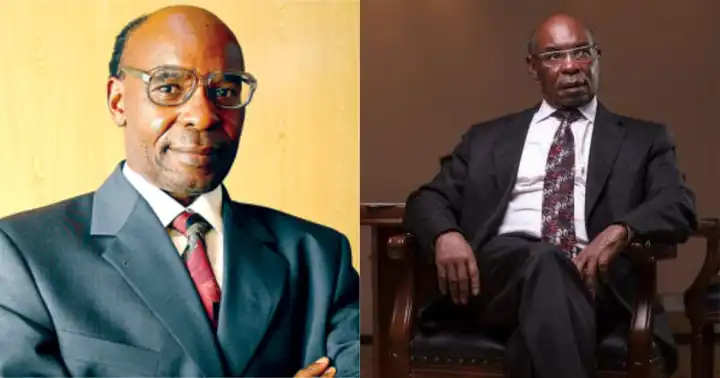
The name Dr. Samuel Kamau Macharia, popularly known as SK Macharia, is synonymous with the Kenyan media landscape. Being the founder and chairman of Royal Media Services (RMS), his influence stretches across every corner of the country through a massive network of radio stations and the dominant Citizen TV.
However, the towering figure we see today, a man who commands the airwaves and shapes public discourse, was forged in a furnace of extreme poverty, displacement, and an iron-clad will to survive.
While many recognize him as a wealthy businessman, the details of his early struggle and the sheer improbability of his success are often overshadowed by his current status. From herding livestock with Maasai boys in Tanzania to mopping floors in Seattle, his life is a testament to the power of resilience.
Read Also: Top Comoros Official Hospitalized in Nairobi Amid Rising Tensions in Moroni
Here are five fascinating things you didn’t know about the man behind the empire.
1. SK Macharia Spent Two Years as a Nomad After Losing His Home to War
Long before he was a titan of industry, SK Macharia was a victim of the turbulent colonial history of East Africa. Born in 1942 in Ndakaini, Murang’a, to parents who worked as squatters on settler plantations, his life was nomadic from the start. Seeking a better life, the family moved to Arusha, Tanzania. However, tragedy struck early when he lost his mother at age five.
The most defining moment of his childhood came in 1952. During the State of Emergency in Kenya, the colonial government ordered the forced repatriation of all Kikuyus back to Central Kenya.
At the time of the raid in Ngaramtoni, young Macharia was out in the bush herding livestock with Maasai boys. When he returned to where his home had been, he found nothing but a smoldering heap of rubble. His family was gone, and he was a ten-year-old boy alone in a foreign land.
For the next two years, he lived a truly nomadic existence. With no resources and no way to reach Kenya, he joined his Maasai friends in the bush, traversing vast distances in search of pasture. It was this wandering that eventually led him, unknowingly, to Thika town.
Recognizing he was back in Kenya, he stayed behind, living as a street boy (*chokora*) and scavenging for leftovers in markets until a chance encounter with a family friend led to a reunion with his father in Ndakaini.
2. SK Macharia Was a Primary School Teacher Before Chasing the “Airlift” Dream
It is hard to imagine the owner of a media empire standing in front of a chalkboard in a rural village, but SK Macharia’s career began in the classroom. After the trauma of his early years, he finally began his formal education in 1954 at the age of twelve. He moved quickly through the system, sitting for his Kenya African Preliminary Examination (KAPE) in 1958.
Due to the scarcity of educated Africans at the time, he was hired as an untrained teacher (UT) at Makomboki Primary School. This experience motivated him to professionalize, leading him to Kahuhia Teachers Training College. By 1961, he was a qualified P3 teacher posted to Gituru Primary School.
While teaching provided stability, Macharia’s eyes were on the horizon. He became captivated by the “J.F. Kennedy-Tom Mboya student airlifts,” a historic program that sent bright young Kenyans to the United States to prepare them for leadership in an independent Kenya. Though he was accepted for the 1962 group, he faced a massive hurdle: his family could not raise the Ksh. 4,000 required for the air ticket. This setback didn’t stop him; it only forced him to find a more grueling, unconventional path to America.
3. SK Macharia Worked Multiple Manual Labor Jobs to Fund Three Degrees
When SK Macharia finally reached the United States, he did not arrive to a life of ease. To survive and pay for his education, he became a master of the “hustle” long before the term became popular. While staying with a host family, the Andertons, he took full responsibility for his tuition and expenses.
His routine was grueling. During the semesters, he took night jobs to keep his days free for classes. During the summers, he often worked three jobs concurrently. These were not glamorous roles; he spent years mopping floors at Sears Department Stores, cleaning offices, and mowing lawns across campus.
Despite the physical exhaustion, he was academically prolific. He didn’t just stop at a Bachelor’s degree. After graduating with a BA in Political Science from Seattle Pacific University, he pivoted to technical expertise, earning a Bachelor of Science in Accounting from the University of Washington. He followed this with a Master of Science in Accounting and Finance, and a Master of Arts in Accounting. This deep financial literacy became the bedrock of his future business ventures, allowing him to navigate complex corporate audits and syndicated loans with ease.
4. SK Macharia Saved a Major Government Parastatal from Liquidation
Upon returning to Kenya in 1969, Macharia’s expertise in accounting made him a valuable asset to the government. While many know him for his private-sector success, his contribution to Kenya’s post-independence public sector was significant.
In 1973, he was appointed to head a task force with a grim mandate: audit the Agricultural Development Corporation (ADC) and prepare it for liquidation. The ADC was struggling, and the government saw no path forward. However, after a year of rigorous auditing, Macharia and his team reached a different conclusion. They argued that the ADC was not a lost cause but a vital institution that could be saved with the right management.
Transferred to the ADC as Financial Controller in 1974, he worked alongside Ben Gakonyo to implement a massive turnaround strategy. Their success didn’t just save jobs; it facilitated the “Africanization” of the economy, helping transfer land from European settlers to indigenous Kenyans. This stint proved that he wasn’t just a numbers man; he was a strategic fixer.
5. SK Macharia: First Major Empire Was Built on Tissue Paper, Not Media
Before there was Citizen TV, there was “Rosy.” In 1976, while still working in the public sector, Macharia started Madhupaper. By the time he left his government job in 1979 to run the company full-time, it was on its way to becoming a manufacturing powerhouse.
Read Also: DR Congo Conflict: Why Ruto Wants East Africa to Lead Peace Efforts
Madhupaper was the only local manufacturer of tissue paper in Kenya at the time. By 1985, the company employed over 300 people and had saved the country millions in foreign exchange by reducing reliance on imports. It was a pioneer in sustainability, creating hundreds of jobs for waste paper collectors.
The success of Madhupaper was so significant that Macharia negotiated a one-billion-shilling syndicated loan from a consortium led by the World Bank’s International Finance Corporation (IFC) to expand. Unfortunately, the political climate of the 1980s proved hostile. His business success made him a target for the political establishment of the day, leading to legal and political battles that eventually saw him move away from paper manufacturing. However, the lessons learned in scaling Madhupaper provided the capital and the grit necessary to launch Royal Media Services, which would eventually dwarf his previous successes.