
Would Patrice Motsepe’s Africa Forward Summit Visit Calm FKF Internal Wrangles?

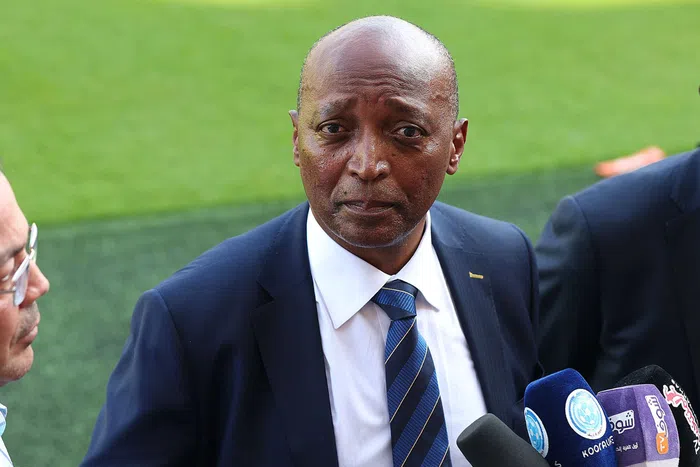
Corruption allegations and administrative instability have frequently shadowed the Football Kenya Federation (FKF), yet the arrival of CAF President Dr. Patrice Motsepe in Nairobi this week signals a shift in focus toward continental ambition.
Arriving for the Africa Forward Summit on May 11–12, 2026, Dr. Motsepe lands in a capital city that is currently the heartbeat of African diplomatic and sporting discourse. While his primary platform is a summit dedicated to innovation and transformative partnership, the subtext of his visit is undeniably tied to the grass, the stadiums, and the governance of the beautiful game in East Africa.
The Africa Forward Summit serves as a high-level stage for Dr. Motsepe to articulate a vision where African ingenuity drives global solutions. Speaking on Monday afternoon, the CAF President is expected to emphasize how football serves as a catalyst for economic integration and “transformative partnership.”
However, beyond the boardroom rhetoric of multilateralism, the practical realities of the “Pamoja” bid,the joint hosting of the 2027 TotalEnergies CAF Africa Cup of Nations (AFCON) by Kenya, Tanzania, and Uganda,take center stage.
The Road to AFCON 2027: A Test of Infrastructure
Kenya finds itself in a high-stakes race against time. Hosting AFCON 2027 is not merely a sporting milestone, but it is the largest event ever held on African soil, requiring world-class infrastructure and seamless logistics.
Dr. Motsepe’s itinerary includes critical meetings with senior officials from the three host nations. These sessions are intended to stress-test the progress of stadium renovations and the harmonizing of cross-border operations. For Kenya, the pressure is immense to prove that the “Pamoja” vision is backed by concrete and steel rather than just optimistic projections.
Addressing the Hussein Mohammed and NEC Standoff
Despite the optimistic atmosphere of the summit, the “elephant in the room” remains the internal state of Kenyan football governance. The FKF has been embroiled in a cycle of wrangles, particularly centered on the ongoing disputes involving Hussein Mohammed and the National Executive Committee (NEC).
These power struggles and administrative friction points have previously drawn the ire of both FIFA and CAF, casting a shadow over the country’s readiness to manage the technicalities of a continental showpiece. Speculation is rife regarding whether Dr. Motsepe will hold side meetings with FKF officials to mediate these specific leadership standoffs.
While his public schedule remains focused on the broader Africa Forward agenda, the necessity of a stable federation to deliver a successful AFCON cannot be overstated. A side meeting would likely serve as a firm reminder that continental support is contingent upon domestic transparency and the cessation of the infighting that has historically hampered the Harambee Stars’ progress.
The success of the 2027 tournament depends on a unified front. Dr. Motsepe’s presence in Nairobi offers a rare opportunity for Kenyan stakeholders to align their internal house with their international obligations.
If the “spirit of transformative partnership” mentioned in the summit’s mission is to mean anything for football, it must start with a commitment to professionalizing the local game. This visit is a litmus test for the region; by engaging with the summit, Dr. Motsepe is positioning football as a pillar of African innovation.
Yet, the true measure of his trip will be felt in the corridors of power where the future of the FKF is decided. Whether this visit clears the fog of past controversies or simply provides a temporary reprieve remains to be seen, but for 48 hours, the eyes of the continent are firmly fixed on Nairobi.