
When Are Heavy Downpours Expected to End in Kenya?

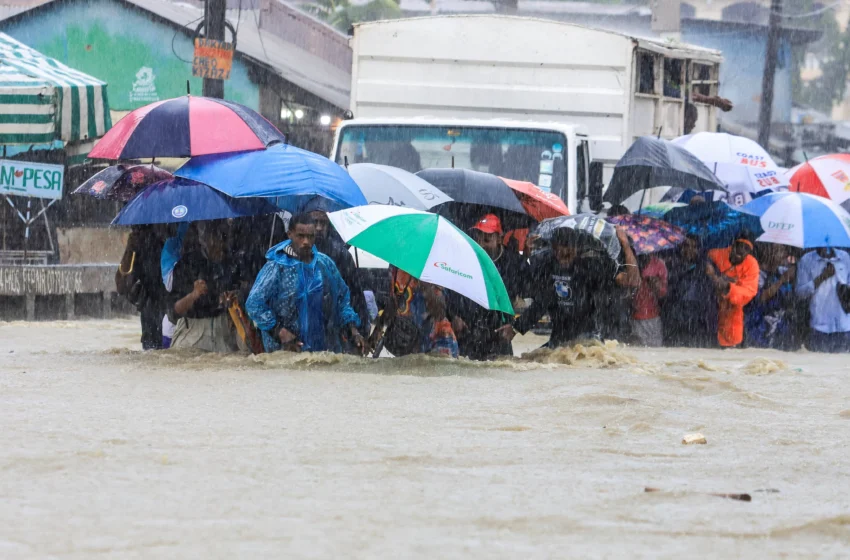
The Kenya Meteorological Department has forecast continued rainfall across several parts of the country, warning that heavy downpours are likely to persist during the first half of May before gradually easing later in the month.
The forecast comes as many regions continue to grapple with flooding, slippery roads and disruptions caused by ongoing rains.
According to the latest weather outlook, rainfall is expected to continue in the Highlands East and West of the Rift Valley, the Lake Victoria Basin, the Rift Valley, parts of the Coast region and Northwestern Kenya.
Some areas within the Highlands East and West of the Rift Valley, the Lake Victoria Basin and the Rift Valley are likely to experience particularly heavy rainfall events over the coming days.
The department has cautioned that the prolonged rains may increase the risk of floods, poor visibility on roads and landslides in vulnerable areas.
Authorities are urging residents to remain alert and take precautionary measures to avoid accidents and loss of life during the rainy season.
“The outlook for May indicates that the second half of the month is likely to be drier than average, implying the cessation of the March-April-May 2026 rainfall season over much of the Highlands East of the Rift Valley, the Southeastern Lowlands and Northeastern Kenya,” he said in a statement as per The Star.
Safety Concerns Rise as Heavy Rains Persist
The warning comes amid concerns that heavy rains witnessed in recent weeks have already caused significant disruptions in some parts of the country. Flooded roads, overflowing rivers and waterlogged settlements have made movement difficult in several counties, while landslide-prone areas remain at high risk due to saturated soils.
Residents have been advised against attempting to walk or drive through moving water, with authorities warning that strong currents can easily sweep away both pedestrians and vehicles. Emergency responders have repeatedly cautioned motorists to avoid flooded roads, especially during periods of intense rainfall.
The Meteorological Department has also warned people against sheltering under trees or near grilled windows during thunderstorms because of the danger posed by lightning strikes and strong winds. Experts say thunderstorms associated with the long rains season can develop rapidly and become dangerous within a short period of time.
People living in low-lying and landslide-prone areas have been urged to remain vigilant as the heavy rains continue. Communities situated near rivers and steep slopes are particularly vulnerable to flash floods and mudslides, especially after several consecutive days of rainfall.
Motorists have further been urged to exercise caution while driving during heavy rains because roads become slippery and visibility is significantly reduced. Traffic police and road safety officials have advised drivers to reduce speed, maintain safe distances and avoid unnecessary travel during storms.
Why the Long Rains Are Expected to Decline
Acting director of the Kenya Meteorological Department Edward Muriuki said the rains are expected to continue in many regions during the first half of May but will likely weaken as the month progresses. He explained that this pattern is consistent with Kenya’s seasonal weather cycle.
He added that May traditionally marks the end of the long rains season in most parts of the country, as weather systems begin to shift away from the region.
“The ‘Long Rains’ end in May because the main rain-producing zone near the equator, the Intertropical Convergence Zone, shifts northwards as the sun moves into the Northern Hemisphere. This shift reduces moisture convergence over Kenya, weakening rainfall systems and allowing drier conditions to set in,” he added.
Weather experts note that the March-April-May season is usually the wettest period in Kenya and plays a critical role in agriculture and water supply. However, intense rainfall events linked to the season can also trigger disasters, particularly in urban centres with poor drainage systems and rural areas prone to flooding.
Even as rainfall is expected to reduce after mid-May, authorities are continuing to urge Kenyans to remain cautious and stay informed through official weather updates. Disaster management teams are also monitoring affected regions closely to respond quickly in case of emergencies caused by the ongoing rains.