
5 Ways $1.1 Billion Nairobi Infrastructure Upgrade Could Transform City by 2030

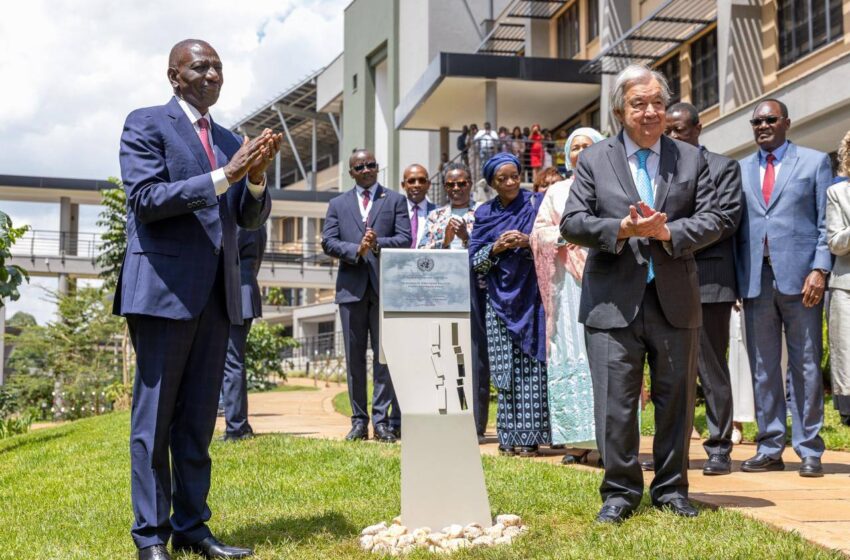
Nairobi is undergoing one of the most ambitious physical and economic transformations in its modern history, driven by the groundbreaking expansion of the United Nations Office at Nairobi (UNON) and a $1.1 billion (KSh143 billion) government-backed infrastructure investment, with the city being repositioned as the “Diplomatic Capital of the Global South.”
Beyond the immediate news of the ceremony, these investments represent a long-term blueprint for the city’s development. The funding is targeted at modernizing the very bones of the capital, from its riverbeds to its digital security systems. For residents and investors, understanding these changes is essential for navigating the Nairobi of the next decade.
While social media spikes will focus on the presence of President Ruto and Secretary-General Guterres, the true story lies in the “Evergreen” impact on your daily life. Here are the five specific ways this billion-dollar injection will reshape the business, social, and physical landscape of Nairobi by 2030.
5.The Rise of “Gigiri-Diplomatic” Real Estate
The expansion of the UN Assembly Hall to accommodate 9,000 people creates an immediate and permanent need for expanded housing. As Nairobi strengthens its position as the only UN headquarters in the Global South, the demand for “Gold Standard” residential units in surrounding areas like Gigiri, Runda, and Rosslyn will hit a new peak. This isn’t just about more houses, but about a specific type of high-security, energy-neutral living space.
Investors should note that the government’s commitment to a “UN One-Stop Shop” will streamline how international staff interact with local services. This centralization makes the northern bypass corridor the most valuable real estate strip in East Africa. For property developers, the shift moves away from generic apartments toward “diplomatic-grade” rentals that prioritize ICT integration and green energy.
Furthermore, the government’s plan to amend the Privileges and Immunities Act allows UN staff to consider retiring in Kenya. This creates a brand-new demographic of high-net-worth permanent residents who will require long-term luxury housing and private healthcare. This legislative change ensures that the real estate market in these zones remains insulated from the typical cycles of the local economy.
4.A New Era for Nairobi’s “MICE” Tourism
Nairobi is officially entering the global race for Meetings, Incentives, Conferences, and Exhibitions (MICE) dominance. By modernizing both the UN facility and the Bomas Convention Complex, the government is creating a dual-hub system capable of hosting the world’s largest summits. This infrastructure allows Kenya to compete directly with international conferencing giants like Cape Town, Dubai, and Geneva.
For the local hospitality industry, this means a transition from “seasonal” tourism to “year-round” business traffic. Hotels, caterers, and transport providers will need to upgrade their service standards to meet the expectations of global delegations and heads of state. The ripple effect will be felt across the entire service sector, creating thousands of specialized jobs in event technology and international logistics.
This modernization also positions Nairobi as a “neutral ground” for global diplomacy and environmental policy. As the world’s challenges, from climate change to financial reform—are debated in the new amphitheater, the city gains immense “soft power.” This global visibility acts as a permanent advertisement for Kenya, attracting further foreign direct investment beyond the tourism sector.
3.The Green Regeneration of the Nairobi Rivers
The $1.1 billion investment allocates significant resources to the physical “regeneration” of the Nairobi Rivers. This is far more than a simple cleanup; it is an effort to reclaim the city’s natural corridors as viable economic and recreational zones. By cleaning the waterways and improving the surrounding land, the government is creating a “Blue Economy” within the city limits.
Improved riverfronts traditionally lead to a massive spike in nearby property values and the birth of new commercial districts. People can expect to see the emergence of riverfront cafes, public parks, and pedestrian walkways that connect different parts of the city.
Environmentally, this project aligns with the UN’s goal for the new campus to be energy-neutral by 2029. By integrating river restoration with urban planning, Nairobi is setting a template for other African cities to follow. A cleaner river system improves public health, reduces the cost of water treatment, and makes the city more resilient to the climate pressures of the 21st century.
2.Infrastructure Beyond the Tarmac: ICT and Security
A major pillar of this infrastructure upgrade is the modernization of ICT systems and security. While new roads and street lighting are visible to the eye, the “digital tarmac” being laid underneath is what will power Nairobi’s future. The government is investing in enterprise-grade security and smart-city technologies to ensure the UN campus and its surroundings are hyper-connected.
This digital focus will likely result in improved internet reliability and 5G coverage for the entire northern Nairobi region. As the city hosts more international bodies, the requirement for seamless, secure data transmission becomes a priority. Local tech startups and digital entrepreneurs will benefit from being in a city that is forced to maintain world-class digital standards.
Additionally, the upgrade to street lighting and ICT-monitored security systems will significantly improve the “24-hour economy” potential of the city. Well-lit streets and high-tech surveillance reduce the cost of doing business by lowering security risks. This allows for a more vibrant nightlife and extended business hours, further boosting the city’s overall productivity and attractiveness to international workers.
1.Financial Reform and the “Global South” Narrative
The investment serves as a physical manifestation of President Ruto’s call for a “New African Financial Architecture.” By building a world-class assembly hall on “African soil,” Kenya is challenging the old narrative that the Global South is a place of problems rather than solutions. The facility will be a permanent stage where Africa can demand fairer international financial systems and debt relief.
This narrative shift has direct economic implications for the Kenyan business community. As Nairobi becomes the recognized hub for Global South diplomacy, it attracts international banks, think tanks, and NGOs to set up regional headquarters here. This concentration of intellectual and financial capital creates a “cluster effect,” making it easier for local firms to access global networks.
Ultimately, this project is about Nairobi claiming its seat at the table of global governance. As Secretary-General Guterres noted, there can be no global justice without permanent African representation in decision-making bodies. By providing the physical infrastructure for these conversations, Nairobi ensures it remains at the heart of the future of multilateralism for decades to come.

