
5 Things Hamad Kalkaba Malboum Did to Revolutionize African Athletics

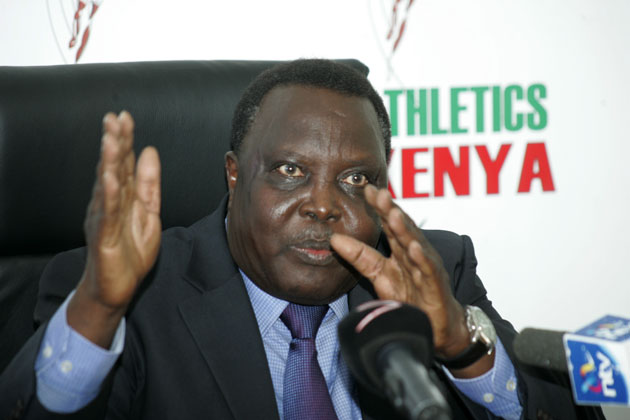
Africa’s sporting landscape was forever changed by the visionary leadership of Colonel Hamad Kalkaba Malboum, who served as a bridge between the continent’s raw potential and the global stage.
Malboum’s death on May 13, 2026, marks the end of an era for the Confederation of African Athletics (CAA). Over his decades-long career, Malboum did not merely manage the sport; he re-engineered it through a unique blend of military precision, artistic creativity, and diplomatic savvy.
The following five pillars detail how his actions revolutionized the industry and elevated African athletes to unprecedented heights.
5.Architecting the Structural Stability of the CAA
Africa’s primary athletic body underwent a radical transformation under Malboum’s stewardship, moving from a period of transition to one of sustained institutional strength. When he took over the presidency in 2003, he inherited a landscape that required a firm hand to navigate the increasing complexities of global sports governance. He applied his background in military administration to instill a sense of order and long-term planning that allowed the CAA to become a powerhouse within World Athletics.
By establishing clear administrative frameworks, he ensured that African voices were heard in every major decision-making forum, from Monaco to Lausanne. He was not content with Africa being a passive participant, he wanted the continent to lead. His ability to maintain his position for over two decades provided a rare level of continuity that allowed for the successful implementation of multi-year development projects that outlasted many of his contemporaries.
This structural revolution meant that national federations across the continent received more consistent support and guidance. He modernized the way the CAA communicated with its members, streamlining processes that had previously been bogged down by bureaucracy. Because of his efforts, the organization became a model for other continental bodies, proving that African sports administration could be as world-class as the athletes it represented.
4.Diversifying the Talent Pipeline Beyond Distance Running
Africa has always been synonymous with long-distance excellence, but Malboum recognized that the continent’s physical potential was far broader. Throughout his tenure, he pushed for the diversification of disciplines, encouraging investment in sprints, jumps, and throws. He understood that for Africa to truly dominate the medal tables, it had to compete across the entire spectrum of track and field events, not just the marathons.
His own history as a 100m and 200m sprinter gave him a personal stake in this mission. He advocated for the establishment of high-performance training centers that catered to explosive power and technical field events. By focusing on these often-neglected areas, he helped pave the way for a new generation of African sprinters and field athletes who are now breaking records and winning gold on the global stage.
This shift in focus revolutionized the perception of the “African athlete.” No longer were they seen only as endurance specialists; they became recognized as versatile, all-around competitors. This expansion of the talent pool not only increased the continent’s medal count but also broadened the commercial appeal of African athletics, attracting new sponsors and interests to the sport.
3.Professionalizing the Military-Sport Connection
Malboum uniquely leveraged his dual identity as a Colonel and a sports leader to create a professional pathway for athletes through military institutions. He saw the armed forces not just as a defensive body, but as an incubator for elite talent where discipline, nutrition, and training could be provided at a high level. Under his influence, military sports programs became a primary engine for athletic development in Cameroon and across the continent.
He served as a leading figure in the International Military Sports Council (CISM), using his position to organize competitions that provided athletes with international exposure. This approach allowed many young men and women to pursue their athletic dreams while having the security and career structure of the military. It was a pragmatic solution to the funding challenges that often plague sports in developing nations.
By formalizing this connection, he brought a level of rigor and “maneuver-like” planning to athletic preparation. The results were evident in the discipline and psychological toughness displayed by athletes coming through these systems. His legacy in this area serves as a blueprint for how government institutions can be effectively harnessed to support national and continental sporting goals.
4.Championing the “Espoir” Spirit and Local Innovation
Africa’s revolution under Malboum was not just about global championships; it was about fostering a local culture of grit and innovation. As the founder and organizer of the “Espoir” Race (the ascension of Mount Cameroon), he created one of the most grueling and prestigious endurance events in the world. This race became a symbol of his belief in the “Hope” (Espoir) and resilience of the African spirit.
He used such local events to prove that Africa could host world-class competitions with unique characteristics. He was a staunch advocate for bringing major championships to African soil, believing that seeing heroes compete at home was the greatest catalyst for youth participation. His work ensured that the continent became a viable and attractive destination for international sporting events, boosting local economies and pride.
This grassroots revolution ensured that athletics remained relevant at the community level. He often spoke of the sport as a tool for social cohesion and national identity. By highlighting local races and indigenous talent, he ensured that the growth of African athletics was organic and deeply rooted in the soil of the continent, rather than being an imported or purely elite phenomenon.
1.Integrating Cultural Identity into Global Advocacy

Africa’s most influential administrator understood that sport does not exist in a vacuum; it is part of a broader cultural tapestry. Malboum revolutionized the way African athletics presented itself to the world by refusing to separate his cultural roots from his professional duties. Whether through his music or his public discourse, he showcased a leader who was unapologetically African while being masterfully global.
He navigated the corridors of the IOC and World Athletics with a dignity that commanded respect, often bridging the gap between traditional customs and modern governance. This cultural integration allowed him to advocate for Africa in a way that felt authentic and powerful. He didn’t just ask for a seat at the table; he brought the richness of African culture to that table, making the global sport more inclusive and diverse.
This approach changed the way international bodies engaged with Africa. They began to see the continent not as a region in need of “help,” but as a partner with a rich heritage and immense intellectual capital. Malboum’s life taught the world that excellence is most potent when it is grounded in one’s true identity, leaving a legacy that will inspire African administrators for generations to come.

