
DR Congo Conflict: Why Ruto Wants East Africa to Lead Peace Efforts

President William Ruto has issued a clarion call to regional leaders, asserting that the burden of stabilizing the Democratic Republic of Congo (DRC) rests primarily on the shoulders of its neighbors.
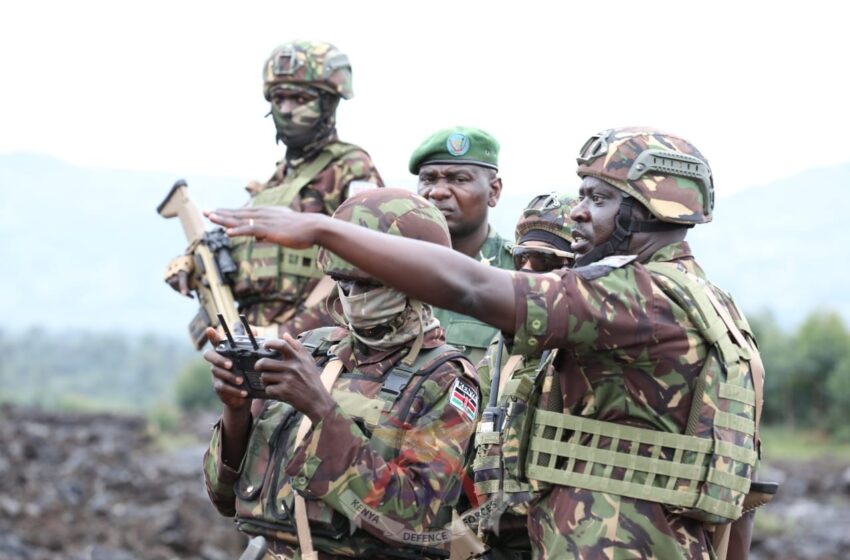
Speaking to France 24 during the Africa Forward Summit in Nairobi, the Kenyan leader highlighted a troubling disconnect between high-level diplomatic signatures and the harsh realities faced by civilians in the eastern DRC. The withdrawal of the East African Community Regional Force (EACRF) last year, prompted by demands from Kinshasa, has seemingly left a security vacuum that continues to bleed the region of its potential.
Recent months have seen a surge in violence despite the historic Washington peace agreement signed in December 2025. This deal, witnessed by Ruto alongside global figures like US President Donald Trump and Rwanda’s Paul Kagame, aimed to silence the guns through a comprehensive ceasefire and disarmament framework.
The Kenyan President remains skeptical of the current progress, noting that the “ink on paper” has not yet transformed into safety for the millions displaced by decades of militia warfare.
Financial and human costs remain a point of reflection for the Kenyan administration, which committed significant military assets to the regional mission before its conclusion.
“Kenya spent resources. Kenya put our armies at risk as part of the East African force,” Ruto said in the interview aired on Wednesday as first published by Capital FM.
“When Kinshasa said we should leave, we left. Those who came in from also left.”
Is the Washington Peace Agreement Failing in Eastern DRC?
Diplomatic milestones often face the grueling test of implementation on rugged terrain. Ruto described the Washington accord as a “monumental diplomatic milestone” during its inception, believing it could unlock the massive economic potential of the Great Lakes region. Today, his tone reflects the gravity of a stalled process. Ongoing fighting and a lack of accountability mechanisms have prevented the safe return of refugees, keeping the humanitarian crisis at a boiling point.
Efforts to disarm rebel groups and foster regional economic cooperation require more than international observers; they require local political will. The President’s remarks suggest that while global powers provide a platform, the actual execution of peace depends on the neighborly commitment of those sharing borders with the mineral-rich nation.
Why is Kenyan Leadership Crucial for Regional Security?
Economic stability in East Africa is intrinsically linked to the peace of its neighbors. Trade routes, infrastructure projects, and regional markets suffer whenever North Kivu or Ituri fall into chaos. Ruto argued that nations like Uganda, Rwanda, and Burundi cannot afford to be passive spectators, regardless of the political friction that sometimes characterizes their relationship with Kinshasa.
“But I think between the ink and the situation on the ground, there is a world of difference,” he noted, emphasizing that the humanitarian situation remains dire.
Strategic interests dictate that Kenya remains a central mediator. The ripple effects of instability—ranging from arms smuggling to the strain of hosting displaced populations—reach far beyond the Congolese border.
“It’s not Washington’s role alone. Washington has a role to play, but Kenya and East Africans — Uganda, Rwanda, Burundi, and all of us here, have an even bigger responsibility because it affects our economies and our countries much more than it affects others,” he said. Leaders must provide solutions now to ensure the Great Lakes region does not remain in a permanent state of flux.
“It is still our responsibility as leaders from this continent and as leaders in this region, whether we like each other or not,” he said.
“But we are the leaders at this point in time, and we must provide solutions. Kenya will continue to play its part.”