
Rigathi Gachagua Fuel Price Explainer Dismissing Government Strait Of Hormuz Claims

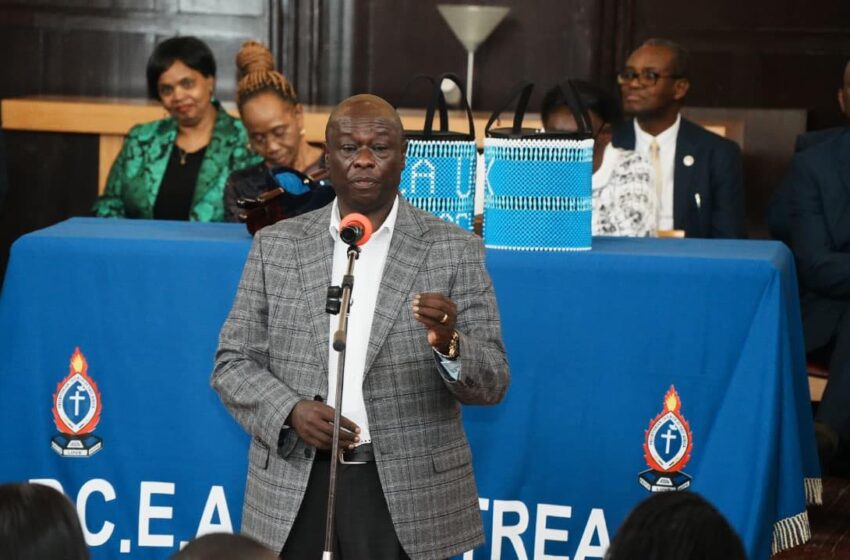
Former Deputy President Rigathi Gachagua, who now leads the Democracy for the Citizens Party (DCP), has dismissed claims that the ongoing global tensions around the Strait of Hormuz are responsible for Kenya’s surge in fuel prices, instead accusing President William Ruto of inflating the landed cost of petroleum products through the government-to-government fuel importation deal.
Speaking from the United Kingdom during a comprehensive press briefing streamed live on his official Facebook page, Gachagua offered an alternative structural breakdown of Kenya’s petroleum supply chain. He strongly challenged the official narrative maintained by State House and national treasury experts, asserting that the geopolitical friction between major global powers does not inherently dictate domestic pricing realities to the extent claimed by state officials.
The Supply Chain Counter-Argument
Kenya does not source its fuel directly from Iran or via the Strait of Hormuz, according to Gachagua, but rather from the Abu Dhabi National Oil Company (ADNOC) in Dubai and Saudi Aramco in Saudi Arabia. He emphasized that the physical path of Kenya’s imported refined oil escapes the immediate vulnerabilities associated with the heavily contested maritime chokepoints in the Persian Gulf.
“Our fuel doesn’t come from Iran. It doesn’t go through the Strait of Hormuz. Our fuel is sold by ADNOC in Dubai and Saudi Aramco in Saudi Arabia, that’s where the fuel is processed and therefore this story that we’re having a challenge because of the Strait of Hormuz is hot air,” Gachagua alleged.
The DCP leader sought to decouple East Africa’s largest economy from direct logistical dependency on the volatile maritime corridor by centering the debate on specific state-backed suppliers in the United Arab Emirates and Saudi Arabia. This counter-narrative serves a critical role in ongoing discourse, aiming to shift public attention from distant international crises directly back onto localized policy decisions and executive governance mechanisms.
Allegations of State Capture and the G-to-G Framework
The real problem in Kenya’s fuel pricing stems from “conflict of interest and state capture” within the government-to-government (G-to-G) fuel import arrangement, the former Deputy President further alleged. This specific framework, introduced as an innovative mechanism to ease foreign exchange pressures and stabilize the local currency, has instead become a lightning rod for deep political and corporate accountability debates.
The fiscal burden borne by Kenyan consumers at the pump is driven by deliberate institutional inflation rather than global market dynamics or baseline statutory taxation, Gachagua who has been a reputation of ledership framework on public resource protection, specifically argued. He alleged that the current structures enrich specific private intermediaries at the direct expense of the taxpaying public, explicitly pointing to Gulf Energy as a key corporate player within the state-sanctioned distribution network.
Gachagua provided specific figures regarding the absolute baseline landed costs of petroleum commodities reaching East African ports to contextualize these severe claims. He asserted that while the authentic landed cost of Super Petrol stands at Ksh.170 per litre and Diesel stands at Ksh.167 per litre, the domestic retail margins are heavily artificially inflated through systematic executive surcharges. He claimed that within this pricing matrix, William Ruto pockets Ksh.37 per litre on Petrol and Ksh.40 per litre on Diesel.
Gachagua did not provide any evidence to substantiate the allegations against the President or the claims regarding the fuel pricing structure, however. Independent financial analysts have continually emphasized that verifying exact profit distributions within complex international state-backed tenders remains immensely challenging without official auditable documentation from the Ministry of Energy or oversight committees.
The State’s Official Stance and Global Realities
His remarks directly contradict statements made by Treasury Cabinet Secretary John Mbadi, who attributed the spike in fuel prices to global market disruptions linked to tensions in the Middle East. The executive branch maintains that external shocks remain the foundational driver of domestic economic tightening, citing severe macro-environmental factors beyond regional judicial control.
Macro-economic vulnerability remains a shared continental burden, Mbadi emphasized during high-level international briefings. He stated that during multi-lateral consultative meetings with International Monetary Fund (IMF) officials, global energy security frameworks dominated historical discussions, with particular focus trained on the systemic shocks triggered by the escalating US-Iran conflict and its subsequent maritime threats.
The Strait of Hormuz, located between Oman and Iran, remains one of the world’s most critical oil transit chokepoints, with nearly a fifth of global oil consumption passing through the narrow waterway daily. Energy analysts note that even if specific shipments originate from terminals outside the Persian Gulf, global pricing indices react fluidly to risk premiums, creating an unavoidable domino effect that shapes regional pump valuations across developing nations.
A Rising Wave of Public Grievance
The intensifying rhetoric arrives amidst widespread domestic anxiety and social unrest, as rising operational costs continue to impact public transport sectors and industrial manufacturing. Protests have periodically disrupted commercial logistics across key urban hubs, forcing regulatory authorities to consistently re-evaluate pricing cycles to prevent prolonged national paralysis.
This political escalation builds upon a series of coordinated oppositional maneuvers. Notably, on 19th April he used a strict seven-day ultimatum to the Head of State to slash fuel prices, threatening to mobilize nationwide protests if the demand is not met. The subsequent expiration of that deadline and the continuation of high tariffs have amplified the modern standoff, setting a highly contentious tone for upcoming legislative debates surrounding energy sector liberalisation and state procurement audits.The structural debate regarding state capture versus global supply chains remains far from resolved even as the Energy and Petroleum Regulatory Authority (EPRA) continues to implement tactical mid-cycle recalculations to pacify public transport operators. The ideological schism between Gachagua’s localized corruption narrative and the government’s international market thesis highlights a definitive pivot point in how economic policy and resource management are critiqued in contemporary Kenya.

