
Kenyan Specialty Coffee Farmers Innovating Composite Plots For Luxury Beverage Market

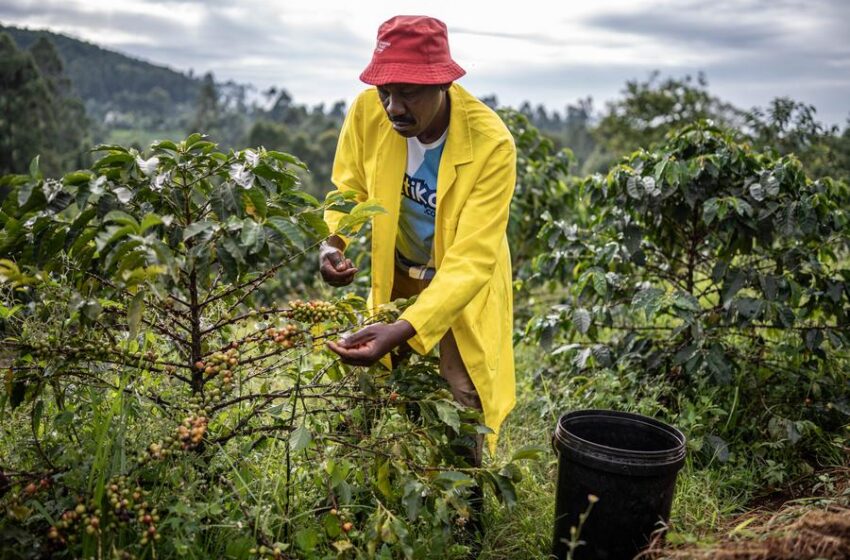
(241221) — NAIROBI, Dec. 21, 2024 (Xinhua) — A farmer picks coffee berries in a coffee farm in Kirinyaga, Kenya, Dec. 20, 2024. TO GO WITH “Feature: Coffee farming provides lifeline for Kenya’s central region” (Xinhua/Wang Guansen)
The global premium beverage industry relies heavily on the distinct, bright acidity of East African Arabica.
Recent agricultural shifts in Central Kenya reveal a brilliant tactical pivot among smallholder estate owners determined to preserve rare flavor profiles. Producers are moving away from traditional single-variety blocks to pioneer advanced composite plots.
The strategy involves planting highly vulnerable legacy trees right next to modern, climate-resilient hybrids within the same acre. This structural layout allows the natural pest defenses of newer varieties to serve as a biological shield for historic crops. The resulting ecosystem maintains the exquisite cup quality international roasters demand while securing the farm against sudden crop failure.
The intersection of artisan farm management and strict global quality standards has birthed a new era of agroecological design. Navigating the economic pressures of global warming requires a deep understanding of these field-level botanical arrangements.
The Matrix of Resilience Analyzing Variety Strengths in Shared Soil
Data-driven insights from regional research stations show the clear operational differences between the varieties found inside a Kenyan composite plot. Farmers balance these distinct traits to achieve a steady, high-value harvest.
|
Coffee Variety |
Primary Agronomic Strength |
Elite Flavor Cupping Potential |
|
SL28 Legacy |
Exceptional deep drought tolerance |
Blackcurrant, bright citrus, winey complexity |
|
SL34 Historic |
High adaptability to wet, high altitudes |
Complex dark chocolate, crisp lime finish |
|
Ruiru 11 Hybrid |
Complete immunity to berry disease |
Balanced body, moderate acidity, solid base |
|
Batian Modern |
Rapid maturity, high leaf rust shield |
Elegant floral notes, bright clean profile |
The figures illustrate a brilliant botanical compromise. By combining these unique assets, smallholders build an agricultural network capable of surviving unpredictable weather patterns.
The scale of intervention reflects a desire to protect independent incomes from devastating fungal outbreaks. Crop diversification ensures that a single disease outbreak cannot wipe out an entire farm’s annual output.
The Spatial Engineering Behind Micro-Climate Modification
The physical placement of distinct coffee tree architectures alters wind currents and soil moisture levels across the plantation. Tall, sprawling legacy branches create a natural canopy over compact dwarf hybrids.
Refined canopy structures minimize direct solar radiation on the soil, lowering evaporation rates during dry spells. The technological setup keeps the ground cool, allowing shallow-rooted varieties to absorb nutrients efficiently.
|
Management Component |
Core Operational Functionality |
|
Canopy Stratification |
Interlocking tall and short trees to break wind impact |
|
Root Zone Partitioning |
Deep and shallow roots drawing nutrients from separate layers |
|
Biochemical Shielding |
Disease-free hybrid zones slowing the spread of fungal spores |
However, the dominance of composite planting introduces distinct challenges for the selective harvesting process. Hand-picking crews must identify differing maturity speeds, ensuring that slower-growing heirloom cherries do not mix with fast-ripening hybrid fruits.
Despite these daily operational challenges, premium estates prioritize composite setups to manage unpredictable tropical weather patterns. The future of artisan beverage production remains firmly tied to the evolution of these mixed-crop patterns.
Economic Implications for the Luxury Global Supply Chain
The tightening of quality standards directly influences the earning potential of independent African growers. Content curators and green buyers pay massive premiums for distinct flavor profiles that score above eighty-five on international specialty scales.
Stricter washing station protocols ensure that composite harvests are separate-milled or strategically blended to hit specific flavor targets. The pressure has caused a noticeable shift toward highly customized processing methods, including anaerobic fermentation experiments.
International marketing agencies are also restructuring their sourcing stories to highlight these sustainable farming systems. Maintaining a steady supply of premium beans requires deep financial investment in local eco-friendly infrastructure.
The long-term sustainability of independent agriculture depends heavily on how international markets reward these climate-smart choices. Clearer communication channels between global specialty roasters and local farmer cooperatives remain essential.
Biochemical Protection Networks and Biological Barrier Dynamics
Fungal pathogens like Coffee Berry Disease present a continuous existential threat to undefended legacy plantations throughout Nyeri, Murang’a, and Kiambu counties. Traditional monoculture farming forces a heavy reliance on costly chemical fungicides that erode soil health over time. Composite configurations establish a physical barrier that disrupts the path of airborne fungal spores.
Healthy clusters of Ruiru 11 and Batian trees act as non-host speed bumps, safely absorbing spores without succumbing to infection. The localized drop in pathogen density spares the sensitive SL28 trees from heavy environmental exposure.
|
Biological Factor |
Monoculture Plantation Risks |
Composite Plot Protective Performance |
|
Pathogen Velocity |
Rapid field-wide transmission |
Disrupted dispersion paths via immune hosts |
|
Chemical Dependency |
Continuous synthetic fungicide sprays |
Integrated pest management lowering input costs |
|
Soil Microbiome |
Degraded beneficial fungal networks |
Enhanced microbial diversity from mixed root exudates |
The operational logic mimics multi-species forestry models used to combat tree-killing blights globally. Smallholders find that biological diversification reduces the cost of inputs by up to forty percent annually.
The resulting financial relief allows family-owned estates to reinvest capital directly into processing infrastructure like raised drying beds. Lowering production overhead while maintaining premium quality transforms the economic baseline of rural communities.
Soil Chemistry Synergy and Underground Root Architecture Integration
The subterranean dynamics of a mixed coffee plantation reveal a highly efficient division of labor between root systems. Legacy SL varieties possess deep, vertical taproots that anchor into the subsoil layers to draw moisture from deep underground reserves.
Modern hybrids utilize dense, lateral feeder networks that spread across the top twelve inches of topsoil to trap nutrients immediately. The spatial segregation ensures that adjacent trees do not compete directly for the same pocket of water or fertilizer.
|
Root Stratum |
Dominant Variety Present |
Primary Nutritional Asset Targeted |
|
Deep Subsoil Zone |
Heirlooms (SL28 / SL34) |
Deep water tables and dense mineral reserves |
|
Shallow Topsoil Zone |
Hybrids (Ruiru 11 / Batian) |
Organic compost breakdown and surface moisture |
The underground structural separation optimizes nutrient use efficiency across the entire farm footprint. Leaf litter falling from the tall heirloom trees creates a natural mulch barrier that locks surface moisture in place for the shallow-rooted hybrids below.
The organic degradation of mixed leaf matter alters the microbial composition of the topsoil, encouraging beneficial mycorrhizal colonies. Stronger biological underground activity converts locked soil phosphorus into bioavailable forms naturally.
Selective Harvesting Protocols and Processing Complexity
Managing a composite block requires highly specialized labor routines during the intense peak picking seasons. Heirloom cherries often reach optimal sugar content levels days before the neighboring hybrid trees show deep crimson coloration.
Cooperative societies training picking crews emphasize exact brix level target checks over general visual scanning methods. Experienced pickers selectively harvest individual rows to keep the delicate legacy sugars isolated during the initial washing phases.
|
Harvesting Parameter |
Legacy Cherry Profiles |
Hybrid Cherry Profiles |
|
Brix Concentration |
High mucilage sugars (20%+ levels) |
Balanced sugar content (16% to 18% levels) |
|
Maturity Velocity |
Slower, prolonged sun exposure required |
Accelerated, highly uniform ripening cycles |
|
Processing Path |
Extended fermentation, natural sun-drying |
Standard fully washed, mechanical pre-drying |
The dual processing paths allow mills to create custom lots tailored to specific export destinations. Elite roasters in Tokyo or Oslo bid aggressively for the unblended legacy micro-lots due to their intense acidity.
The structural hybrid components find use in creating premium commercial espresso bases for regional café chains. Market diversification ensures that the estate secures cash flow from multiple pricing tiers simultaneously.
Future Projections and Algorithmic Tracking of Agricultural Patterns
The integration of remote sensing and drone technology helps progressive cooperatives map the precise vegetative health of composite fields. Computer vision models can easily differentiate the distinct leaf shapes of Batian from legacy SL34 canopies.
Satellite analytics provide early warning alerts for moisture stress patterns long before visual wilting occurs on the ground. The precise data streams allow estate managers to target irrigation resources exactly where sensitive varieties need them most.
|
Technological Layer |
Operational Application |
System Output Value |
|
Drone Spectrometry |
Leaf color and chlorophyll indexing |
Preemptive identification of localized leaf rust |
|
IoT Ground Probes |
Deep-soil hydration tracking |
Real-time regulation of localized drip systems |
The application of digital tracking mechanisms elevates regional agriculture to meet international corporate sustainability metrics. European buyers require verifiable proof of environmental stewardship before finalizing long-term purchasing agreements.
The composite model satisfies these strict international regulatory standards by proving a massive reduction in chemical runoff. Sustainable field layouts preserve local water tables while boosting regional biodiversity metrics.
The evolving intersection of field biology and luxury market placement ensures the longevity of the country’s specialty sector. Creative smallholders continue to demonstrate that ecological intelligence remains the finest defense against global climate disruptions.