
Technical Analysis of Kenyan Intermediary Service Platform Architectures & Digital Asset Distribution Layers

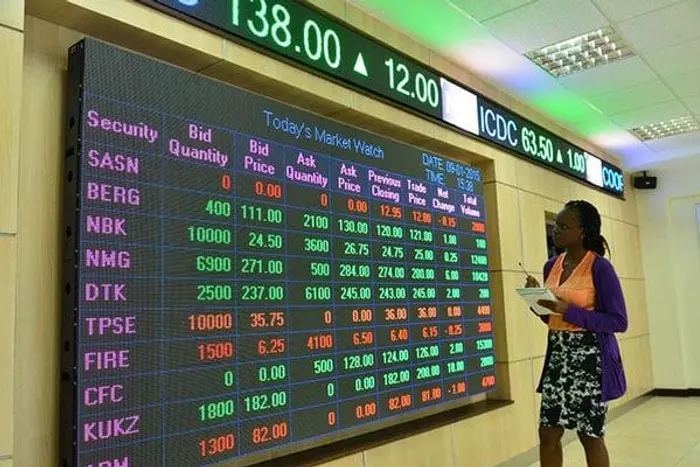
The structural maturation of the Kenyan capital markets ecosystem relies on decoupling product manufacturing from digital distribution networks.
Historically, legacy asset management institutions operating under the Capital Markets Act relied on manual client acquisition, physical branch distribution networks, and high onboarding frictional barriers.
The regulatory formalization of the Intermediary Service Platform Provider (ISPP) framework by the Capital Markets Authority (CMA) introduces a distinct, software-driven layer to the domestic financial architecture.
This specialized infrastructure layer abstracts institutional custody mechanics into programmable API pipelines. By evaluating the system design of graduates from the CMA Regulatory Sandbox, such as Moneto Ventures Limited (Chumz) and institutional pipeline engines like Pesa Bridge Limited, structural engineers can map how programmatic micro-liquidity aggregation integrates with traditional financial infrastructure.
Component Topology of Distributed Wealth Infrastructure in Kenya
An enterprise-grade digital wealth platform operating under Kenyan ISPP parameters requires a distinct three-tier architectural topology. This separation ensures that the customer-facing applications remain highly decoupled from the core transaction ledgers managed by institutional trustees and fund custodians.
The system begins at the Consumer Application Layer, which handles edge-node deployment via native mobile applications or optimized Unstructured Supplementary Service Data (USSD) gateways. This layer is designed for minimal payload delivery to ensure functionality across varying network speeds within rural and urban Kenya. It executes client-side input validation, captures biometric authentication tokens, and gathers structural identification documentation required for anti-money laundering verifications.
The system then moves into the ISPP Orchestration Middleware tier, which serves as the core stateless transaction engine and state machine of the architecture. It maps user investment intents to corresponding fund allocations without taking direct custody of client capital. The middleware acts as a high-throughput programmatic router, orchestrating real-time database state changes, evaluating behavioral rules, and interacting with third-party verification engines via HTTPS POST methods secured by TLS 1.3 encryption protocols.
At the base sits the Institutional Asset Ledgers, consisting of the core banking systems and investment ledgers maintained by licensed fund managers, trustees, and custodians. This layer processes the aggregated capital allocations, mints fractional pool units, and handles settlement cycles for government securities and commercial paper. The ISPP middleware queries this layer using standardized financial messaging layouts to update user dashboards asynchronously.
Algorithmic Micro Liquidity Harvesting and State Triggers
The economic viability of retail wealth platforms in Kenya relies on converting fractional daily disposable income into high-yield capital assets. Traditional systems cannot process low-value transactions due to high fixed banking overheads. Digital ISPP systems overcome this structural limitation by implementing programmatic micro-savings engines that track transactional velocity.
Save-on-spend configurations leverage webhook integration with consumer transactional pipelines to execute micro-harvesting logic. When an authenticated user triggers a payment event via mobile money rails, the ISPP core platform parses the metadata payload. The system calculates a variable rounded-off financial differential based on pre-configured user parameters and places that secondary amount into an processing queue.
This asynchronous queue manages the micro-allocations by bundling them into batch processing intervals, preventing network saturation and reducing database lock contentions. Once the accumulated batch balances reach a designated operational threshold, the engine executes a consolidated transactional call to the asset ledger. This process minimizes payment gateway overhead and optimizes unit allocation costs for the retail investor.
Predictive liquidity forecasting engines run concurrently within the middleware tier to analyze historical user withdrawal behavior. These machine learning models evaluate seasonal spending cycles, macroeconomic adjustments, and systemic liquidity events to balance fund redemption flows. This analytics engine ensures that the platform maintains optimized cash-buffer balances across integrated partner banks without over-allocating capital away from yield-bearing assets.
Systems Engineering Analysis of Digital Asset Delivery
|
Engineering Vector |
Legacy Manual Wealth Infrastructure |
Automated Robo Advisory Deployments |
Intermediary Service Platform Infrastructure (ISPP) |
|
Data Orchestration Pipeline |
Batch processing via physical document clearing and evening file uploads. |
Automated questionnaire processing linked to predefined model portfolio variations. |
Real-time event-driven message queuing utilizing programmatic RESTful APIs. |
|
Capital Unit Scalability |
Fixed entries typically limited above KES 5,000 to offset administrative costs. |
Moderate fractional tracking with systemic allocations starting at KES 1,000. |
Granular fractional allocation systems accommodating entries as low as KES 10. |
|
Identity Verification Architecture |
In-person verification accompanied by certified copies of government documents. |
Digital document parsing coupled with basic optical character recognition processing. |
Programmatic verification via live Integration with national identity registries (IPRS APIs). |
Sandbox Engineering Validation and Compliance Systems
Transitioning a novel financial architecture from an unvalidated prototype to a fully licensed market utility requires rigorous sandbox iteration. The CMA Regulatory Sandbox provides a structured testing frame where software providers operate under relaxed compliance thresholds to verify technical performance and data governance. Moneto Ventures Limited utilized this testing model to evaluate the Chumz application architecture prior to securing its mainstream ISPP status in August 2022.
During the sandbox iteration lifecycle, platforms must demonstrate the technical integrity of their security boundaries, data protection practices, and transaction handling workflows. Software engineers focus on identifying edge-case failures, measuring application latency, and validating the performance of error-handling loops under high concurrent transaction loads. This systematic validation ensures that consumer data protection compliance aligns fully with the Data Protection Act.
Compliance engineering within a graduated ISPP platform demands the automation of regular audit logs and regulatory data delivery pipelines. The system architecture includes dedicated compliance modules that generate cryptographic ledgers of all transactional activities. These automated modules compile daily financial summaries, fund distribution tracking records, and system performance logs to push directly to regulatory ingestion databases.
This automated oversight reduces operational friction, ensuring constant compliance without manual report compilation. By exposing structured data endpoints to regulatory auditors, the platform maintains a verifiable record of performance. This architectural transparency reinforces system trustworthiness while lowering compliance management overhead.
Structural Portfolio Design of Collective Investment Funds
Understanding the high-yield performance of digital wealth platforms requires an evaluation of the underlying asset structures within Kenyan Collective Investment Schemes (CIS). A licensed fund manager pools the aggregated micro-capital harvested by the ISPP to gain institutional purchasing power across the money market, fixed income, and equity landscapes.
The Money Market Fund (MMF) represents the foundational asset engine for mass-market digital platforms due to its high liquidity profiles and low risk parameters. The underlying portfolio of a Kenyan MMF is heavily weighted toward short-dated government securities, including 91-day, 182-day, and 364-day Treasury Bills. These public debt instruments offer stable, predictable yield curves that are immune to equity market volatility.
The remaining asset allocation is distributed across highly rated corporate commercial paper and structured bank certificates of deposit (CDs). These private placement instruments offer yield premiums above the government baseline curve to boost the aggregate performance of the fund pool. The compounding interest generated by these short-term instruments is computed algorithmically on a daily basis and credited to individual user balances at monthly intervals.
For retail investor cohorts with extended investment horizons, the ISPP architecture routes capital into balanced or growth equity funds. These secondary vehicles introduce exposure to the Nairobi Securities Exchange (NSE), balancing dividend-yielding blue-chip equities with medium-term treasury bonds. The platform middleware automates the rebalancing of these allocations based on programmatic risk-tolerance assessments executed during user onboarding cycles.
API Integration Standards for Telecommunications and Asset Ledgers
The operational continuity of an ISPP ecosystem depends on the security, resilience, and layout standards of its Application Programming Interfaces (APIs). The platform serves as a multi-directional bridge, translating incoming webhooks from telecommunications mobile money frameworks into institutional ledger entries.
The inbound payment orchestration relies on direct integration with the Safaricom M-Pesa Daraja API platform using Customer-to-Business (C2B) or Lipa Na M-Pesa STK Push protocols. When a user authorizes an investment transfer, the ISPP gateway sends a secure HTTPS POST request payload to the telecommunications server using TLS 1.3 encryption protocols. The telecom operator processes the transaction, clears the user wallet, and issues an asynchronous webhook callback containing transaction reference tokens, MSISDN identifiers, and financial metadata.
The outbound integration layer transforms this incoming mobile money payload into a standardized institutional investment transaction message. The architectural standard is migrating toward the ISO 20022 XML and JSON financial messaging frameworks to replace legacy, fragmented flat-file sharing models. This standard unifies the metadata layout for transaction processing, balance checks, and unit reconciliation workflows.
To prevent transaction loss during network drops or infrastructure timeouts, the platform implements an enterprise message broker system utilizing RabbitMQ or Apache Kafka architectures. If an integrated fund manager’s ledger experiences a temporary database timeout, the transaction payload is retained in a persistent, durable queue. The system automatically executes exponential back-off retry logic until the asset ledger confirms successful unit allocation via an authenticated webhook response.
Cross Border Scaling Mechanics inside the East African Community
Expanding a Kenyan-engineered ISPP architecture across regional borders requires navigating deep technological fragmentation and distinct national regulatory structures. An infrastructure configuration optimized for the Kenyan market cannot be deployed directly into neighboring jurisdictions without addressing localized telecommunications structures and sovereign legal restrictions.
Currency conversion volatility represents a core risk factor when routing cross-border investment capital within the East African Community (EAC). For an investor in a regional market to access high-yield Kenyan money market funds, the platform core must handle real-time foreign exchange pricing and settlement. To minimize conversion friction, advanced ISPP systems integrate with cross-border clearing networks and multi-currency digital wallets.
To achieve regional scalability without rebuilding the core product layout, engineers build highly modular software abstractions. The primary system engine—containing ledger databases, rule execution software, and behavioral analytics code—remains globally unified across cloud nodes. Localized dependencies, including national identity registries, cellular network APIs, and specific sovereign tax withholding scripts, are isolated into independent microservices.
Long-term structural scaling will rely on the completion of the East African Community Capital Markets Infrastructure (CMI) harmonization initiative. This regional integration framework seeks to link the automated trading systems of all regional stock exchanges into a single virtual ecosystem. Intermediary software architectures designed with open API profiles will dominate this unified landscape, facilitating the frictionless flow of retail investment capital across the entire region.