
Top 10 Richest Kenyan Footballers 2026 Financial Rankings Plus Net Worth Analysis

Professional sports reward those who treat personal brands like corporate entities. Kenyan athletes now dominate global sports headlines, utilizing prestigious contracts to secure long-term stability. Accurate rankings of the ten wealthiest Kenyan footballers for 2026 reflect diverse income streams, investment portfolios, and broader economic impact.
Beyond weekly match-day salaries, sophisticated asset management strategies now transform these individuals into institutional-grade investors. Examining the shift from luxury consumption to wealth preservation provides a comprehensive look at how the next generation of Harambee Stars secures financial independence on and off the pitch.
The Paradigm Shift: Wealth Beyond Match Wages
Modern professional football represents a high-stakes industry where raw talent meets tactical financial management. Kenyan athletes now dominate global sports headlines, utilizing prestigious contracts to secure long-term stability. Success no longer depends solely on weekly match wages; it stems from sophisticated investment choices across real estate, agribusiness, plus digital brand equity.
Athletes who diversify early create generational wealth, moving away from the common pitfall of relying on single revenue sources. Analyzing the net worth of these top earners requires cross-referencing industry reports with specialized financial databases and verified transfer records. A clear transition is visible: professional football serves as the primary engine for capital, while property, commercial ventures, and brand ambassador roles serve as the chassis for lasting stability.
Read Also: Top Comoros Official Hospitalized in Nairobi Amid Rising Tensions in Moroni
The Kenyan Pipeline: From Local Pitches to Global Markets
Financial trajectories for Kenyan footballers have evolved significantly. The pipeline from local leagues to European tiers remains more robust than ever, fueled by improved scouting networks plus stringent FIFA regulations that prioritize youth development. Players like Amos Wanjala, currently developing within the Valencia CF academy system, represent a new breed of athlete. Such young professionals begin their financial education before their first professional contract, learning to view their career as a high-growth startup. Focus on early-stage career development ensures that by the time these players reach their prime, they are already equipped with a foundational understanding of asset management and brand equity.
Michael Olunga: The Strategic Icon
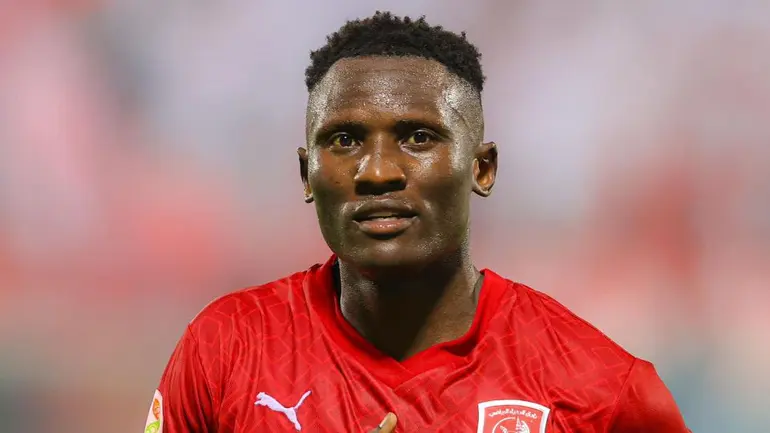
Michael “The Engineer” Olunga currently leads the financial hierarchy through a combination of lucrative Qatari contracts plus sharp commercial awareness. Playing for Al-Arabi SC remains his primary revenue source, yet he leverages his public image to secure high-profile endorsements. Strategic land banking across Homa Bay plus Nairobi provides a robust safety net, proving his commitment to permanent wealth accumulation. His academy, MOFA, acts as both a social investment plus a strategic long-term venture.
2026 Financial Power Rankings
| Rank | Player | Current Club | Primary Income Driver |
| 1 | Michael Olunga | Al-Arabi SC | Qatari League Salary |
| 2 | Victor Wanyama | Retired | Brand Ambassador Roles |
| 3 | Job Ochieng | Real Sociedad | La Liga Salary |
| 4 | Joseph Okumu | Stade Reims | Ligue 2 Contract |
| 5 | Collins Sichenje | Charlton Athletic | Championship Salary |
| 6 | Erick Otieno | Raków Częstochowa | European Club Salary |
| 7 | Daniel Anyembe | Viborg FF | Danish Superliga Salary |
| 8 | Timothy Ouma | Lech Poznań | European League Wages |
| 9 | McDonald Mariga | Retired | Commercial Farming Ventures |
| 10 | Amos Wanjala | Valencia CF (Academy) | European Development Contract |
The Legacy of Wanyama Plus Mariga
Victor Wanyama transitioned into a prominent role as a brand ambassador following his successful stint in the English Premier League. Recent partnerships with developers underscore his focus on hospitality plus residential property. McDonald Mariga continues to harvest returns from long-term investments in agriculture. Both legends serve as vital examples for younger players regarding the necessity of post-career diversification. Their ability to remain relevant long after their final professional match provides a blueprint for current stars.
Understanding Investment Categories: A Strategic Briefing

Sophisticated athletes now view their personal capital through a structured “Capital Stack.” By treating playing contracts as seed funding, they transition from active earners into institutional investors. Such a transition requires a disciplined approach to asset allocation, mirroring the strategies employed by private equity firms and professional wealth managers.
Portfolio categorization follows four strategic pillars:
-
Alpha-Generation Assets (High-Growth Equities): These represent the “growth engine” of the portfolio. Athletes allocate a calculated portion of their capital toward high-beta ventures, such as venture capital or emerging market equities. While carrying a higher risk profile, they offer potential for exponential capital appreciation, serving as the primary driver for long-term wealth expansion.
-
Core Operational Assets (Real Estate & Infrastructure): Often referred to as the “cornerstone” of the portfolio, these assets provide essential balance. By investing in commercial property or urban development, athletes generate predictable rental yields. These holdings act as a hedge against inflation and market volatility, providing a steady “income floor” that remains resilient regardless of sporting career outcomes.
-
Defensive Liquidity (Fixed Income & Bonds): Every institutional-grade portfolio requires a defensive position. Fixed-income instruments, including sovereign bonds or diversified corporate credit, offer stable, predictable cash flows. Such assets minimize portfolio beta, ensuring that a significant portion of an athlete’s capital remains protected against systemic economic downturns.
-
Cash Equivalents (Operational Liquidity): Maintaining robust liquid reserves remains non-negotiable. “Goalkeeper” assets consist of high-interest cash equivalents and insurance vehicles. Liquidity serves as a risk-mitigation tool, guaranteeing immediate access to capital for unforeseen expenses or rapid entry into lucrative market opportunities without forced asset liquidation.
Comparative Case Study: The Cost of Portfolio Mismanagement
To understand the difference between sustained wealth and the “retirement cliff,” consider two profiles of hypothetical athletes.
Athlete A: The High-Beta Gambler
Athlete A directs 90% of contract earnings into speculative ventures—high-volatility tech stocks, cryptocurrency, and vanity business projects without clear revenue models. When the sports career ends prematurely due to injury, the high-beta portfolio collapses during a market downturn, leaving the athlete with no liquid cushion. Lack of professional oversight leads to “sudden wealth syndrome,” where lifestyle inflation consumes the remaining capital.
Read Also: Rio Ferdinand To Open International Doors For Arusha Through AFCON 2027
Athlete B: The Institutional Investor
Athlete B adopts the “Capital Stack” model from the first day of their professional career. They allocate 50% into “Defensive” bonds and real estate, ensuring a baseline income floor. They designate 30% for “Core Operational” commercial properties in Nairobi, generating rental income. Only 20% is reserved for “Alpha-Generation” high-growth equities. When the sporting career concludes, Athlete B maintains their standard of living through passive income, effectively securing generational wealth.
The Macro-Economic Context

Rising numbers of Kenyan footballers investing locally occur concurrently with national infrastructure projects. Modern stadiums and improved transportation logistics in Kenya increase the value of land surrounding these hubs. Athletes who reinvest foreign currency earnings into domestic commercial real estate contribute to local employment and create infrastructure that outlasts their sporting careers.
Success for the Harambee Stars on the international stage creates a “halo effect” for the domestic sports economy. When national teams qualify for major tournaments like the WAFCON or AFCON, visibility for Kenyan talent skyrockets. This increased profile attracts foreign investment, improves the valuation of local football academies, and encourages further construction of world-class facilities. Consequently, individual athletic success directly bolsters the financial ecosystem of the nation’s sports industry.
Future Outlook
Looking toward 2027 plus beyond, the trend of Kenyan footballers investing on home soil will likely accelerate. With national infrastructure projects plus modernization initiatives, the value of land plus commercial space is rising. Players who leverage their foreign-currency earnings to secure domestic assets will define the next generation of Kenya’s wealthiest citizens. Success for the 2026 cohort is defined not by current wages, but by the strength of their balance sheets after they depart the global stage.