
Kenya vs Lesotho Stalemate Exposes Critical Defensive Transition Vulnerabilities Ahead of Sunday Return Leg

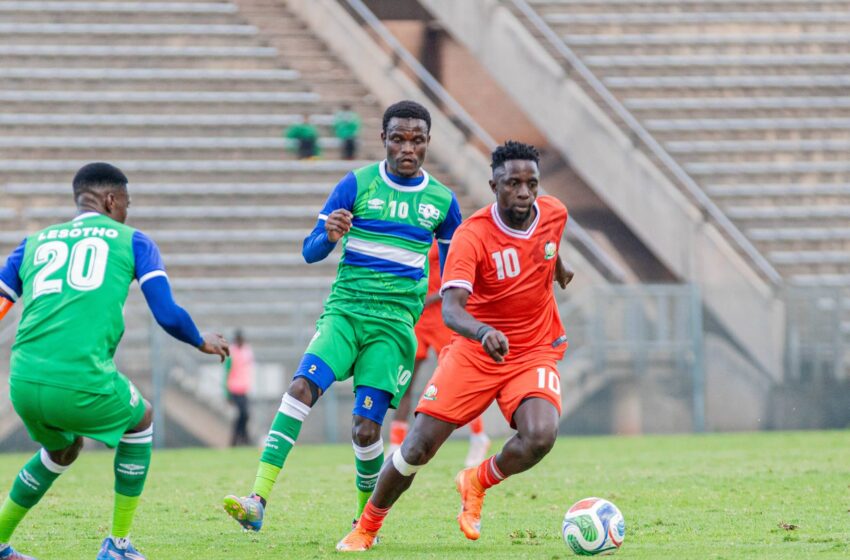
Harambee Stars initiated their technical evaluation window with a competitive 1-1 stalemate against Lesotho at the Lucas Masterpieces Moripe Stadium in Pretoria, South Africa. Settling for a draw in the first leg provided a critical foundation for the upcoming TotalEnergies CAF Africa Cup of Nations (AFCON) 2027 qualifiers, offering a deep look into systemic squad development. Reviewing the technical breakdown of the opening encounter helps evaluate the tactical adjustments expected when the two sides meet again at the same venue on Sunday, June 7.
Operating within an altered international scheduling framework forced immediate tactical adaptations from the technical bench. Cancellation of high-profile fixtures against Palestine and Kyrgyzstan in Bishkek required a rapid realignment of the squad’s competitive focus. Facing a disciplined, defensive unit ranked 145th globally provided a realistic simulation of the physical and tactical hurdles common in regional qualification groups. Deconstructing technical parameters of the opening match reveals critical developmental insights regarding defensive transition vectors, midfield operational pacing, and final-third execution metrics.
Read Also: Rio Ferdinand To Open International Doors For Arusha Through AFCON 2027
Technical Audit of the First Leg: Structural Strengths and Defensive Transition Fractures
Sovereign sports management structures rely heavily on early game consolidation to establish tactical dominance over lower-ranked defensive systems. Opening phases of the encounter exhibited a cagey operational framework from both sides before structural patterns began to emerge around the quarter-hour mark. Early pressure culminated in a breakthrough when defender Frank Odhiambo secured his maiden international goal, nodding home the opening strike after fourteen minutes of play. This initial success validated the squad’s set-piece configuration and high-pressing orientation across the opening stanza.
Midfield rotational stability experienced a noticeable shift past the forty-minute mark, allowing the opponent to establish sustained possession inside the defensive third. While counter-attacking vectors generated clear transitions—including a sharp right-wing sequence from Zech Obiero prior to the recess—final-third efficiency remained unoptimized.
-
Accrued Midfield Rotational Liabilities emerged following strategic halftime personnel adjustments, where fresh physical presence struggled to convert positional dominance into high-quality shooting opportunities.
-
Defensive Clearing Vulnerabilities surfaced during critical secondary transition phases, particularly when keeper positioning variations collided with set-piece defensive coverage.
-
The Equilibrating Set-Piece Concession occurred in the 68th minute, when an incoming free-kick vector struck the woodwork and allowed opposition captain Thabo Makhele to capitalize on a localized marking lapse.
Structural consistency fractured during the closing twenty minutes of play, as the technical structure prioritized roster rotation over sustained attacking velocity. Managing a highly stubborn, low-block defensive system exposed explicit development needs regarding creativity, off-the-ball runs, and edge-of-the-box spatial manipulation.
Sunday Strategic Projections: Tactical Optimization Vectors for the Return Encounter
Bridging operational performance gaps requires executing precise adjustments ahead of the high-velocity return leg this Sunday at the Lucas Moripe Stadium. The technical management team must address the offensive limitations that prevented the squad from breaking down a deeply entrenched defensive block late in the previous match. Adjusting tactical metrics involves transitioning from a predictable, wide-wing cross layout to a dynamic, vertical-passing blueprint through central midfield lines.
| Tactical Operational Phase | First Leg Performance Metrics | Sunday Adjustment Projections | Strategic Selection Focus |
| Offensive Final-Third | Weak finishing efforts from the edge of the box | High-velocity combination plays and overlap variables | Developing consistent scoring depth across forward lines |
| Midfield Control Vector | Rotational tracking drops in the second half | Sustained counter-pressing and higher transition speed | Creating a balanced operational spine for future qualifiers |
| Defensive Set-Piece | Structural breakdown leading to a woodwork goal | Zone-marking stabilization and tight keeper communication | Minimizing late-game soft concession vulnerabilities |
Personnel management during Sunday’s rematch will heavily influence the long-term selection matrix for upcoming competitive qualification matchdays. Expect the technical bench to deploy highly aggressive attacking rotations early, testing the physical limits of the opponent’s defensive line. Refining these structural elements helps build a versatile tactical profile capable of unlocking tight defensive shapes under varying match pressures.
Comparative Assessment of Regional Pre-Qualifying Preparation Frameworks
Evaluating the preparatory path of the national team requires examining the broader geopolitical operational realities facing the Council of East and Central Africa Football Associations (CECAFA) region. While Kenya and Ethiopia maintain active preparation schedules through localized friendly series, multiple regional competitors have experienced significant structural disruptions. Planned international windows for Uganda, Tanzania, Burundi, and Rwanda in Morocco faced total cancellation due to strict sanitary and public health considerations.
This regulatory divergence provides the active squads with a distinct competitive advantage regarding match fitness, structural cohesion, and tactical experimentation. Utilizing active FIFA windows to test fringe players against international opponents establishes a highly resilient selection database. Continuous operational exposure bridges the gap between domestic league pacing and high-intensity international competition, accelerating the development of younger prospects within the national setup.
Read Also: Top Comoros Official Hospitalized in Nairobi Amid Rising Tensions in Moroni
Strategic Pathway for National Squad Architecture and Qualification Readiness

Development value from these South African friendly matches will directly shape the squad’s competitive floor during the high-stakes AFCON 2027 qualification cycle. Incorporating younger talent into established tactical frameworks allows the coaching staff to assess individual mental resilience and structural discipline away from home soil. Discovering reliable depth options across the defensive spine reduces dependence on a fixed core of senior players, safeguarding the team against future injury crises or suspension risks.
On a broader scale, establishing a clear, identity-driven style of play remains the ultimate objective of this international residency. Future qualifying matches will demand flawless execution, tactical discipline, and the ability to grind out difficult results on the road. Shifting toward an analytical, data-informed approach to squad building marks a major evolution in national sports administration, constructing a highly modern football infrastructure capable of securing historic continental qualification.

