
Harambee Stars Market Value Dips Despite Steady Climb in FIFA Rankings

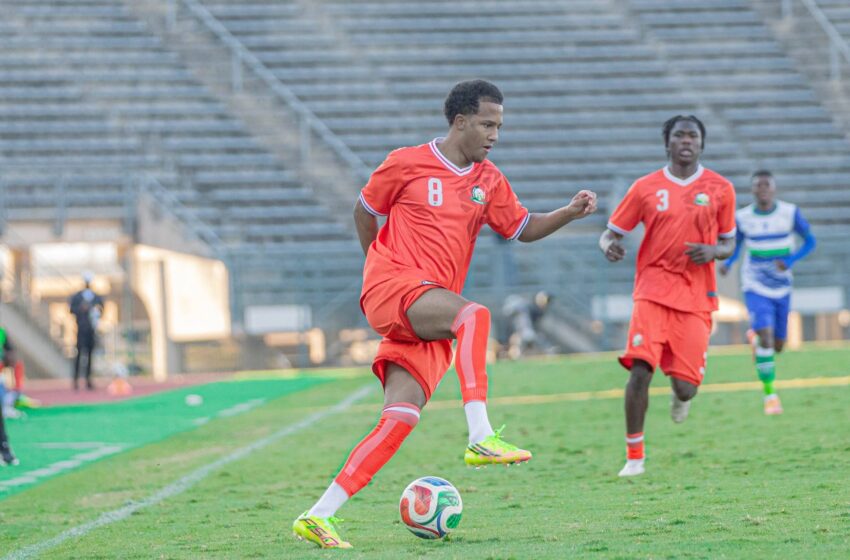
The Kenya national football team faces a rare economic paradox within the global game. While the Harambee Stars enjoy a steady climb in official FIFA World Rankings, the squad’s collective market value continues a downward trajectory in international transfer assessments.
Recent database metrics value the current 24-man roster at a modest €3.30 million, a stark decline from prior structural cycles. Financial evaluation models increasingly prioritize youth metrics and elite European league representation, creating a sharp discrepancy between Kenya’s improving on-pitch performances and depressed commercial valuations on the global market.
Also Read: Rio Ferdinand To Open International Doors For Arusha Through AFCON 2027
Why Kenya Harambee Stars market value is falling despite better results
Football market values are no longer driven purely by talent or match performance. Most valuation systems rely heavily on league visibility, transfer history, and age structure.
Kenyan players who move abroad often enter lower-tier leagues or development squads. These environments tend to reduce their statistical market value even when performance improves.
A second factor is squad restructuring. The national team is currently built around younger players, with an average age of 23.8 years. Youth improves long-term potential but lowers immediate market pricing.
Global football economics rewards established stars in top leagues. Emerging players from developing football nations usually start with lower valuation benchmarks.
Kenya Harambee Stars squad profile and financial structure
The current squad shows a strong shift toward international exposure. Most players are now based outside Kenya, giving the team tactical strength and global experience.
| Metric | Current Status |
|---|---|
| Squad size | 24 players |
| Foreign-based players | 19 |
| Foreign-based ratio | 79.2% |
| Average age | 23.8 years |
| Total market value | €3.30 million |
| FIFA ranking | 109 |
A high foreign-based ratio suggests growing international recognition of Kenyan talent. Many of these players gain tactical discipline abroad, even if their market values do not immediately reflect it.
This creates a gap between sporting performance and financial valuation.
Position-by-position breakdown of Kenya Harambee Stars value
Different areas of the pitch contribute unevenly to the squad’s total valuation.
Midfield remains the strongest financial unit, driven by players who combine experience and international exposure. Attack follows closely due to young forwards developing in European systems.
Defence shows the lowest current valuation but carries strong future potential due to its young age profile.
| Position | Average Age | Total Value | Key Insight |
|---|---|---|---|
| Goalkeepers | 26.3 | €75k avg | Stable but low market demand |
| Defenders | 23.3 | €575k avg | High future growth potential |
| Midfielders | 24.5 | €1.53m avg | Strongest financial segment |
| Attackers | 22.4 | €1.13m avg | Rising young talent |
Defenders stand out as the most undervalued group. Many are still developing, meaning strong international tournaments could significantly increase their market price.
Key players driving Kenya Harambee Stars market value
A few standout players carry a large share of the squad’s total valuation.
Job Ochieng remains the most valuable player in the team, followed by experienced midfield and defence contributors playing in European leagues.
- Job Ochieng – €1.00m (Real Sociedad B)
- Erick Otieno – €600k (Raków Częstochowa)
- Richard Odada – €300k (UTA Arad)
- Alphonce Omija – €300k (Étoile du Sahel)
- Sydney Agina – €200k (Stoke City youth setup)
- Stanley Wilson Omondi – €200k (AIK Solna)
Players in European development systems tend to have higher long-term valuation ceilings. However, consistency at senior club level remains the key factor for major increases.
Why Kenya Harambee Stars market value does not match FIFA ranking

Kenya’s rising FIFA ranking reflects improved team coordination and match results. However, FIFA rankings do not measure player transfer value.
Market value depends on:
- League strength
- Transfer demand in Europe
- Player visibility in top competitions
- Contract situations
- Age and development stage
Kenya’s squad is improving tactically but still lacks consistent representation in elite European leagues. That gap explains the mismatch between ranking and valuation.
Foreign leagues boost performance but distort valuation
Most Kenyan internationals now play outside the country. This improves tactical discipline and match experience.
However, many operate in mid-tier European or North African leagues. These leagues often undervalue players compared to top five European competitions.
The result is a dual effect:
- Team performance improves
- Market valuation remains modest
This is a common pattern for developing football nations transitioning into global systems.
Domestic league influence on Kenya football market value
The FKF Premier League still plays a central role in talent development. However, limited broadcasting revenue and infrastructure gaps reduce global visibility.
Neighbouring leagues such as Tanzania’s Ligi Kuu Bara have invested heavily in sponsorship and broadcasting. This attracts stronger financial ecosystems and affects regional player movement.
Improving local stadiums, youth academies, and media exposure remains critical for increasing future valuations.
What will increase Kenya Harambee Stars squad value in future
The next valuation jump depends on three key factors.
1. Strong continental tournament performance
African Cup of Nations and World Cup qualifiers provide global exposure. Strong performances immediately increase player value.
2. Transfers to top European leagues
Movement to higher-ranked leagues in England, Spain, Germany, France, and Italy raises valuation dramatically.
3. Youth development breakthroughs
Young players breaking into senior European first teams will significantly shift overall squad valuation.
Key takeaway
Kenya Harambee Stars are becoming stronger on the pitch, but financial valuation is still catching up due to league exposure and player pathways.
The current €3.30 million squad value does not reflect Kenya’s growing football quality. A young core, increasing foreign-based players, and improving results suggest future growth.
Market value will likely rise once more players secure consistent roles in top-tier European leagues and deliver strong performances in major tournaments.