
Equity EU Deal Boosts Global Student Mobility

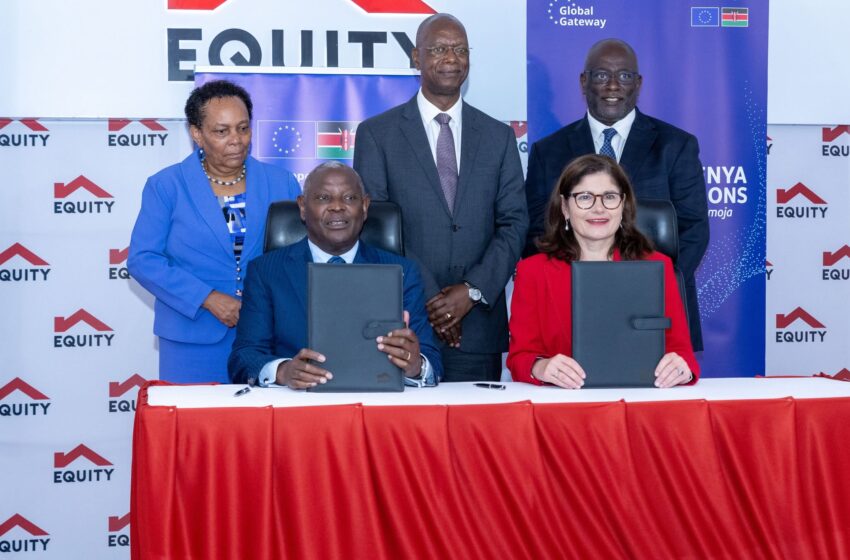
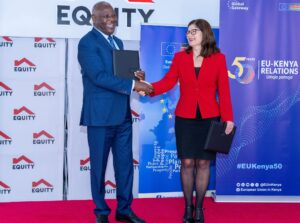
A new education partnership between the European Union and the Equity Group Foundation is set to reshape international learning opportunities for Kenyan students. The collaboration focuses on expanding access to higher education, strengthening skills development, and building globally competitive graduates.
At the center of the initiative is a plan to send 100 high-performing Equity scholars to European universities every year for master’s degree studies. This move is expected to deepen academic mobility between Kenya and Europe while supporting long-term human capital growth.
The partnership reflects a growing recognition that education is no longer just a national investment but a global competitiveness strategy.
Also Read: Rio Ferdinand To Open International Doors For Arusha Through AFCON 2027
Why EU and Equity Group Foundation education partnership matters for Kenya
Kenya continues to position itself as one of Africa’s strongest education hubs. However, limited postgraduate opportunities and high competition for local scholarships have pushed many talented students to seek alternatives abroad.
This partnership introduces a structured pathway that removes uncertainty from international education access.
Instead of relying on individual applications, scholars will now benefit from coordinated placement support, institutional collaboration, and funding alignment.
The result is a more predictable and inclusive system for academic advancement.
How the 100 student European scholarship programme will work
The programme is designed to identify top-performing students from the Equity Leaders Program and guide them into European universities.
Each year, 100 students will be selected based on academic performance, leadership potential, and community impact.
Once selected, students will gain access to partner universities across Europe for fully structured master’s degree programmes.
Scholarship pathway structure
| Stage | Process | Outcome |
|---|---|---|
| Selection | Equity Leaders Program screening | Top scholars identified |
| Preparation | Academic and leadership training | Readiness for global education |
| Placement | European university matching | Admission into master’s programmes |
| Mobility | Study across Europe | International exposure |
| Reintegration | Return or global career paths | Leadership development |
This structured approach ensures that scholars are not only academically strong but also prepared for global environments.
Erasmus Plus and Kenya European education cooperation
Kenya has become one of the leading African participants in the Erasmus Plus programme. This initiative supports academic exchange between Europe and partner countries.
Each year, around 600 Kenyan students and academics travel to more than 30 European countries. At the same time, about 300 European scholars visit Kenyan institutions.
These exchanges strengthen research collaboration, academic innovation, and cultural understanding.
Kenya Europe academic exchange impact
| Category | Kenyan Participants Abroad | European Participants in Kenya | Impact Area |
|---|---|---|---|
| Students | 600 annually | Limited | Education mobility |
| Academics | Research exchange | 300 annually | Knowledge sharing |
| Institutions | Universities | Universities | Collaboration networks |
This continuous exchange helps build long-term academic relationships that go beyond individual scholarships.
Role of Equity Leaders Program in global education access
The Equity Leaders Program plays a central role in preparing students for international opportunities. Established in 1998, it focuses on identifying high-achieving students and supporting their academic journey.
To date, more than 1,200 scholars from Kenya and neighboring countries have gained admission into leading global universities.
The programme combines academic excellence with leadership training, ensuring that students are not only successful in exams but also prepared for global responsibility.
Many graduates return with new skills that contribute to education, entrepreneurship, and public leadership in their home countries.
What Equity Group Foundation and EU partnership means for human capital development
Human capital development refers to improving the skills, knowledge, and productivity of a country’s workforce.
This partnership strengthens that goal in several ways:
1. Advanced academic exposure
Students gain access to universities with stronger research infrastructure and global academic networks.
2. Skills transfer
Exposure to European education systems introduces new methods in science, technology, business, and governance.
3. Leadership development
Students return with international experience that enhances decision-making and innovation.
Comparison of education pathways for Kenyan students
| Pathway | Local University | Individual Study Abroad | EU Equity Partnership |
|---|---|---|---|
| Access | High competition | Expensive and complex | Structured selection |
| Funding | Limited scholarships | Self-funded or partial | Supported pathway |
| Global exposure | Moderate | High but uneven | High and structured |
| Career outcomes | Local focus | Mixed outcomes | Global leadership pipeline |
This comparison shows why structured partnerships are becoming more important in modern education systems.
Economic impact of international education partnerships
Education partnerships like this do more than support individual students. They also influence national development.
When students study abroad and return with advanced skills, they contribute to:
- Better public sector leadership
- Stronger private sector innovation
- Improved research output
- Increased foreign investment confidence
Countries that invest in global education mobility often experience faster economic transformation.
The EU and Equity Group Foundation partnership creates a structured pathway for Kenyan students to access European education, strengthening long-term national development.
Challenges and opportunities ahead
Despite the benefits, several challenges remain.
One key concern is ensuring that graduates return or maintain strong ties with local development systems. Brain drain is a common issue in international scholarship programmes.
Also Read: Top Comoros Official Hospitalized in Nairobi Amid Rising Tensions in Moroni
However, structured reintegration programmes and leadership pipelines can help solve this challenge.
Another opportunity lies in expanding the programme beyond 100 students annually as capacity grows.
The EU and Equity Group Foundation education partnership represents a major shift in how Kenyan students access global education. It moves beyond individual scholarships into a structured, scalable system of talent development.
If successfully implemented, it could position Kenya as a leading source of globally trained professionals in Africa.
The long-term impact will depend on how effectively students are supported before, during, and after their studies abroad.

