How Enock Morrison Move To Al Merrikh Changes Gor Mahia Tactical Structure

Player transfers in African football are often discussed as simple transactions, but the real consequences show up on the pitch long after the headlines fade.
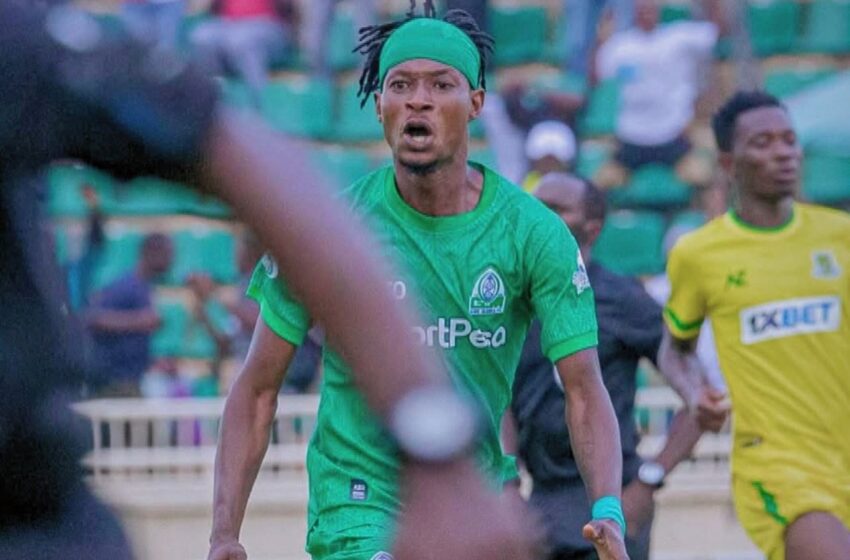
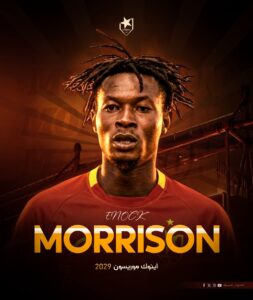
The move involving Ghanaian midfielder Enock Morrison from Gor Mahia FC to Al-Merrikh SC is one of those cases where the impact goes far beyond squad lists.
On paper, it looks like just another regional transfer between two strong African clubs. In reality, it changes how Gor Mahia build attacks, control matches, and respond under pressure.
To understand that impact properly, you also need to understand the club he is joining. Al Merrikh is not just a destination. It is a system built to win immediately.
Also Read: Rio Ferdinand To Open International Doors For Arusha Through AFCON 2027
Al Merrikh History And Why The Club Attracts Top African Talent
A Sudanese Giant Built On Competition And Expectation
Al Merrikh is one of Sudan’s most successful football clubs and has spent decades competing at the top of domestic football alongside its historic rival Al Hilal.
Based in Omdurman, the club has built a reputation that goes beyond national borders. It is known across Africa as a team that does not rebuild slowly. It competes.
That identity has been shaped by:
-
Consistent domestic league dominance
-
Regular appearances in CAF Champions League competitions
-
Strong financial investment compared to many regional clubs
-
A win-now culture driven by intense rivalry pressure
In African football terms, Al Merrikh sits in a category of clubs that expect immediate results, not long development cycles.
Why Players From Kenya And Ghana Fit The System
Al Merrikh has historically recruited players from West and East Africa because these markets produce technically skilled and tactically adaptable players.
Midfielders in particular are highly valued because they:
-
Control match rhythm
-
Connect defensive and attacking phases
-
Influence possession under pressure
-
Create scoring opportunities in tight games
Enock Morrison fits this profile. He is not just a squad addition. He is a tactical tool.
Enock Morrison Role Before The Transfer
Before his move, Morrison’s role at Gor Mahia was centered around creativity and transition play.
At his best, he operated as:
-
A link between midfield and attack
-
A progressive passer in central areas
-
A player who could break defensive lines
-
A support option in counter-attacking phases
Even when he was not scoring or assisting directly, his presence influenced how Gor Mahia built attacks.
That kind of player is often underestimated until he is gone.
How Gor Mahia Tactical Structure Changes Without Morrison
Losing a central attacking midfielder forces a team to rethink its entire structure, not just its starting eleven.
At Gor Mahia, the most visible changes will appear in three areas: build-up play, chance creation, and game control.
Tactical Impact Breakdown Table
| Tactical Area | With Morrison | After Departure | Expected Effect |
|---|---|---|---|
| Build-up play | Balanced through central channels | More reliance on wide play | Predictable attacks |
| Chance creation | Central creativity available | Reduced final-third invention | Lower goal variety |
| Game control | Better midfield rhythm | Less control under pressure | More transitional chaos |
| Opponent marking | Harder to isolate midfield | Easier to block central lanes | Tactical limitation |
The biggest issue is not losing a player. It is losing a decision-maker in the middle of the pitch.
What Gor Mahia Must Change On The Pitch
Without Morrison, Gor Mahia are likely to adjust their structure in a few key ways.
They may:
-
Push creativity to the wings instead of central areas
-
Rely more on long balls during pressure phases
-
Use deeper midfielders to initiate attacks
-
Rotate younger or less experienced playmakers
These adjustments can work, but they usually require time to stabilize.
Why Timing Of The Transfer Matters For Gor Mahia
Transfers are always disruptive, but timing determines how severe the disruption becomes.
For Gor Mahia, this move comes during a period of tactical transition under coaching restructuring. That makes stability even more important.
When a creative midfielder leaves during a rebuild phase, three problems appear:
-
Systems are not yet fully settled
-
Replacement players lack chemistry
-
Tactical identity is still being defined
This combination creates inconsistency, especially in early-season matches.
How Al Merrikh Will Use Morrison Differently
At Al Merrikh, the expectations will be different from Gor Mahia.
Instead of development or adaptation, the focus will be immediate performance.
Morrison is likely to be used in roles such as:
-
Advanced central playmaker
-
Second-line attacker behind forwards
-
Transition controller in CAF matches
-
Set-piece support creator
The Sudanese club tends to give foreign midfielders clear responsibilities rather than experimental roles.
That clarity often helps players perform faster.
How African Football Economics Shape Moves Like This
This transfer is also part of a larger economic pattern in African football.
Clubs in Sudan, North Africa, and parts of West Africa often have stronger financial packages compared to many East African teams.
That creates a predictable flow:
-
Ghana produces technical talent
-
Kenya develops competitive league experience
-
Sudan offers stronger financial incentives
-
North African clubs provide continental exposure
Regional Football Movement Table
| Region | Financial Strength | Player Export Level | CAF Competition Presence |
|---|---|---|---|
| Sudan | High | Medium import focus | Strong |
| Kenya | Moderate | High export rate | Developing |
| Ghana | Moderate | Very high export rate | Strong talent pipeline |
This structure explains why players like Morrison move north or west within Africa rather than staying in domestic leagues.
What Gor Mahia Lose Beyond Just A Player

The real loss for Gor Mahia is not just technical. It is structural.
Morrison provided:
-
Stability in midfield transitions
-
A passing outlet under pressure
-
Creativity in tight matches
-
Balance between attack and control
Without him, the team must redistribute responsibility across multiple players, which often reduces efficiency.
What Gor Mahia Must Do Next To Stay Competitive
To remain competitive domestically and in CAF competitions, Gor Mahia will need to respond quickly.
Key priorities include:
-
Signing or promoting a creative midfielder
-
Strengthening midfield rotation depth
-
Improving tactical flexibility in attack
-
Reducing overdependence on wide play
Failure to address these areas could lead to struggles in tightly contested matches.
How One Transfer Changes Tactical Identity
Football is often decided not by how many players a team loses, but by what kind of player leaves.
The departure of Enock Morrison from Gor Mahia FC to Al-Merrikh SC is a clear example of that reality.
Gor Mahia lose more than a midfielder. They lose a tactical connector who helped shape their attacking rhythm.
Al Merrikh gain a player suited to their win-now continental ambitions.
The difference between the two clubs is not just geography or league structure. It is timing, ambition, and how quickly each club can turn a transfer into performance.
The challenge now for Gor Mahia is now adaptation while for Al Merrikh, it is execution. And in African football, execution usually decides everything.